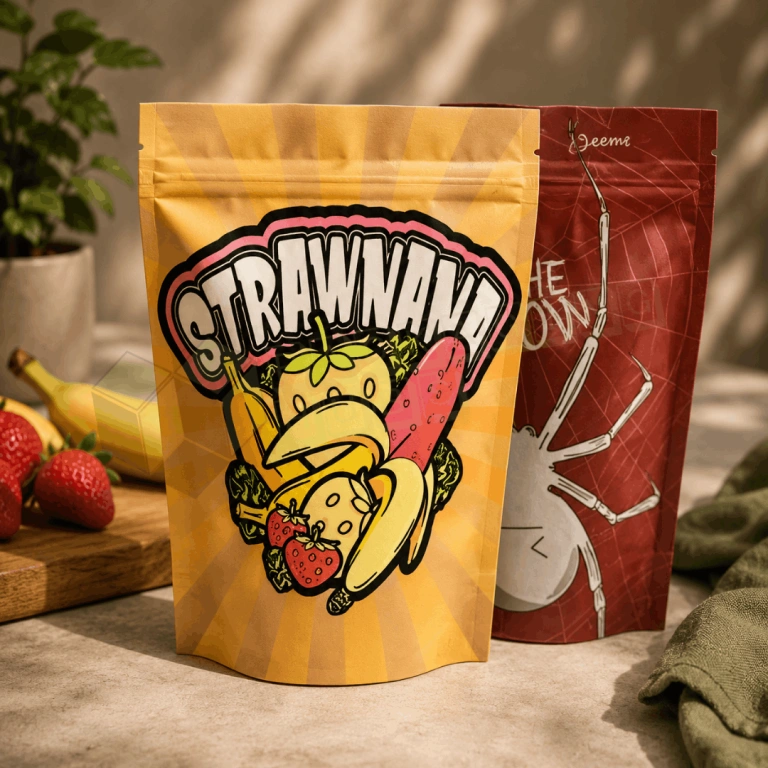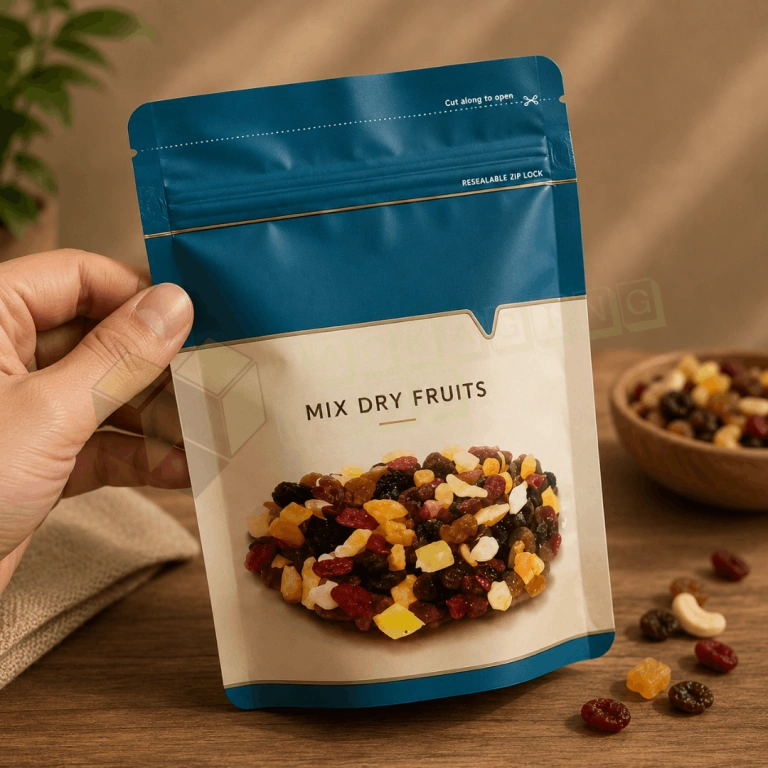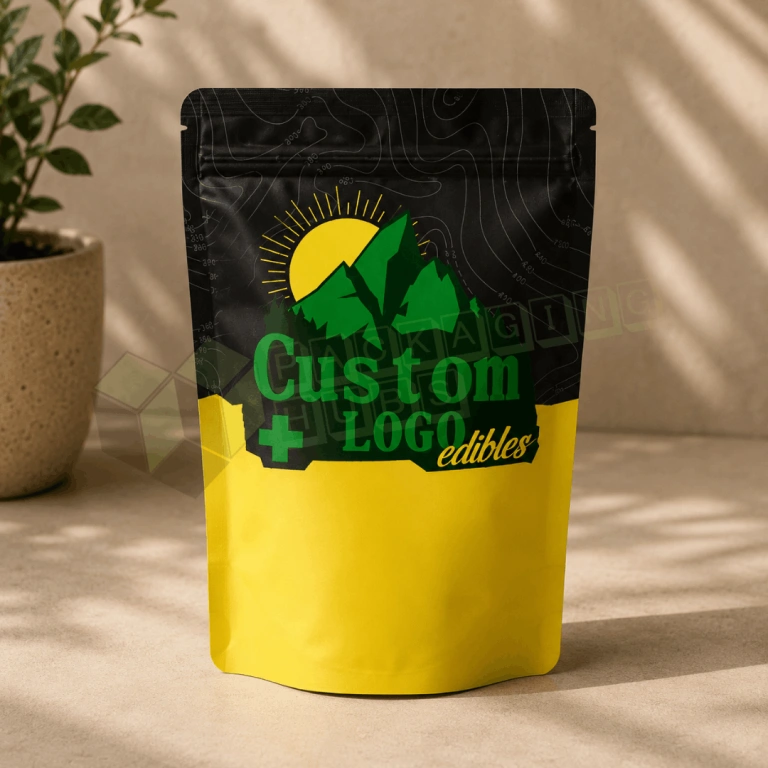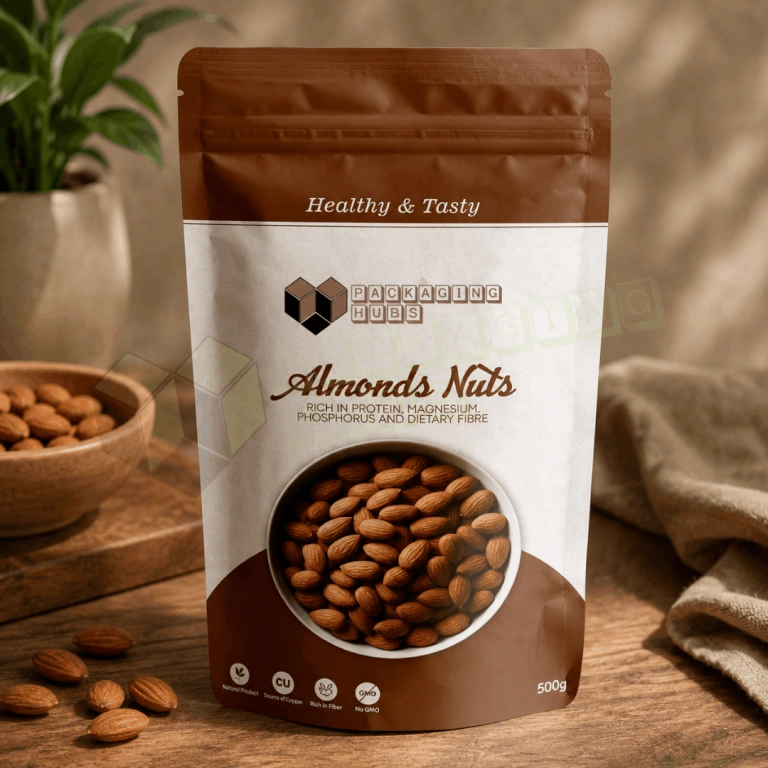
Free design support and free U.S. shipping. No minimum order.
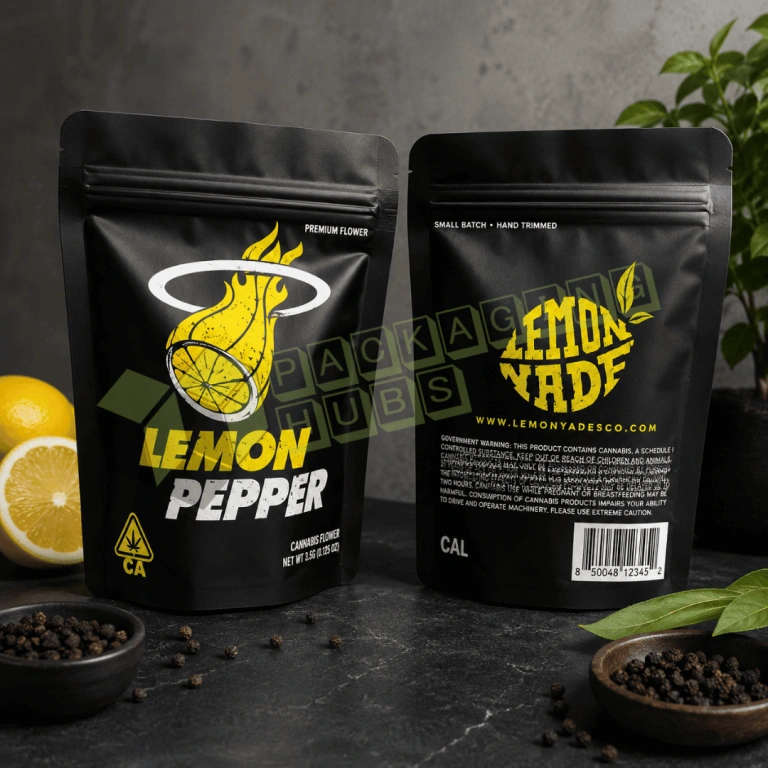
Child Resistant Mylar Bags combine safety-focused closure design with custom films, sizes, printing, finishes, and tamper-evident features for regulated and specialty products. Packaging Hubs supports U.S. businesses with zero MOQ, free design services, flexible lead-time options, and free shipping nationwide.
Child Resistant Mylar Bags serve a different purpose from ordinary resealable pouches. The package must make access significantly difficult for young children while still allowing adults to open it correctly. That requirement changes the closure, opening instructions, material strength, seal layout, artwork, filling process, and documentation that a commercial buyer should review before production.
Packaging Hubs develops custom flexible packaging for licensed cannabis businesses, supplement brands, specialty-product manufacturers, retailers, wholesalers, and other B2B buyers that need a more controlled opening system. A California cannabis company may need a tested child-resistant configuration for retail sale, while a Florida specialty brand may need a safety-focused resealable pouch for a different product category. Therefore, the specification must start with the product and applicable requirement rather than the appearance of the zipper.
Our zero MOQ policy supports prototypes, regional tests, and larger repeat orders. Free design services help organize the dieline and opening instructions, while free U.S. shipping and flexible lead-time options support businesses with different purchasing schedules.
The phrase “child resistant” has a specific safety meaning. It does not mean that a package is impossible for every child to open, and businesses should not treat it as a marketing synonym for a strong zipper. The U.S. Consumer Product Safety Commission explains that special packaging is designed to be significantly difficult for children under five to open or obtain a harmful amount of the contents within a reasonable time while remaining usable by normal adults. Buyers should review the CPSC Guide to Special Packaging when a product falls under Poison Prevention Packaging Act requirements.
This distinction also matters for brands researching child proof mylar bags. “Child proof” sounds absolute, while “child-resistant” more accurately describes the regulated performance concept. Therefore, we avoid promising that an ordinary zipper, thick film, or heat seal automatically creates compliant packaging.
A buyer should verify the exact package configuration rather than only the zipper model. Dimensions, closure placement, opening instructions, outer packaging, tamper-evident features, and the way the finished pouch reaches the consumer can affect the test configuration. Under 16 CFR 1700.20, special packaging is evaluated through defined child and adult testing procedures. The current eCFR testing procedure should guide compliance teams when federal special-packaging requirements apply.
Before discussing colors or finishes, buyers should separate the main packaging functions because each one solves a different safety or performance problem.
| Packaging function | What it is intended to do | What it does not prove | Buyer verification |
| Child-resistant closure | Makes access significantly difficult for young children under the applicable test framework | It does not mean the package is impossible for every child to open | Confirm testing for the exact finished configuration |
| Tamper-evident feature | Gives visible evidence that the package may have been opened or altered | It does not automatically create child resistance | Review the tear strip, top seal, label, or other evidence feature |
| Resealable closure | Allows an adult user to close the package again after opening | A normal zipper is not automatically child resistant | Check repeated opening, instructions, and closure engagement |
| Barrier laminate | Helps control moisture, oxygen, light, odors, or puncture risk according to the structure | Barrier performance does not establish child-resistant compliance | Match the laminate to the product and storage conditions |
This comparison shows why tamper evident child resistant pouches need two separate design conversations. A heat-sealed strip may provide visible initial-opening evidence, while the underlying child-resistant zipper controls later access. The two can work together, but one should never substitute for the other. Buyers should also retain the testing and compliance documentation that applies to their exact package.
The opening mechanism must fit both the product and the adult user. Push-to-open, pinch-and-pull, dual-action, hidden-track, slider-based, and other closure systems can create different opening motions. Some work better on smaller flat pouches, while others need more grip area or a wider upper panel. Clear opening instructions also matter because a technically secure package can still create customer frustration when adults cannot understand the opening method.
Custom child resistant mylar bags may be developed for cannabis flower, edibles, gummies, supplements, capsules, powders, household products, and other goods when the selected configuration suits the application. However, one mechanism should not be assumed to work equally well for every category. Product oils, powder contamination, sharp contents, filled weight, opening frequency, and customer dexterity can affect the best choice.
A Colorado dispensary may prioritize resealable child resistant pouches for multi-use products, while a Michigan manufacturer may need a single-use or tamper-evident format. Packaging Hubs develops the closure around the intended product experience rather than forcing the same zipper onto every SKU.
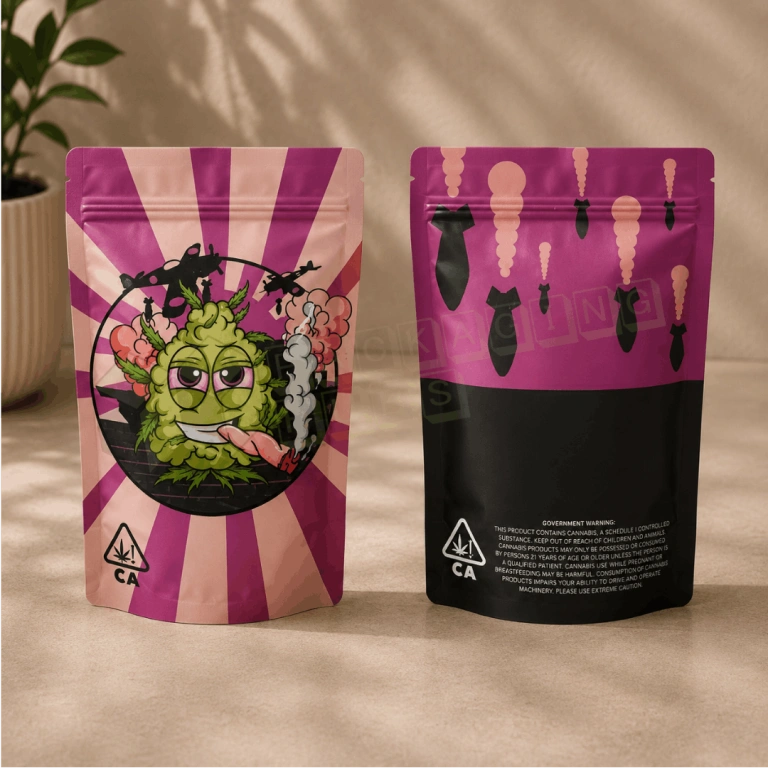
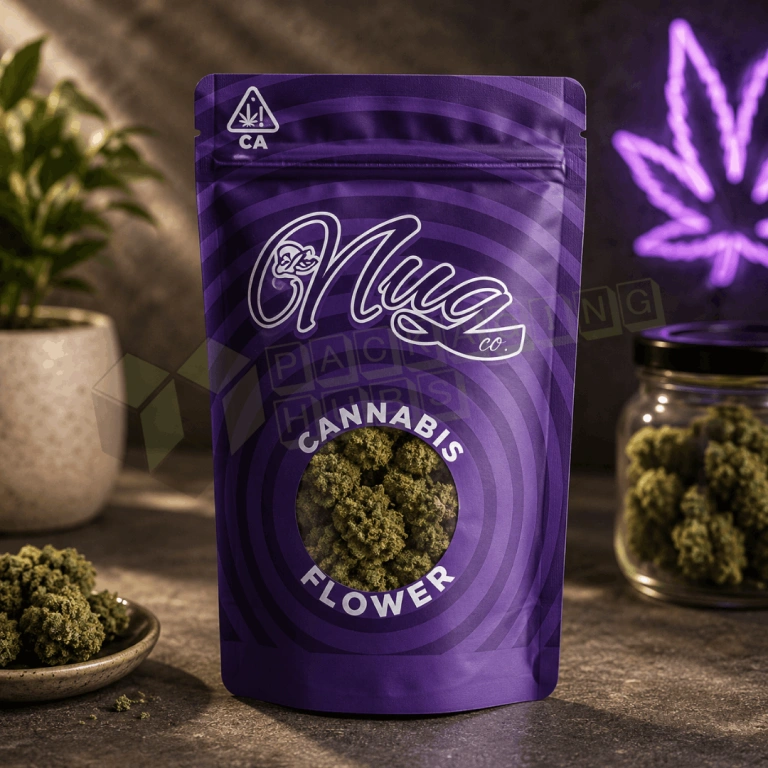
Businesses sourcing child resistant mylar bags in California should confirm the rules that apply to their exact cannabis product and license activity before production. California’s Department of Cannabis Control states that cannabis goods must be sold in child-resistant packaging and places responsibility on the licensee that packaged the cannabis good. The state’s child-resistant packaging guidance provides additional direction for licensed businesses.
This state-specific requirement illustrates why a pouch developed for one regulated market should not automatically be assumed to satisfy every other state. Packaging Hubs can reserve space for warnings, symbols, batch information, opening instructions, and other buyer-supplied compliance elements. However, the licensed business should confirm the current legal requirements in each target market before approving production.
The closure controls access, while the laminate provides much of the package’s physical protection. A safety zipper attached to an unsuitable film can still leave the pouch vulnerable to punctures, moisture, oxygen, light, aroma transmission, or weak seals. Material selection should therefore follow the contents, filled weight, storage environment, distribution route, and opening frequency.
The following material comparison explains the role of common layers without treating one structure as universally suitable.
| Material direction | Main role | Suitable commercial use | Important consideration |
| PET or BOPET outer film | Supports printing, stiffness, and surface durability | Branded retail pouches with detailed graphics | It generally needs additional layers for sealing and barrier performance |
| Metallized PET | Improves opacity and resistance to light, moisture, oxygen, and aroma | Cannabis, supplements, herbal products, and aroma-sensitive goods | Metallic film affects the appearance of printed colors |
| Aluminum foil laminate | Provides stronger barrier performance for demanding applications | Products needing greater opacity or lower transmission | It costs more, prevents visibility, and can show creasing |
| PE or LLDPE inner sealant | Creates a flexible sealing and product-contact surface | Zippered and heat-sealed pouches | The grade must suit the contents and sealing process |
| Nylon-reinforced laminate | Adds toughness and puncture resistance | Sharp, dense, or heavily handled contents | Added toughness may increase cost and stiffness |
| Clear barrier structure | Provides product visibility | Selected products or controlled display windows | Transparent sections normally reduce privacy and light protection |
This table demonstrates why buyers should not select a pouch only by thickness. A stronger laminate may help resist punctures, while an opaque barrier may protect light-sensitive products. Meanwhile, the film still needs enough flexibility around the child-resistant closure so adults can perform the required opening motion comfortably.
Child resistance does not automatically stop strong aromas. Products containing terpenes, botanical ingredients, coffee oils, or other noticeable scents may require a lower-permeability laminate and dependable seals in addition to the safety closure.
Brands where odor containment forms a major purchasing requirement can review our Custom Smell Proof Mylar Bags for a barrier-focused packaging direction. Odor resistance and controlled child access can coexist, but each needs its own material and performance review rather than one unsupported all-purpose claim.
Child resistant stand up pouches need enough upper-panel space for the closure and enough grip area for the adult opening motion. A pouch can hold the correct number of grams yet still create poor usability when the top becomes too narrow or the contents fill directly into the safety zipper.
Before approving dimensions, buyers should consider product volume, density, required headspace, closure depth, heat-seal allowance, gusset expansion, label area, and the position of the opening instructions.
The following size framework helps buyers understand why capacity and closure usability must be developed together.
| Format | Common commercial use | Main sizing priority | Typical risk if undersized |
| Small flat pouch | Samples, capsules, single-use products, and compact goods | Preserve enough grip space around the closure | Adults may struggle to perform the opening motion |
| Small stand-up pouch | Flower, gummies, supplements, and specialty products | Balance gusset capacity with upper-panel width | Contents may crowd the zipper or top seal |
| Medium stand-up pouch | Multi-use edibles, larger fills, and powders | Provide repeated-access comfort and clear instructions | Powder or fragments may contaminate the closure |
| Large resealable pouch | Bulk products, refills, and multi-serving formats | Scale zipper and film strength with filled weight | Heavy contents may stress the closure or seals |
| Fully custom pouch | Kits, unusual products, or market-specific layouts | Coordinate product cavity, labeling, and opening zones | Decorative areas may consume functional space |
These formats remain starting points rather than fixed sizes. A Nevada retailer may need additional front-panel space for information, whereas an Ohio co-packer may prioritize filling speed and zipper clearance. Packaging Hubs can prepare custom dimensions from product samples, exact measurements, or fill data before the final dieline is approved.
Not every food pouch needs controlled child access. Dry grains, freeze-dried products, coffee, pantry ingredients, and other conventional storage products usually prioritize moisture, oxygen, light, sealing, and storage efficiency.
Buyers working on those applications can compare Custom Mylar Food Storage Bags for a storage-focused solution. This distinction prevents brands from adding unnecessary complexity to packaging that does not require a child-resistant opening system.
Packaging Hubs first determines whether the buyer has a genuine safety or regulatory requirement. Only then should the project move into a specialized closure.
Custom printed child resistant mylar bags need a visual hierarchy that treats opening instructions as functional information. Decorative graphics should not hide grip points, arrows, tabs, tear-away areas, or closure directions. The package may also need product identity, warnings, net contents, barcodes, QR codes, batch information, ingredients, or state-specific labeling.
Before printing, buyers should select a process that matches the quantity, artwork complexity, and reorder plan. The following comparison explains how printing decisions can affect both branding and functional communication.
| Printing decision | Best use | Commercial advantage | Safety-focused consideration |
| Digital printing | Short runs, market tests, state-specific versions, and multiple SKUs | Easier artwork changes and economical versioning | Keep opening instructions consistent across versions |
| Flexographic printing | Medium and high-volume repeat programs | Efficient recurring production and spot-color control | Confirm plate changes do not shift functional graphics |
| Rotogravure printing | Large programs requiring repeatable detailed artwork | Strong consistency over longer runs | Higher setup investment makes final approval important |
| CMYK process color | Photographs, gradients, and full-color designs | Broad creative flexibility | Graphics should not overpower warnings or opening directions |
| PMS/Pantone color | Critical brand colors and controlled spot shades | Better repeat brand-color control | Film and white ink can alter perceived color |
| RGB artwork | Screen previews and digital design work | Wide on-screen color range | RGB must be converted for print and may visibly shift |
The best mylar bag design for a safety-focused pouch is not simply the most colorful option. Packaging Hubs provides free design services to check bleed, resolution, white ink, barcode contrast, CMYK or PMS setup, closure clearance, and instruction placement. RGB artwork can also be reviewed and converted appropriately before production.
Creative brands may want a custom silhouette to increase retail recognition. Die Cut Mylar Bags can provide shaped flexible packaging, but a child-resistant version requires additional restraint.
Narrow points, deep curves, shifted zipper positions, and unusual top edges can change the way adults grip and open the package. Therefore, a design adjustment that seems purely decorative may become important when it alters the configuration associated with child-resistant performance.
We can refine the contour around the closure, top seal, opening instructions, and required information so the creative shape does not undermine the package’s functional purpose.
Brands considering character outlines, logo-shaped packaging, or highly customized silhouettes can explore Irregular Shaped Mylar Bags for a more design-led structural direction.
For safety-sensitive products, the package still needs enough space for the child-resistant mechanism, adult grip area, heat seal, warnings, and instructions. A creative pouch only adds commercial value when the final configuration remains practical to fill, close, display, and use.
Child Resistant Mylar Bags wholesale programs should give procurement teams more than a low unit price. Repeat buyers need controlled dimensions, closure placement, material structure, printing, and documentation from one run to the next. A change in zipper type, pouch dimensions, opening instructions, or laminate may become more significant when the product depends on a defined safety configuration.
Packaging Hubs supports startups, dispensaries, supplement companies, private-label manufacturers, contract packers, wholesalers, and multi-location retailers. Buyers searching for child resistant packaging USA can begin with a validation run under our zero MOQ policy and scale after reviewing the physical package and required documentation.
Multi-state businesses may also need separate artwork versions where warnings or market requirements differ. Consequently, the legal or compliance team should review each target state before a national production run.
The most expensive packaging errors often happen when buyers treat compliance, usability, filling, and branding as separate projects. A suitable closure can become frustrating when the pouch is too narrow. Powder can interfere with zipper tracks. A heat-sealed header can cover instructions. Likewise, attractive artwork can require redesign when warnings or mandatory information have no reserved space.
These problems become especially important for child resistant cannabis pouches, where closure performance, aroma control, tamper evidence, branding, and market-specific information may all compete for limited pouch space.
Packaging Hubs reviews the product, dimensions, filling process, safety closure, artwork, and final seal together. Physical sampling can also help buyers evaluate adult usability, package balance, fill clearance, and graphic placement before a larger commercial order.
Child Resistant Mylar Bags can be developed in flat, stand-up, opaque, metallized, printed, resealable, tamper-evident, and custom-sized configurations. Packaging Hubs serves B2B buyers and small businesses throughout the United States while also supporting custom packaging projects worldwide.
Before ordering, provide the product type, target state or market, fill weight, desired dimensions, quantity, required closure, available testing documentation, barrier objective, artwork, finish, filling process, and delivery schedule. We can then prepare the dieline and quotation around those requirements instead of making unsupported compliance assumptions.
Our zero MOQ policy supports initial testing and small launches, while scalable manufacturing supports larger repeat programs. Free design services help prepare production-ready artwork, free shipping applies throughout the United States, and flexible lead-time options support urgent, standard, and planned schedules.
Order Now to begin your project, or Get a Free Quote to compare closure systems, materials, dimensions, printing methods, and finishing options.
| Box Style | Child Resistant Mylar Bags |
| Dimension (L + W + H) | All Custom Sizes & Shapes |
| Quantities | No Minimum Order Required |
| Stock | Material, MOPP/VMPET/PE/BOPP/ALU, THICKNESS: 100/120/150 microns/sid |
| Printing | Digital/ Gravure |
| Finishing | Gloss/ Matt/ Spot uv |
| Included Options | Die Cutting, Gluing, Scored, Perforation |
| Additional Options | Eco-Friendly, Recycled Boxes, Biodegradable |
| Proof | Flat View, 3D Mock-up, Physical Sampling (On request) |
| Turnaround | 4 – 8 Business Days, RUSH |
| Shipping | FLAT |
Pick the stock and the finish that suit your product. We’ll confirm both on your proof before anything is printed.
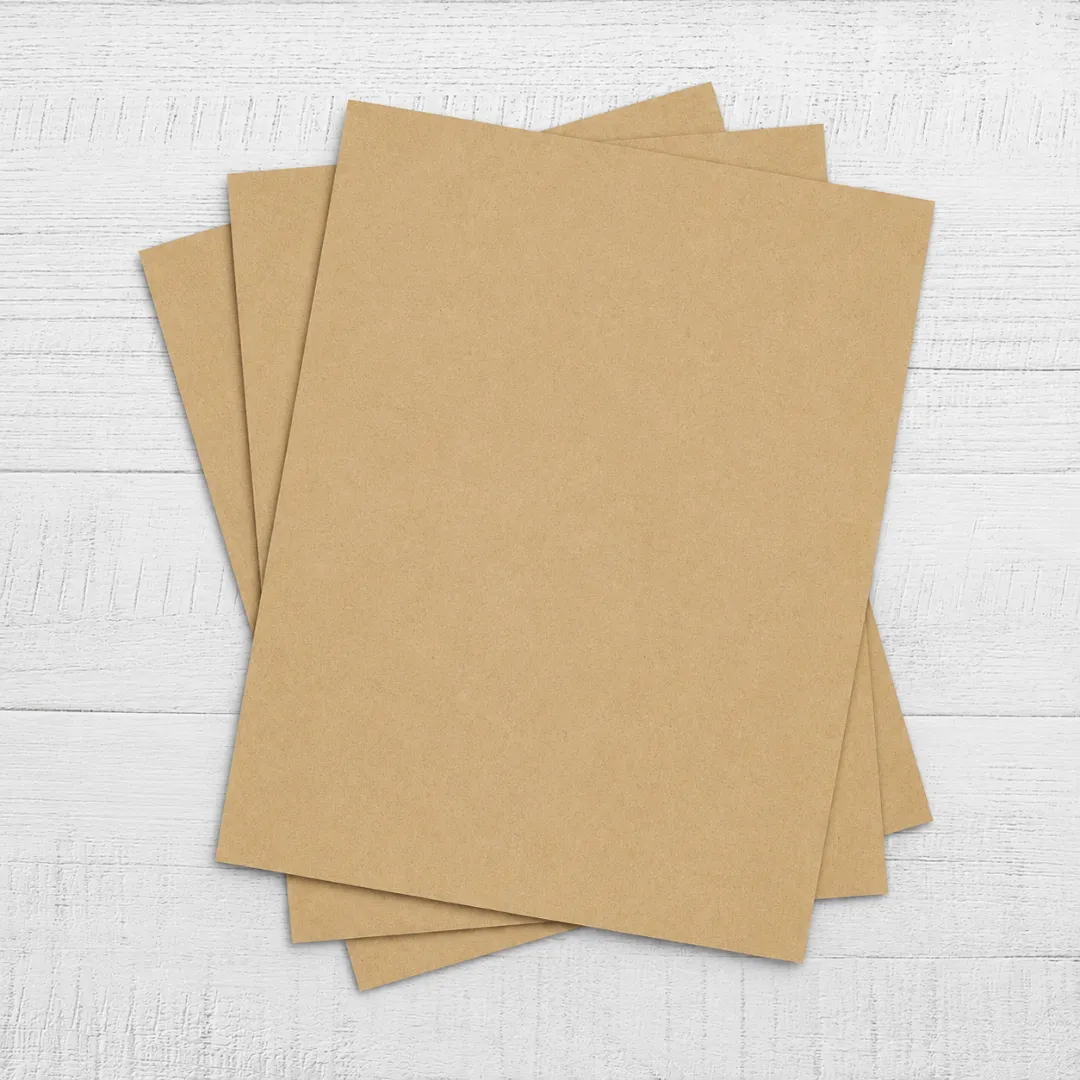
Kraft paper is a strong, durable and reliable material that is widely used across many different industries.
We use cardboard material with the least environmental impact and minimizes waste generation.
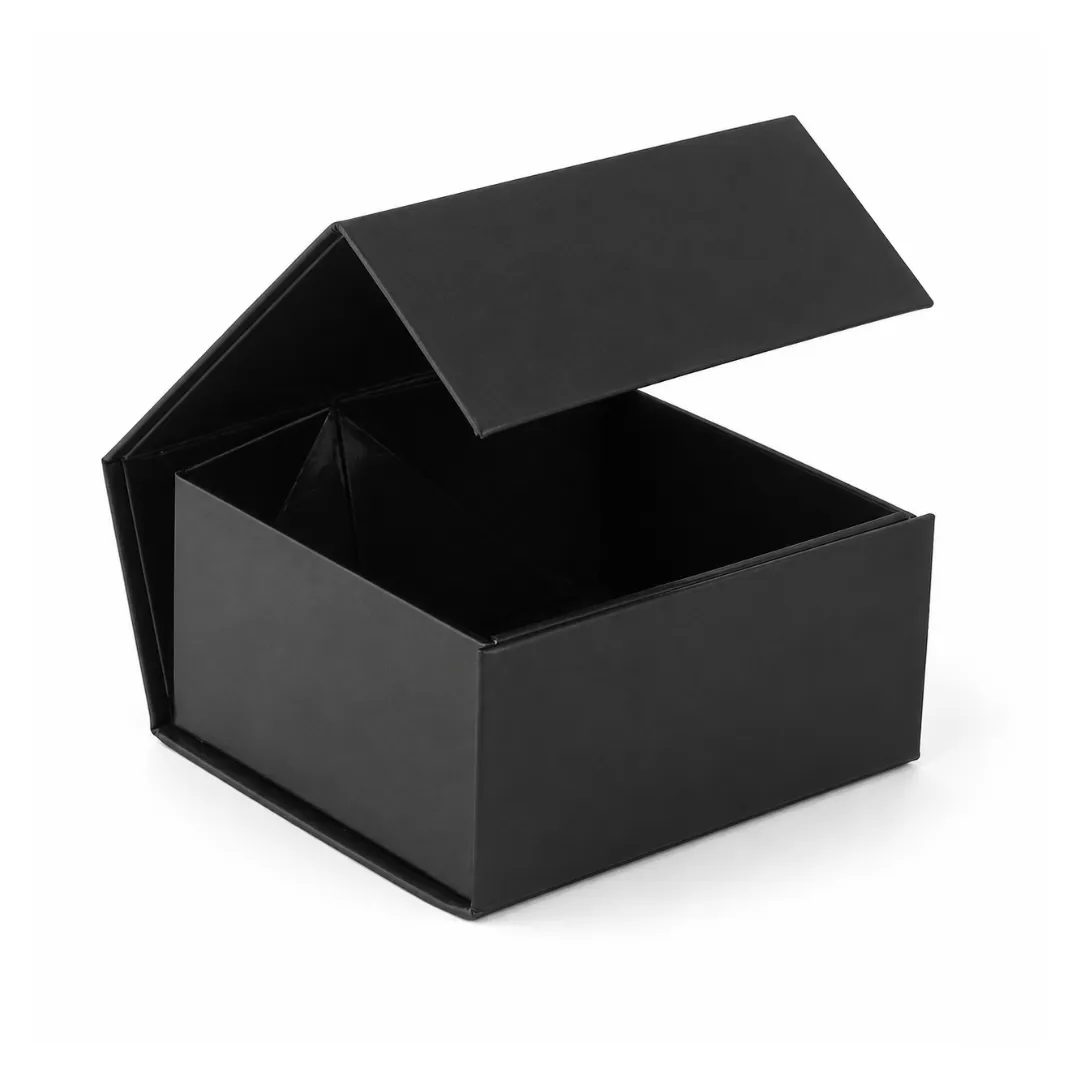
Rigid is highly protective, affordable and recyclable material. These boxes provide maximum protection.
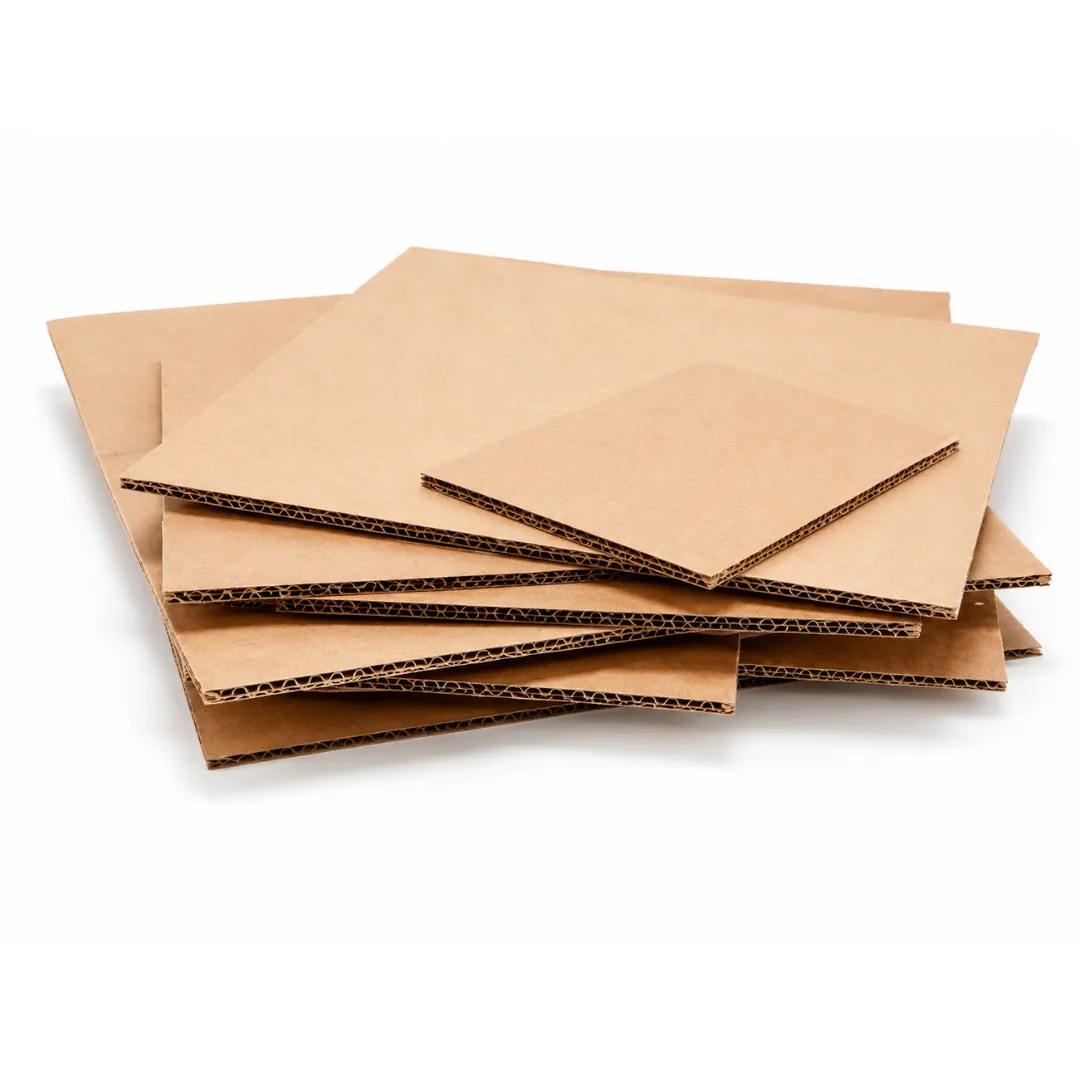
Corrugated material is easy to customize, cost effective and sustainable. It is also great for branding purposes.
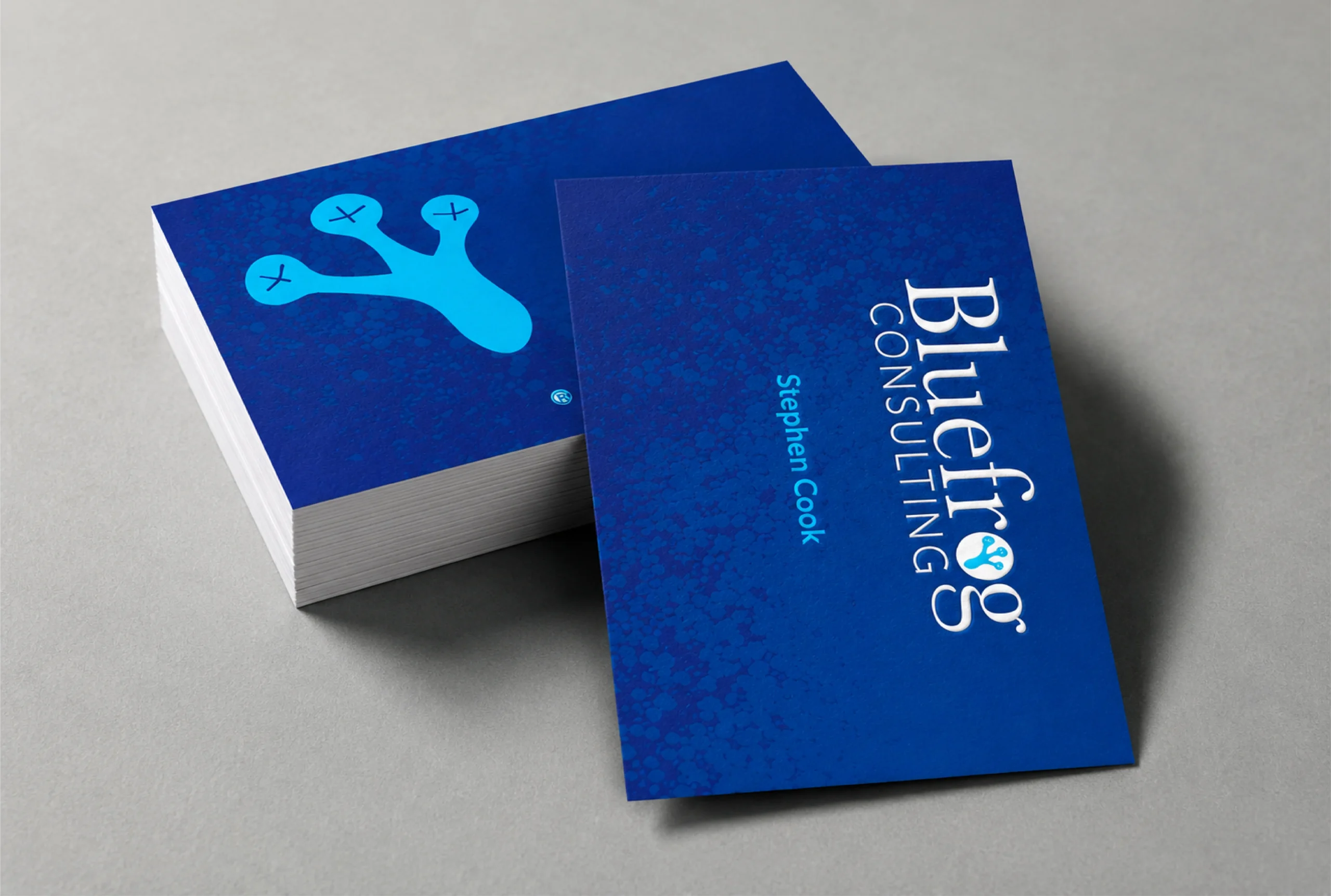
We add additional layer of protection with soft touch lamination from toner chipping.
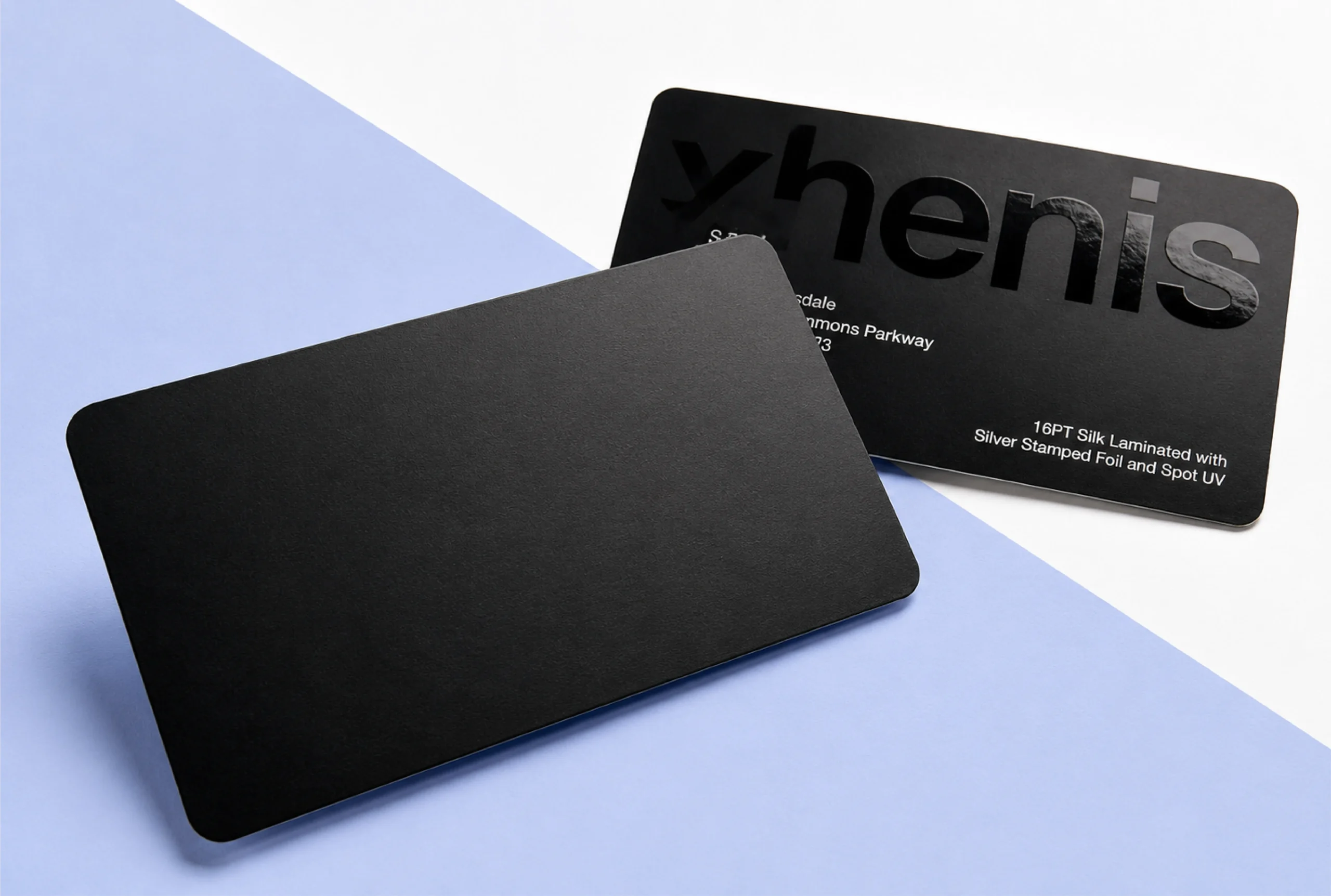
With our matte finish, fingerprints and smudges will now be less visible on the packaging.
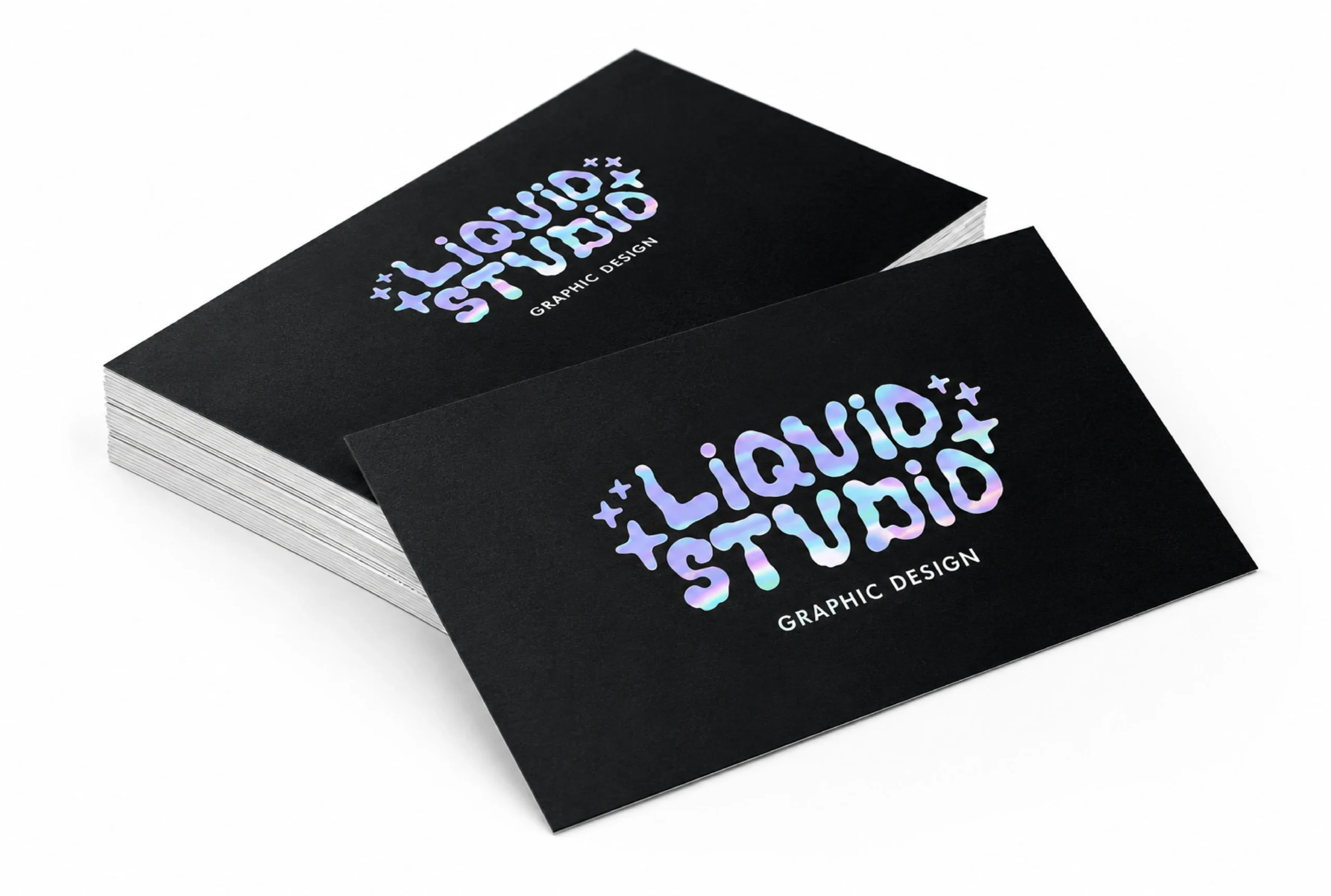
Holographic foil diffracts light and reveals the colors of the rainbow at various angles.
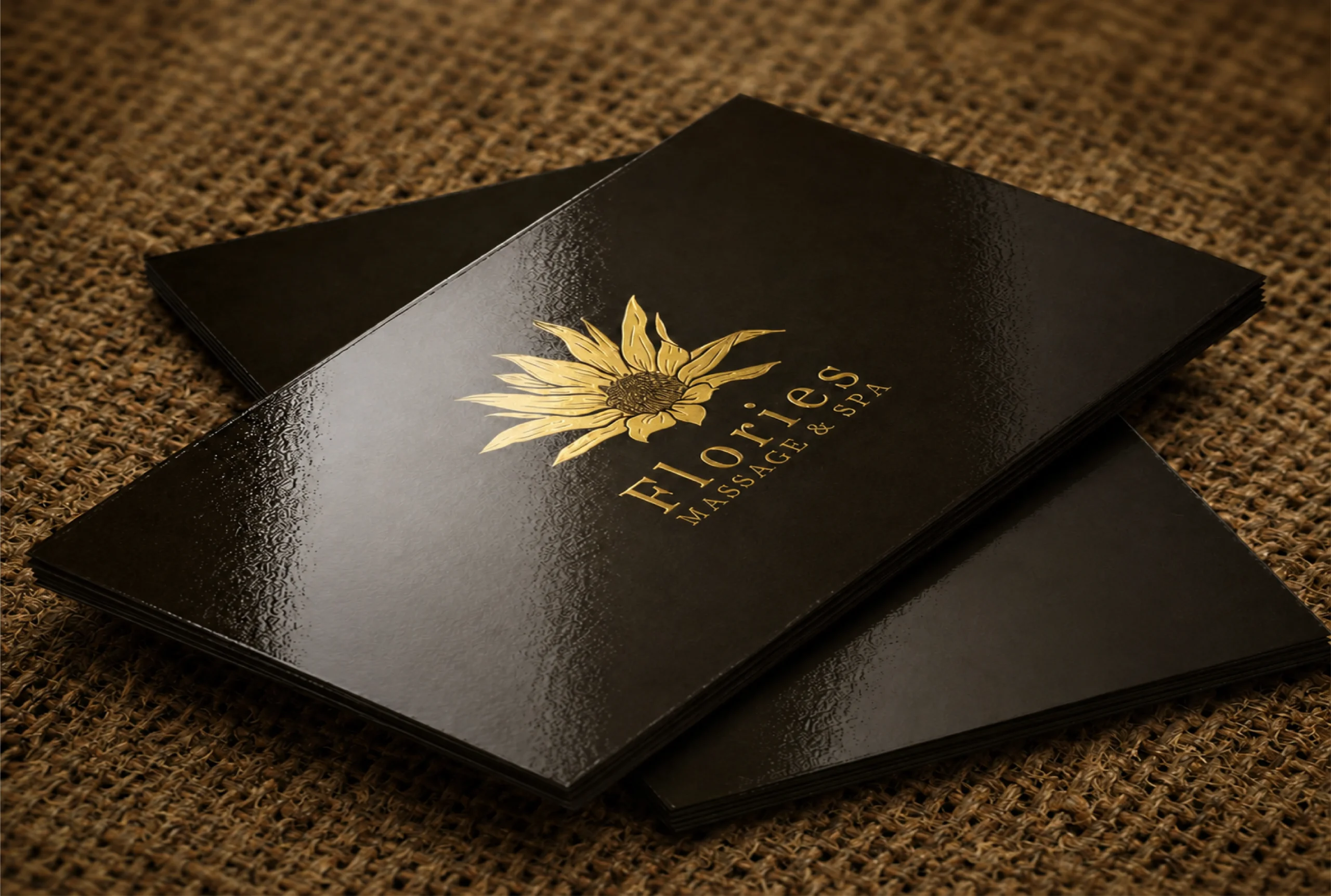
Our glossy finishing gives your packaging an extra layer of shine.
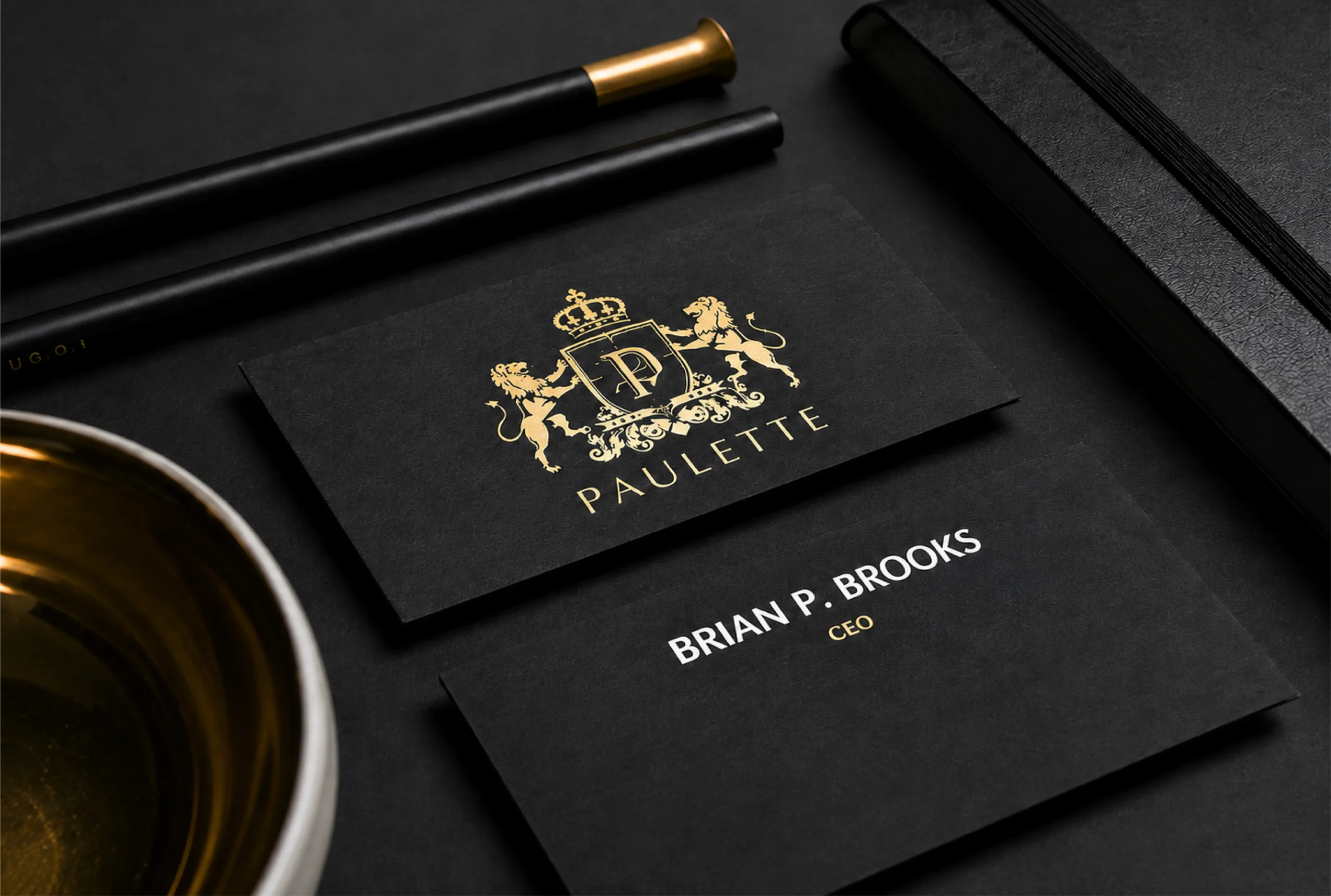
Decorate a wide range of your product packaging with our foil stamping.
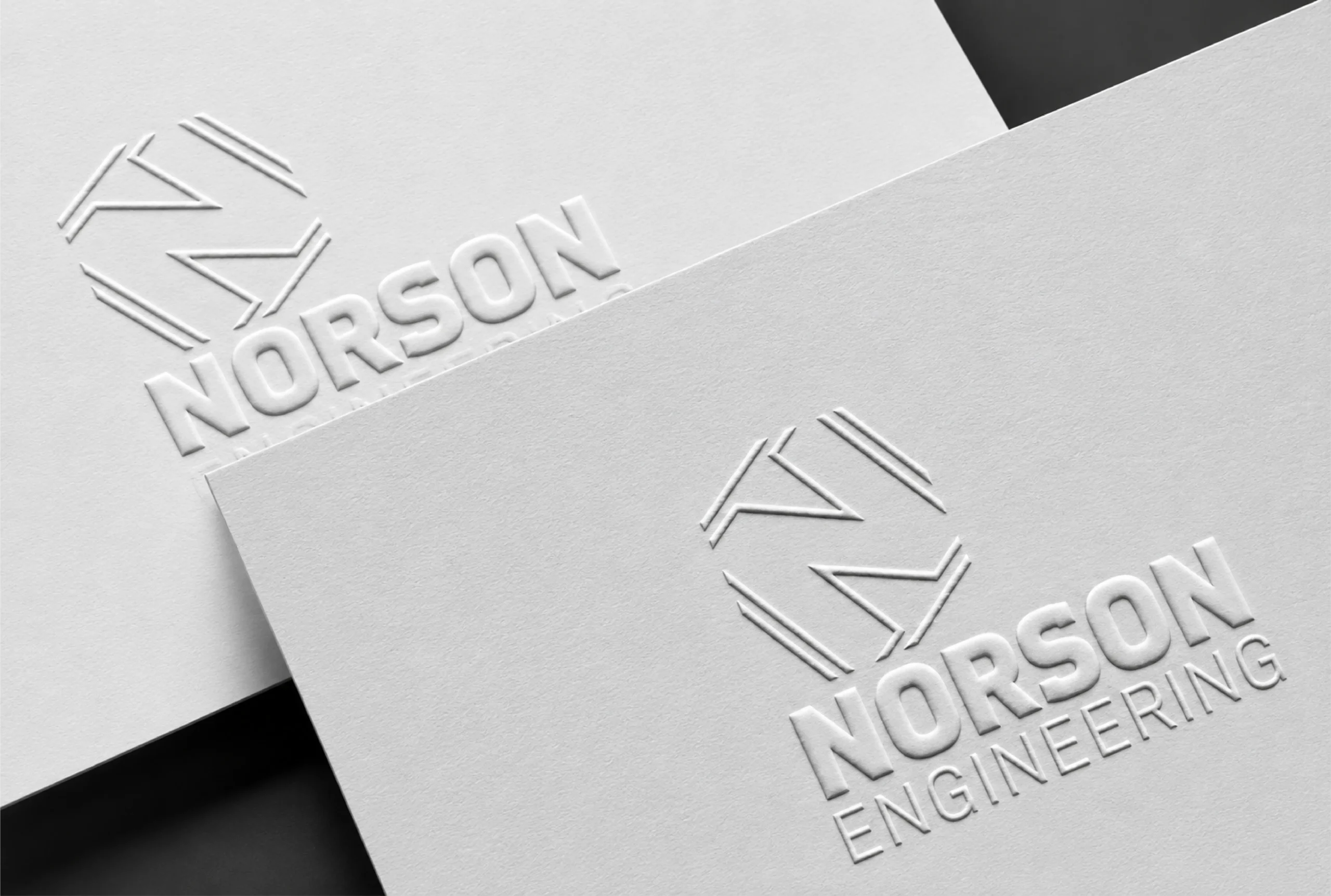
With our embossing technique, we transfer the finest details of your product on packaging.
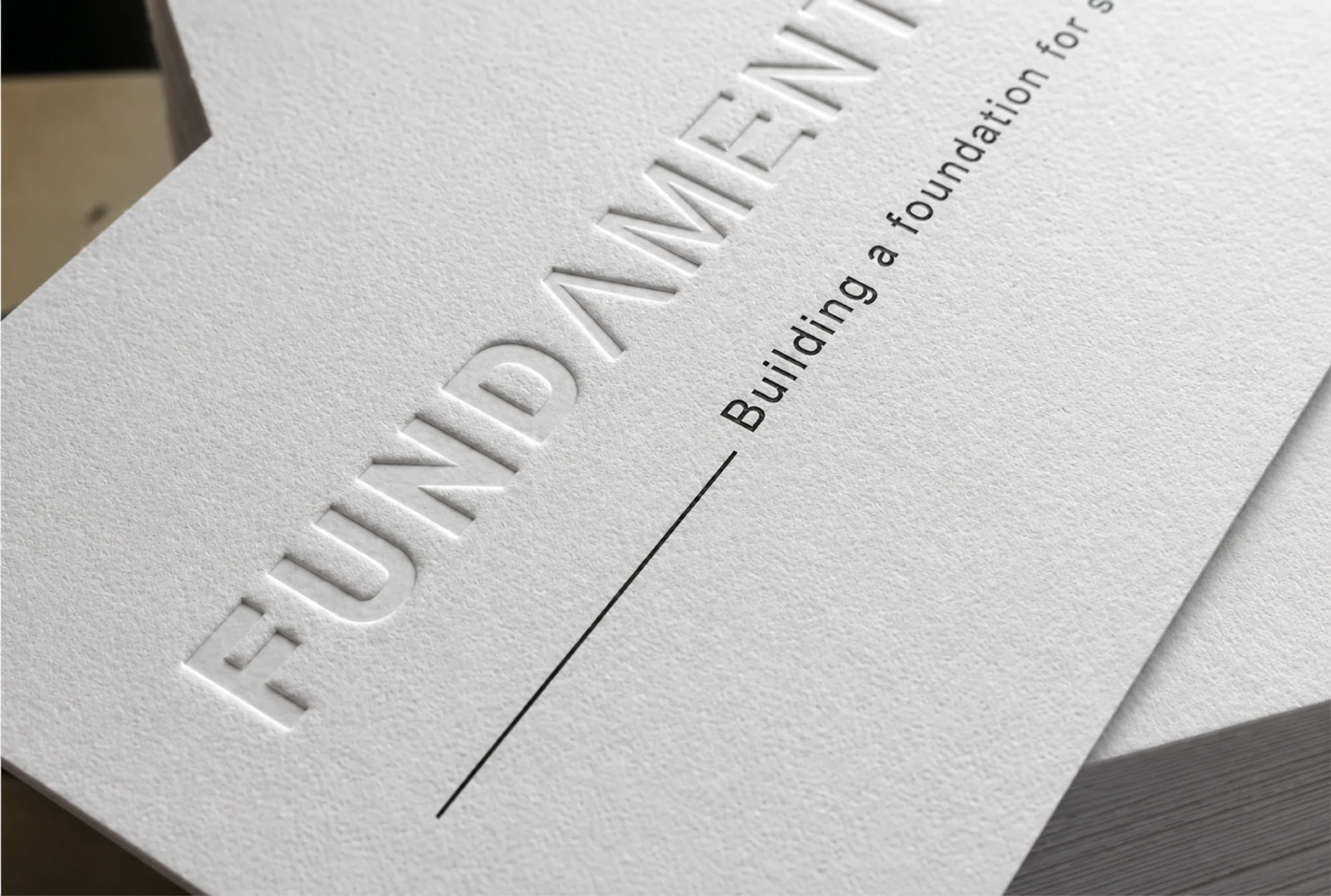
We use debossing technique to add unique graphics into your packaging.
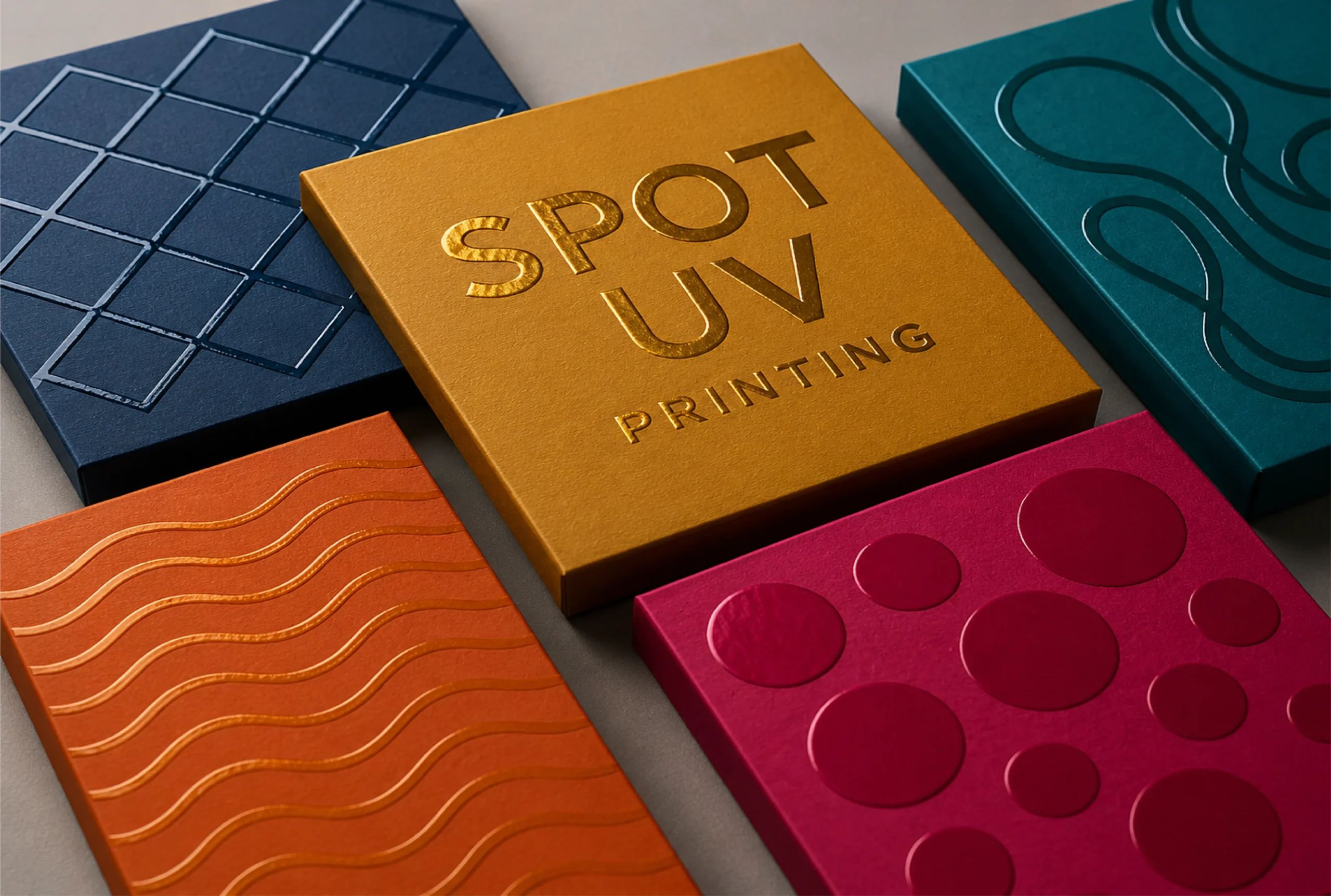
Our high-gloss UV coating gives light and shine to cure the printed material's varnish.
Still unsure? Email sales@packaginghubs.com and a packaging specialist will help.
Get your free quote today and see why Packaging Hubs is the most trusted name in U.S. custom packaging.