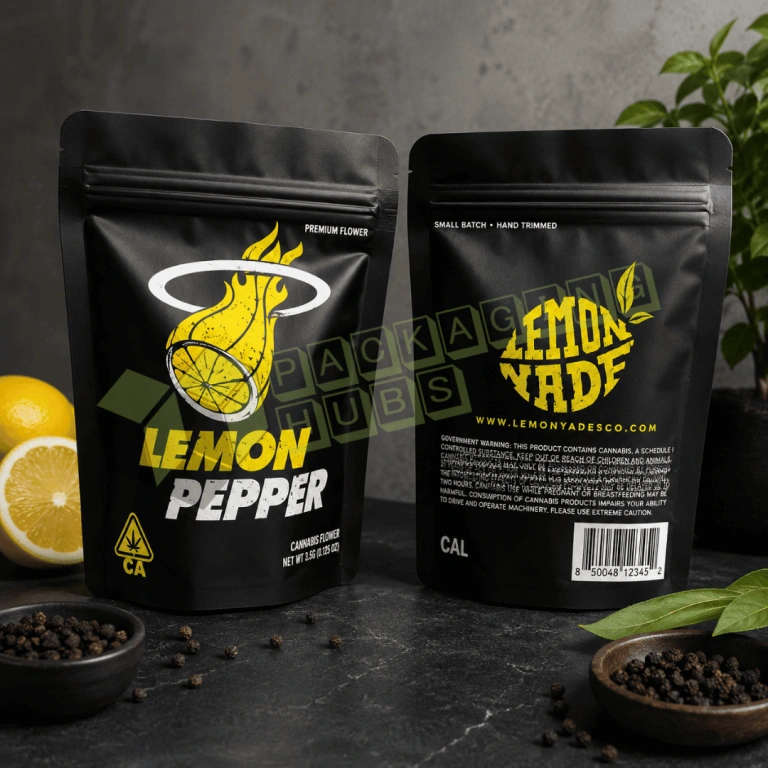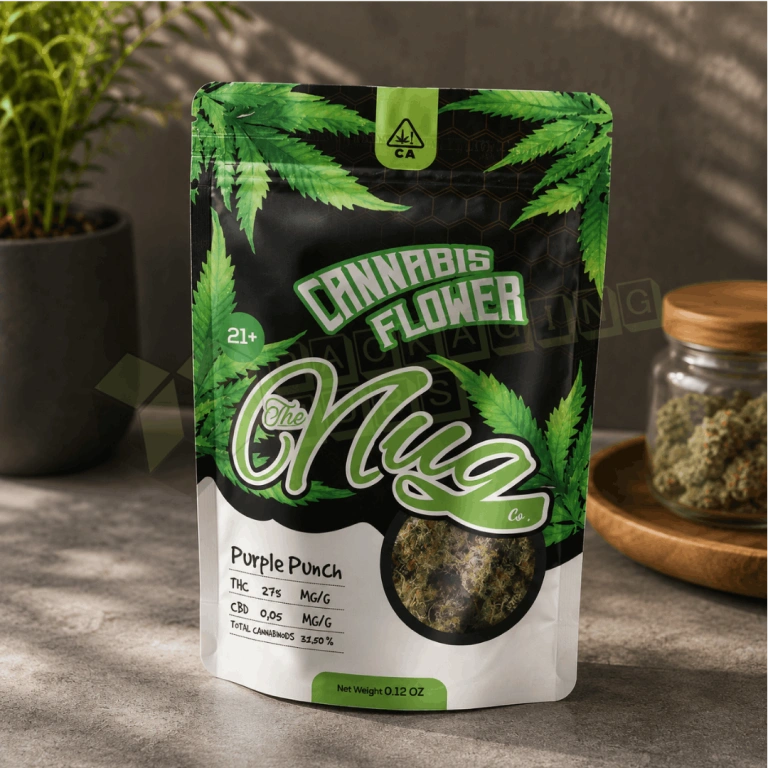
Free design support and free U.S. shipping. No minimum order.
Large Mylar Bags create a different packaging challenge from ordinary retail pouches because every increase in capacity changes more than the dimensions. Filled weight rises, seals carry greater loads, gussets expand further, workers handle the package differently, and shipping cartons need to support a heavier flexible pack.
Packaging Hubs develops large-capacity packaging around the product, actual filled weight, desired volume, storage environment, filling method, closure, handling process, and distribution route. Therefore, we do not simply enlarge a small pouch dieline and assume the same film, zipper, seal width, and gusset will continue performing correctly.
These bags can support grains, rice, beans, flour, pasta, dehydrated products, freeze-dried foods, coffee, pet products, powdered ingredients, mushroom products, refill packs, specialty goods, and other suitable bulk applications. Buyers can order custom dimensions with zero MOQ, while free design services, flexible lead-time options, and free shipping throughout the United States support both product trials and repeat B2B purchasing.
The primary advantage of a large pouch is not simply that it holds more product. A well-designed large format can reduce the number of individual packages needed for a given quantity, simplify refill programs, support food-service or wholesale customers, and create family-size or institutional offerings.
However, larger packaging also creates tradeoffs. A bag holding more product becomes more expensive if a seal fails because the business loses the contents as well as the package. The customer may also struggle to pour, carry, reseal, or store an unnecessarily large pack.
Therefore, the first decision should be the commercial use rather than the largest possible dimensions.
The following capacity map explains how different large-format needs lead to different package directions.
| Buyer requirement | Suitable large-format direction | Main structural concern | Commercial question to answer |
| Family-size retail product | Large stand-up or flat-bottom pouch | Stable base, zipper strength, and shelf footprint | Can customers comfortably lift, pour, and reseal it? |
| Food-service ingredient supply | Large flat or gusseted pouch | Efficient filling and dependable top sealing | Does the bag fit storage bins and preparation workflows? |
| Long-term dry-food program | Opaque high-barrier liner or pouch | Moisture, oxygen, light, seal integrity, and outer protection | Should one bulk quantity be divided into smaller packs? |
| Refill packaging | Large resealable pouch | Repeated opening, grip, and controlled pouring | Will customers use the complete quantity within a suitable period? |
| Wholesale distribution | Reinforced bulk pouch | Filled-weight support and carton efficiency | How many filled bags should fit into each master carton? |
| Freeze-dried product | High-barrier large pouch with careful headspace | Moisture reabsorption and product crushing | Can the product tolerate compression during handling? |
This table shows why Large Mylar Bags should be developed from the entire supply chain. Packaging Hubs considers how the pouch is filled, lifted, stacked, opened, stored, and shipped rather than treating capacity as the only specification.
Bulk capacity may look efficient, but one oversized package is not always the best storage solution. Opening a large bag exposes the entire contents each time the customer accesses it. Smaller internal packs can improve rotation, make quantities easier to handle, and limit the effect of contamination or package damage to one portion.
Utah State University Extension notes, for example, that wheat stored in roughly 10-pound bags can be easier to manipulate and rotate, and several such packages can be placed within a five-gallon bucket. Its broader food-storage guidance also discusses Mylar-type packaging for several dry foods.
Therefore, businesses developing large mylar bags for food storage should compare one bulk liner against multiple smaller sealed packs before choosing the final configuration.
Brands whose primary goal is extended dry-food storage can also review Custom Mylar Food Storage Bags for a more storage-specific packaging strategy involving product moisture, oxygen management, portioning, and validated storage practices.
Large Mylar Bags should never be sized using capacity labels alone. A bulky freeze-dried snack, dense rice, powdered ingredient, pet treat, and lightweight dried mushroom product can occupy completely different volumes at the same weight.
A good specification therefore starts with the actual fill. Packaging Hubs reviews the width, height, gusset depth, headspace, seal allowance, zipper position, product settling, and required handling space.
The next table shows how large-format categories can be approached without pretending there is one universal dimension for each capacity.
| Size direction | Common commercial role | Primary design concern | Useful structural feature |
| Large retail pouch | Family sizes, refills, pet products, and ingredients | Shelf stability and customer handling | Bottom gusset, zipper, and carrying grip where appropriate |
| Extra large mylar bags | High-volume products and wholesale quantities | Seal loads and puncture resistance | Reinforced laminate and wider closure zones |
| 5 gallon mylar bags | Bulk dry-food liners and preparedness applications | Fit inside protective buckets or containers | Long top opening with sufficient heat-seal allowance |
| Institutional pouch | Food service and ingredient supply | Filling speed and controlled dispensing | Wide opening or customized pouring format |
| Fully custom bulk format | Products outside conventional capacity ranges | Relationship between filled weight, volume, and shipping | Custom gussets, film structure, handles, and secondary cartons |
The table is intentionally a format guide rather than a list of fixed dimensions. A five-gallon-class liner, for instance, should be checked against the actual container and fill method instead of assuming every bucket or food requires an identical bag.
5 gallon mylar bags commonly serve as flexible liners for dry-food storage programs, but the outer container can be as important as the liner itself. Flexible film can provide barrier protection, while a rigid food-appropriate bucket or other suitable container can improve stacking and defend the pouch from rough handling or pests.
Utah State University Extension specifically discusses placing multiple Mylar-type bags inside five-gallon buckets for wheat storage and emphasizes moisture-proof food-grade packaging and protection from insects and rodents.
Packaging Hubs can adjust the large liner dimensions around the buyer’s intended container. The pouch should leave enough film above the product for a clean seal without creating so much excess material that the closed liner becomes difficult to place inside the bucket.
Small flexible pouches are normally lifted from almost any edge. Large packages behave differently. Employees may lift them repeatedly during filling, warehouse movement, case packing, and retail stocking.
For that reason, large stand up pouches may need stronger bottom seals, balanced gussets, greater puncture resistance, or a dedicated handle depending on the filled weight and product.
A handle also changes the force distribution through the package. It should not simply be cut into a decorative area without considering the load beneath it. Likewise, a wide gusset helps increase volume but can create instability when the product settles unevenly.
Packaging Hubs can review these factors during dieline development so the pack remains functional when full rather than only looking correct when empty.
The phrase heavy duty large mylar bags usually reflects a buyer’s need for greater toughness, but total thickness is only one part of durability.
A laminate may need puncture-resistant nylon for sharp or rigid contents, a tough PET outer layer for handling, an appropriate barrier layer for storage, and a dependable PE or CPP inner sealant. Increasing thickness without addressing the failure mechanism can add cost without solving the actual problem.
For example, sharp pasta may create localized puncture pressure, while dense grains place more sustained stress on the bottom and side seals. A large powder pack creates different risks because fine particles can contaminate the top closure.
Packaging Hubs evaluates the contents, weight, carton, handling, storage environment, and sealing method before recommending a material.
Large Mylar Bags can use different laminated structures depending on whether the primary concern is moisture, oxygen, aroma, puncture, light exposure, printing quality, or mechanical handling.
The material comparison below explains how common layers contribute to larger pouch construction.
| Material direction | Primary contribution | Suitable large-format application | Limitation or tradeoff |
| PET or BOPET outer layer | Printing quality, stiffness, and abrasion resistance | Branded bulk foods, pet products, and refill bags | Usually requires additional barrier and sealing layers |
| Metallized PET | Opacity plus improved moisture, oxygen, and light resistance | Dry ingredients, powders, coffee, and aroma-sensitive goods | Metallic substrate can change printed color appearance |
| Aluminum foil laminate | Stronger barrier for demanding dry-storage uses | Selected long-term or freeze-dried applications | Increased cost, creasing, and complete opacity |
| Nylon or PA | Toughness and puncture resistance | Sharp products and demanding distribution | Can increase material cost and affect stiffness |
| PE or LLDPE inner layer | Flexible heat-sealing surface | Many bulk food and non-food pouches | Grade must match product contact and sealing equipment |
| Clear barrier film | Product visibility | Shorter-turn retail bulk products | Generally gives less light protection than opaque formats |
The correct structure depends on the application rather than the word “large.” Packaging Hubs can develop commercial mylar bags that prioritize barrier performance, toughness, printing, or a controlled combination of all three.
Large food packaging may contain significantly more product than a small retail pouch, so buyers should be especially careful about the material specification.
The FDA explains that food packaging and its components, including substances such as adhesives and colorants, can qualify as food-contact substances and that food-contact additives must be authorized for their intended use before U.S. marketing.
For that reason, Packaging Hubs does not treat “FDA approved bag” as a universal material description. The buyer should provide the food type, filling conditions, oils, storage plan, and required regulatory documentation so the inner layer and other relevant components can be selected for the intended use.
Dried mushrooms and freeze-dried products can occupy considerable volume without creating the same filled weight as grains or powders. This means the bag may need more physical space while still requiring careful protection against compression and environmental exposure.
Businesses packaging dried mushroom pieces, powders, functional blends, or other mushroom products can review Custom Mushroom Mylar Bags for a product-specific discussion of moisture sensitivity, product form, fill density, and material selection.
A large mushroom pack should not be designed by simply using the same dimensions as a dense ingredient bag. Packaging Hubs can adapt the gusset and headspace so lightweight pieces are not unnecessarily compressed.
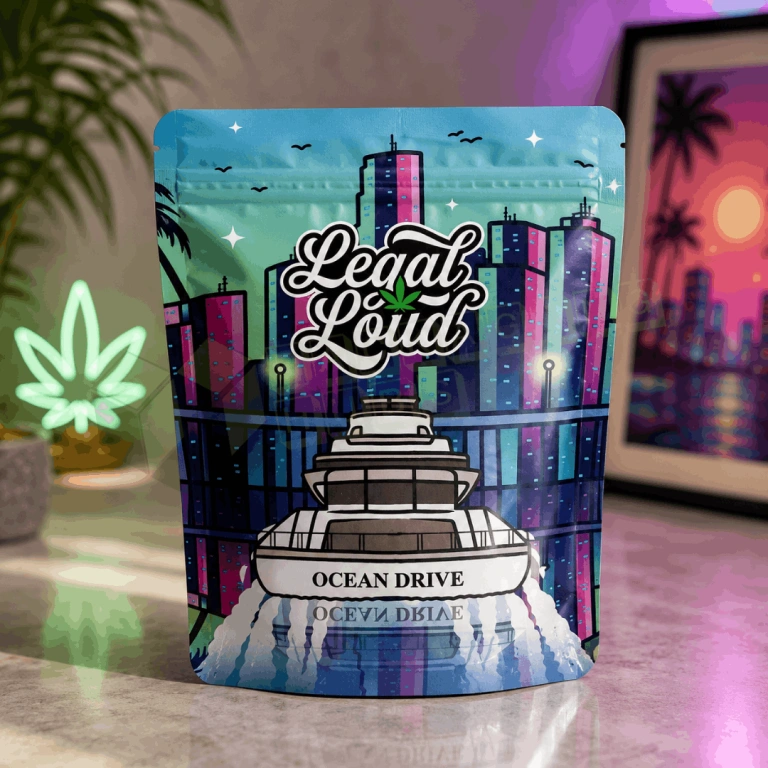
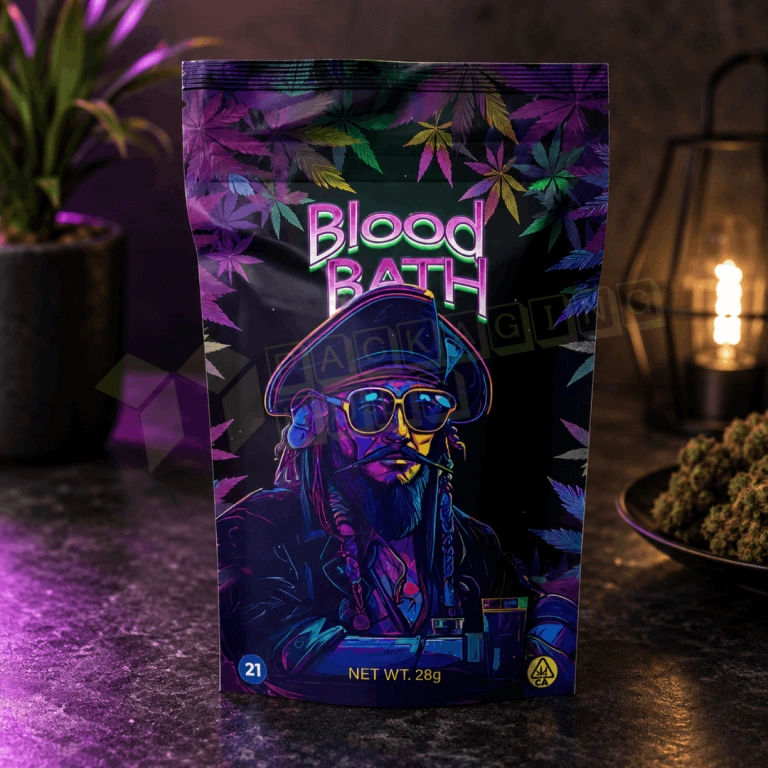
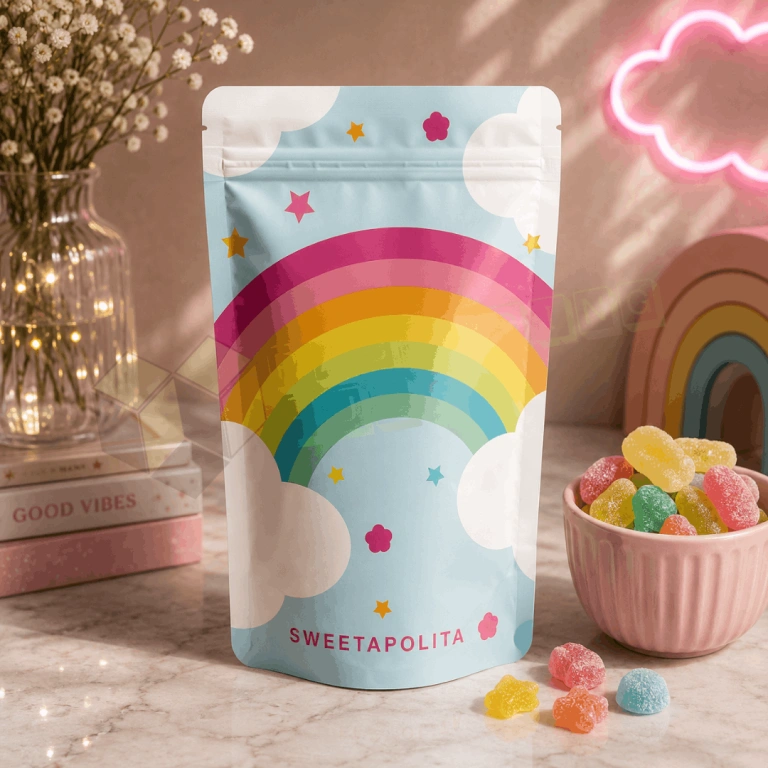
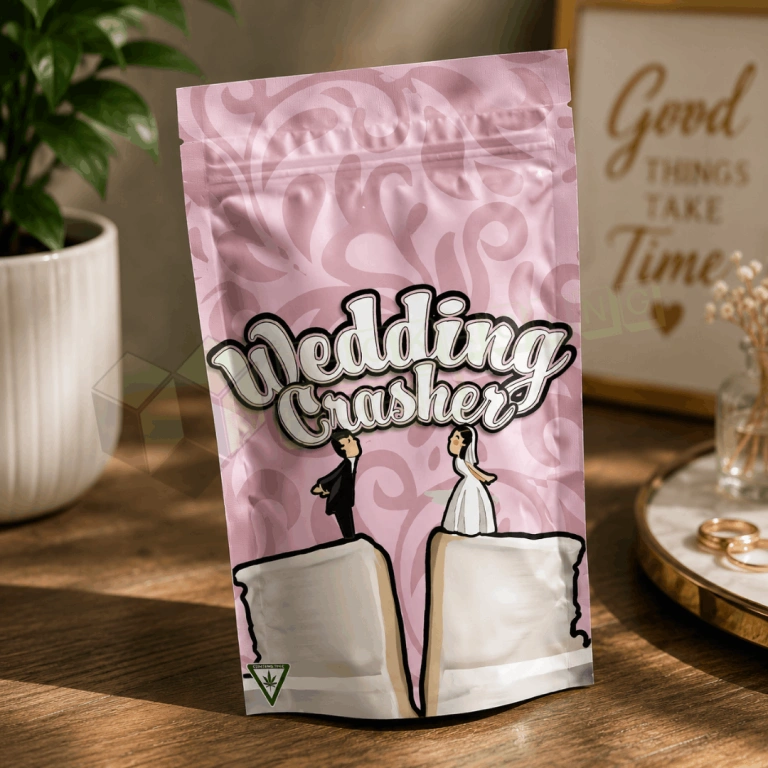
custom printed large mylar bags offer significantly more artwork area than small retail pouches, but more space does not mean every inch should contain graphics.
Large front panels can support a strong logo, product identity, ingredient photography, preparation directions, storage instructions, barcode areas, and wholesale information. However, an oversized design can become visually noisy when every available area contains a message.
Printing methods can include digital production for shorter runs or multiple artwork versions, while flexographic or rotogravure processes may become more practical as repeat quantities increase.
CMYK supports photographs, gradients, and full-color illustration. PMS or Pantone colors can help control key brand shades. RGB remains a screen-based mode and should be converted for commercial production.
Packaging Hubs provides free design services to help organize the larger panel, check resolution, control white ink, position barcodes, preserve seal zones, and build a hierarchy customers can understand from a distance.
Large Mylar Bags wholesale purchasing becomes easier when the approved structure can be reproduced consistently. Procurement teams should identify the exact dimensions, film structure, zipper, seal area, print version, finish, carton count, and handling requirements associated with the approved pack.
A small structural change can have larger consequences on a high-capacity bag. Increasing the gusset may change carton count. Changing the zipper may affect filling clearance. Switching the film can alter sealing conditions.
Packaging Hubs can maintain a defined specification for repeat programs so wholesalers, private-label businesses, and distributors do not need to rebuild the packaging decision with each order.
For buyers searching large mylar bags USA, our U.S.-focused service includes free nationwide shipping and flexible order sizes. Businesses looking for large mylar bags California or custom mylar bags Texas can also use the same national manufacturing program without creating doorway-style location variations.
Large resealable mylar bags require a zipper that suits both the opening width and the filled package. A closure that works comfortably across a small pouch may feel weak or inconvenient across a much wider bag.
Buyers should consider how frequently customers will open the pouch, whether they will pour directly from it, and whether particles could enter the zipper tracks.
For powders, grains, pet products, or bulk snacks, headspace helps keep the zipper clean. Larger consumer packs may also benefit from a grip area or handle that allows one hand to support the weight while the other operates the closure.
The pouch can still use an initial top heat seal above the zipper when a closed retail pack or tamper-evident opening is desired.
A larger pouch can contain substantially more inventory than a small pack. Therefore, a failed top seal may create a greater product loss.
The inner sealant, film thickness, seal-bar width, temperature, pressure, dwell time, and cleanliness of the closure area all affect performance. A wider bag also requires consistent sealing across a longer distance.
Businesses that need more detailed sealing guidance can review Custom Mylar Heat Seal Bags for equipment compatibility, seal-zone planning, and closure development.
Packaging Hubs can prepare samples for machine testing when needed, but buyers should validate the finished package using their own product, equipment, and operating conditions before large-scale filling.
Large coffee quantities, botanical ingredients, pet foods, spices, and other aromatic products may require more than an ordinary polyethylene bag.
Odor containment depends on the complete laminate, side seals, closure, top seal, storage duration, and repeated opening. The zipper alone cannot turn a high-capacity pouch into a verified odor barrier.
Businesses where aroma containment is the primary concern can review Custom Smell Proof Mylar Bags for a more specialized barrier direction.
Large capacity can make this issue more noticeable because every time customers open a bulk package, a greater volume of contents becomes exposed. Portioning, resealing, and storage instructions should therefore form part of the packaging decision.
large mylar storage bags are flexible, so they do not provide the same stacking structure as rigid containers. Even a strong pouch can be punctured or crushed when a heavy object lands on it or a sharp carton component repeatedly rubs against the film.
Secondary cartons should therefore fit the filled pouches without forcing them into sharp folds. Empty space should also be controlled so heavy bags do not shift excessively during transit.
For palletized B2B distribution, carton strength and stacking pattern matter just as much as the pouch itself. Packaging Hubs can help coordinate the filled pouch dimensions with secondary packaging so buyers avoid developing the two components separately.
Retail packaging is often judged from the front panel. Large B2B packaging may be judged more by how quickly employees can identify, lift, open, and store it.
Large bags can include clear lot-code areas, product names visible from several orientations, handles, simple color coding, or labels positioned for warehouse shelving.
A New York ingredient distributor may prioritize traceability and carton efficiency, while a California specialty-food brand may need both warehouse performance and attractive retail graphics. A Texas contract packer may focus first on filling speed and seal consistency.
These local references support relevant U.S. commercial intent without turning the page into a list of cities that adds no value to the buyer.
A large pouch can sometimes use less packaging material per unit of product than multiple small pouches, but that does not automatically make it environmentally preferable.
Multilayer barrier packaging can contain several polymers, coatings, inks, adhesives, or closures. The FTC says its Green Guides are intended to help marketers avoid environmental claims that mislead consumers and emphasizes substantiation of environmental marketing claims.
Therefore, Packaging Hubs can discuss reduced-material designs or alternative structures where technically suitable, but claims such as recyclable, biodegradable, compostable, or environmentally friendly should reflect the documented finished structure and relevant recovery systems.
A large pouch can save packaging steps, but mistakes can become more expensive because more product is exposed to each failure.
If a dense fill stresses the bottom, we can revise the film, seals, gusset, or carton support. If powder contaminates the top seal, the height and filling process may need adjustment. Customers cannot pour comfortably, the opening may require a different geometry. If the package becomes difficult to lift, a handle or smaller capacity may provide better usability.
Likewise, if one five-gallon package exposes more product than the customer can reasonably use after opening, multiple smaller sealed packs may provide a better solution.
Packaging Hubs treats these decisions as commercial packaging engineering rather than automatically recommending the largest available pouch.
Large Mylar Bags can be developed for bulk foods, grains, powdered ingredients, coffee, freeze-dried goods, pet products, botanical products, mushroom products, wholesale refills, and other suitable high-capacity applications.
Packaging Hubs supports extra large mylar bags, 5 gallon mylar bags, large stand up pouches, large resealable mylar bags, reinforced flat pouches, custom gussets, heat-sealed liners, handles, transparent areas, opaque barrier structures, and full custom printing.
Our zero MOQ policy allows businesses to test dimensions and structures before scaling. Free design services help develop dielines and production artwork. Flexible lead-time options support different purchasing schedules, while free shipping throughout the United States simplifies landed-cost planning.
Send the product type, filled weight, approximate volume, desired dimensions or container size, order quantity, closure, filling process, material goals, artwork, distribution method, and target delivery date.
Get a Free Quote to compare capacities, films, seals, gussets, printing methods, handles, and secondary packaging. Order Now when your specification is ready for production.
| Box Style | Large Mylar Bags |
| Dimension (L + W + H) | All Custom Sizes & Shapes |
| Quantities | No Minimum Order Required |
| Stock | Material, MOPP/VMPET/PE/BOPP/ALU, THICKNESS: 100/120/150 microns/sid |
| Printing | Digital/ Gravure |
| Finishing | Gloss/ Matt/ Spot uv |
| Included Options | Die Cutting, Gluing, Scored, Perforation |
| Additional Options | Eco-Friendly, Recycled Boxes, Biodegradable |
| Proof | Flat View, 3D Mock-up, Physical Sampling (On request) |
| Turnaround | 4 – 8 Business Days, RUSH |
| Shipping | FLAT |
Pick the stock and the finish that suit your product. We’ll confirm both on your proof before anything is printed.
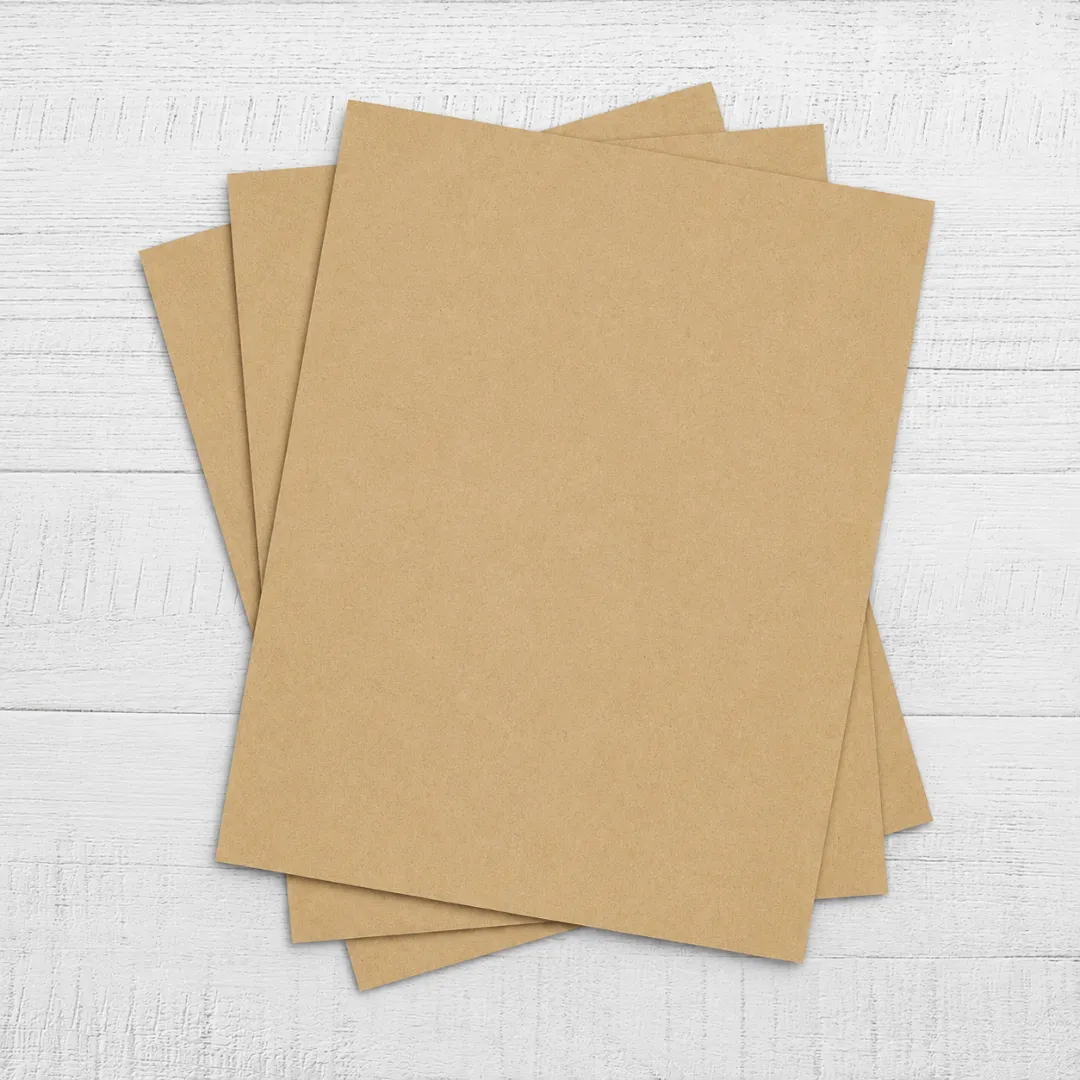
Kraft paper is a strong, durable and reliable material that is widely used across many different industries.
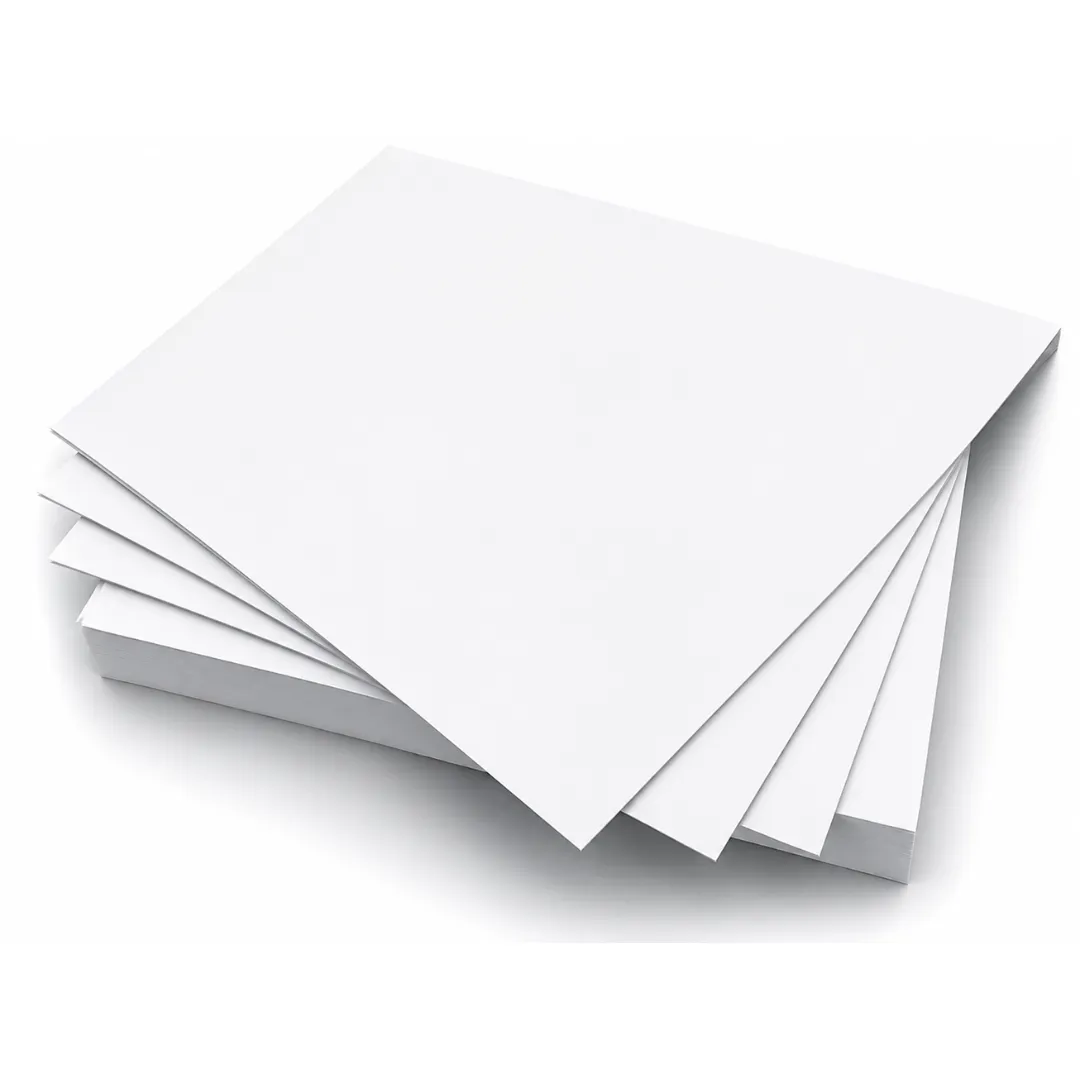
We use cardboard material with the least environmental impact and minimizes waste generation.
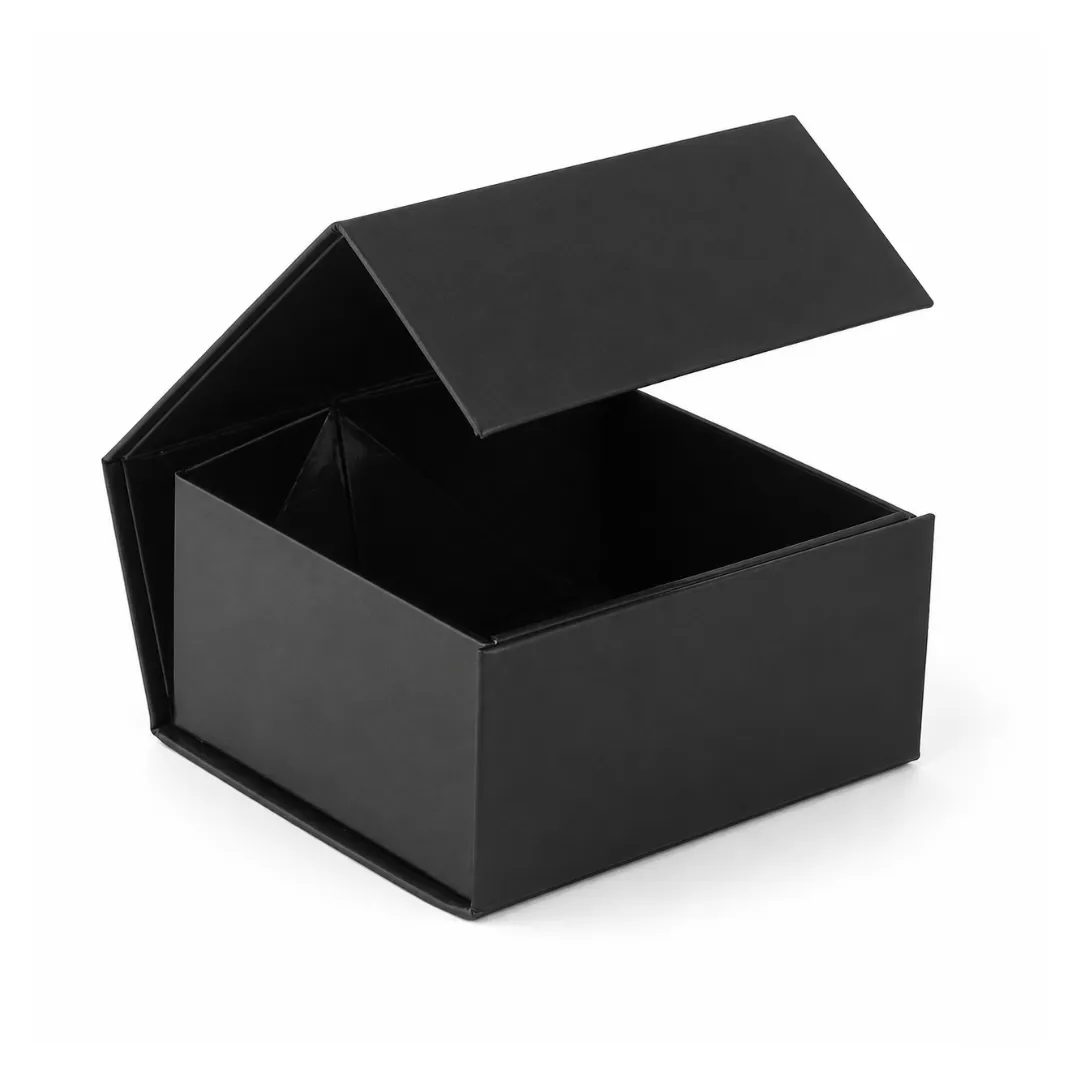
Rigid is highly protective, affordable and recyclable material. These boxes provide maximum protection.
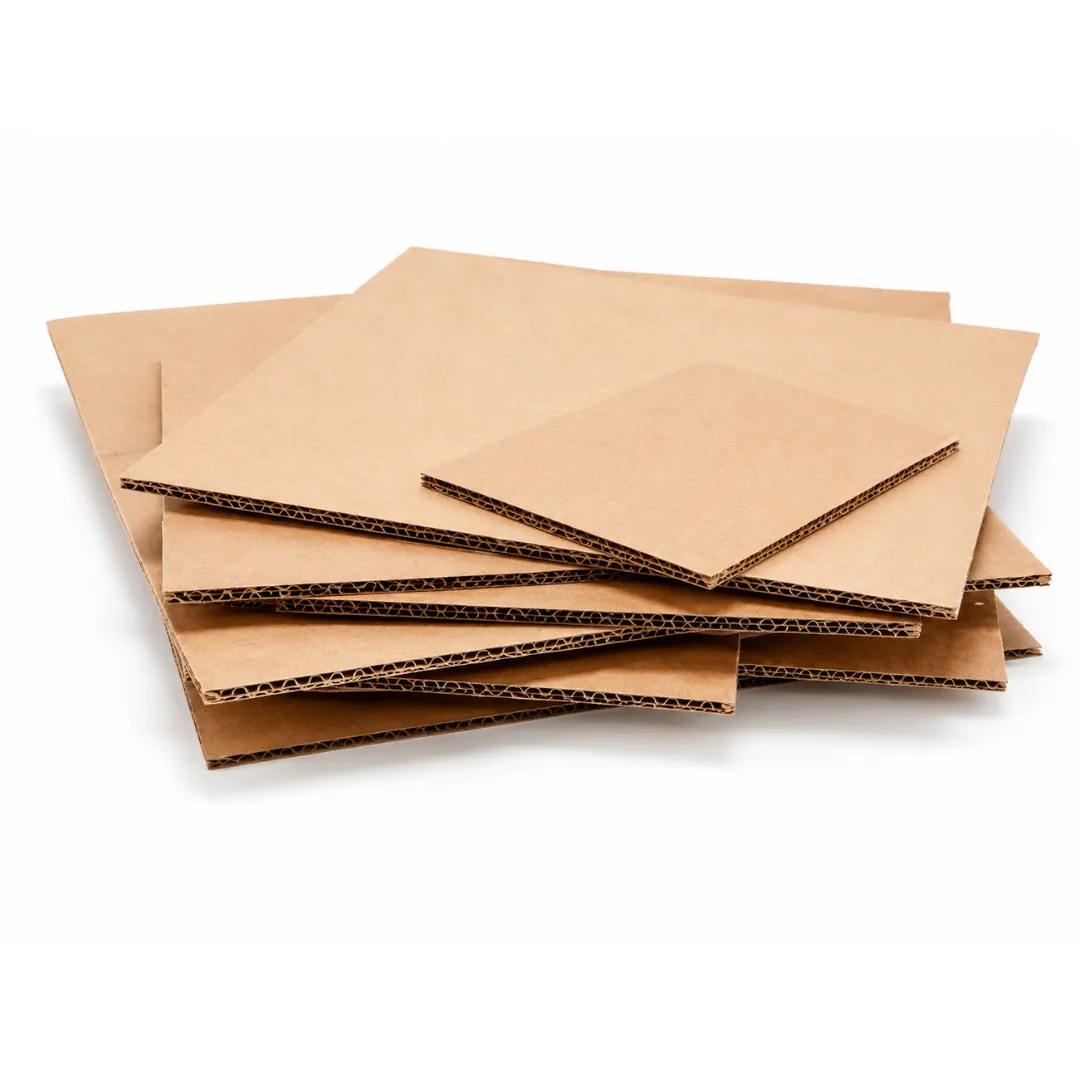
Corrugated material is easy to customize, cost effective and sustainable. It is also great for branding purposes.
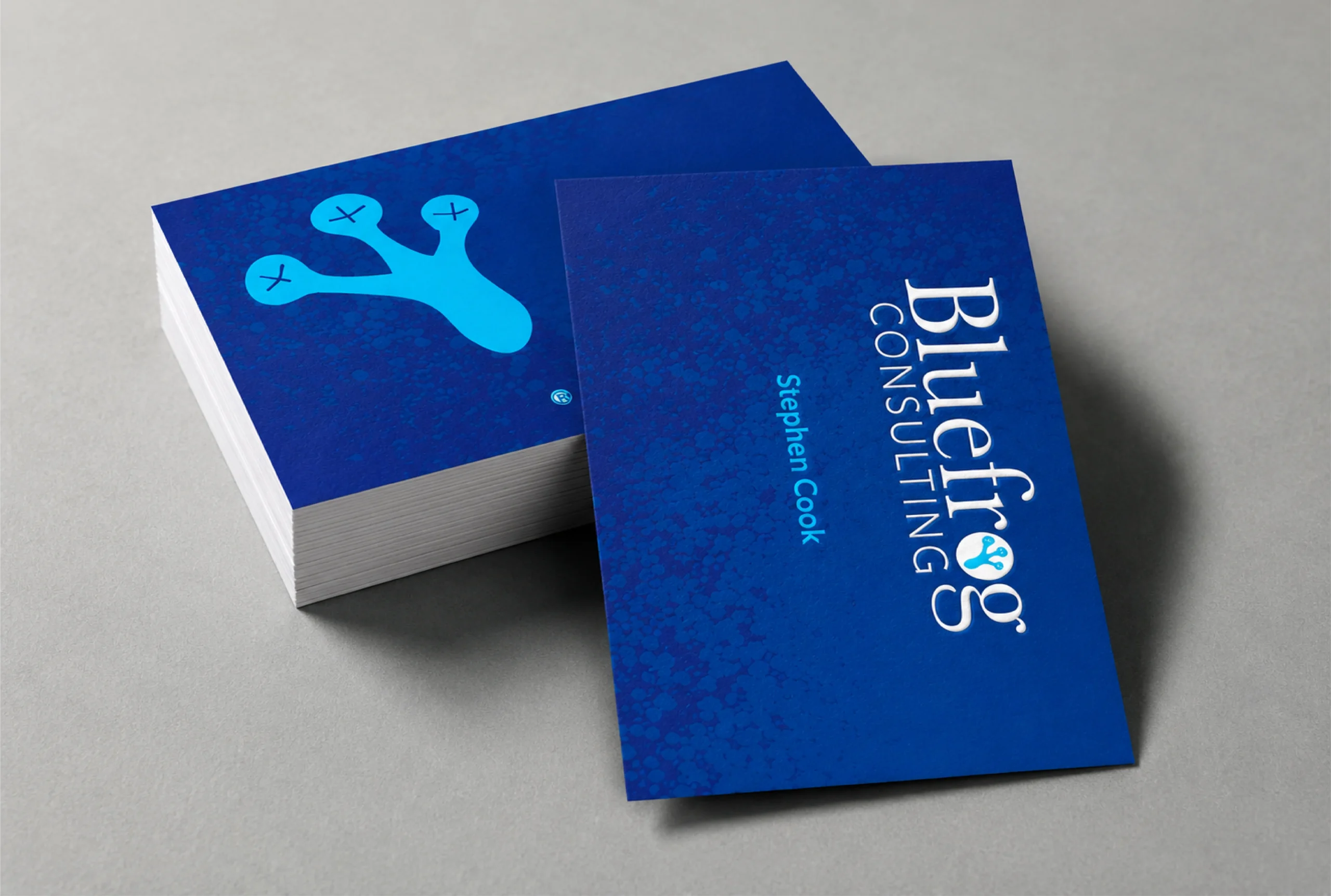
We add additional layer of protection with soft touch lamination from toner chipping.
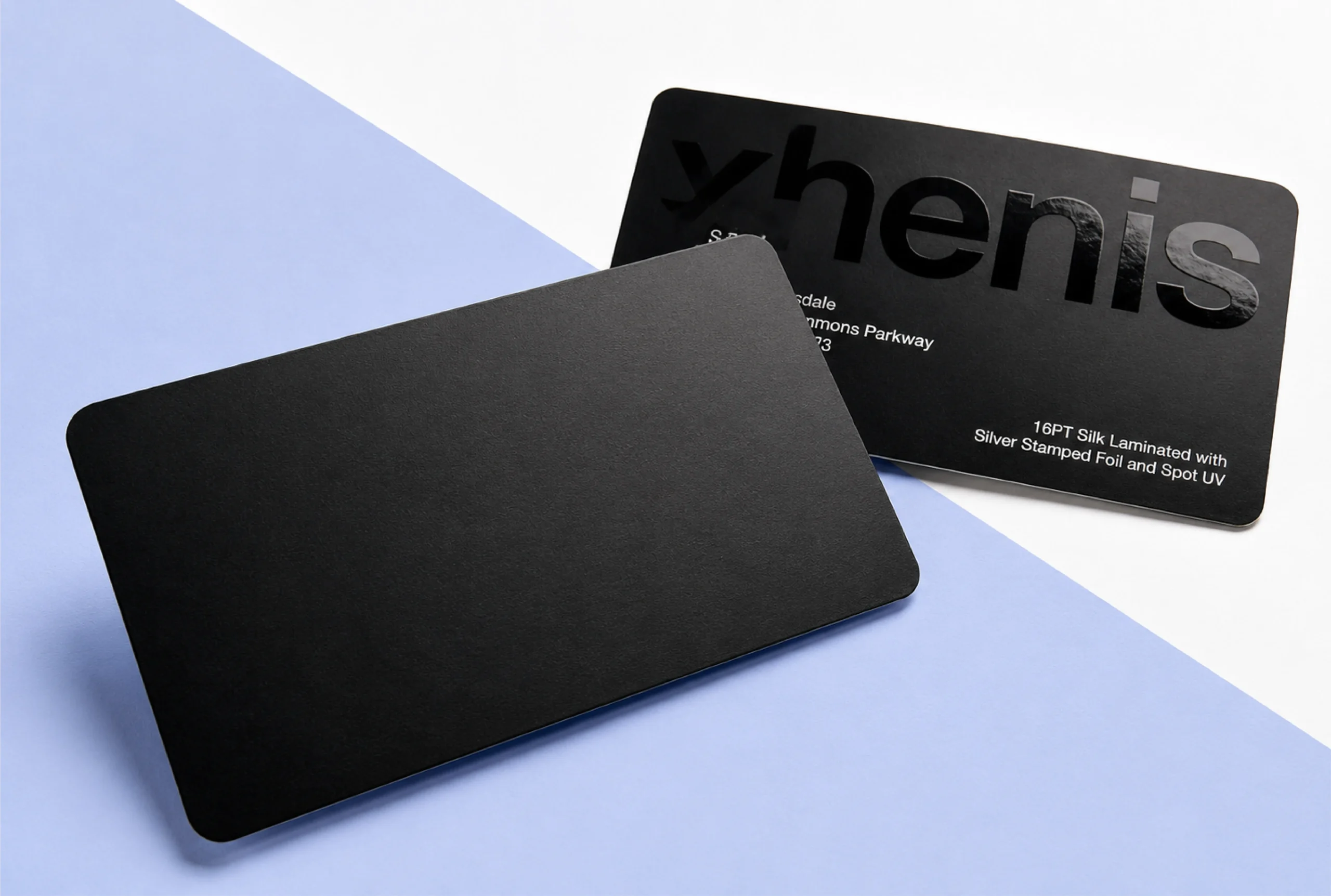
With our matte finish, fingerprints and smudges will now be less visible on the packaging.
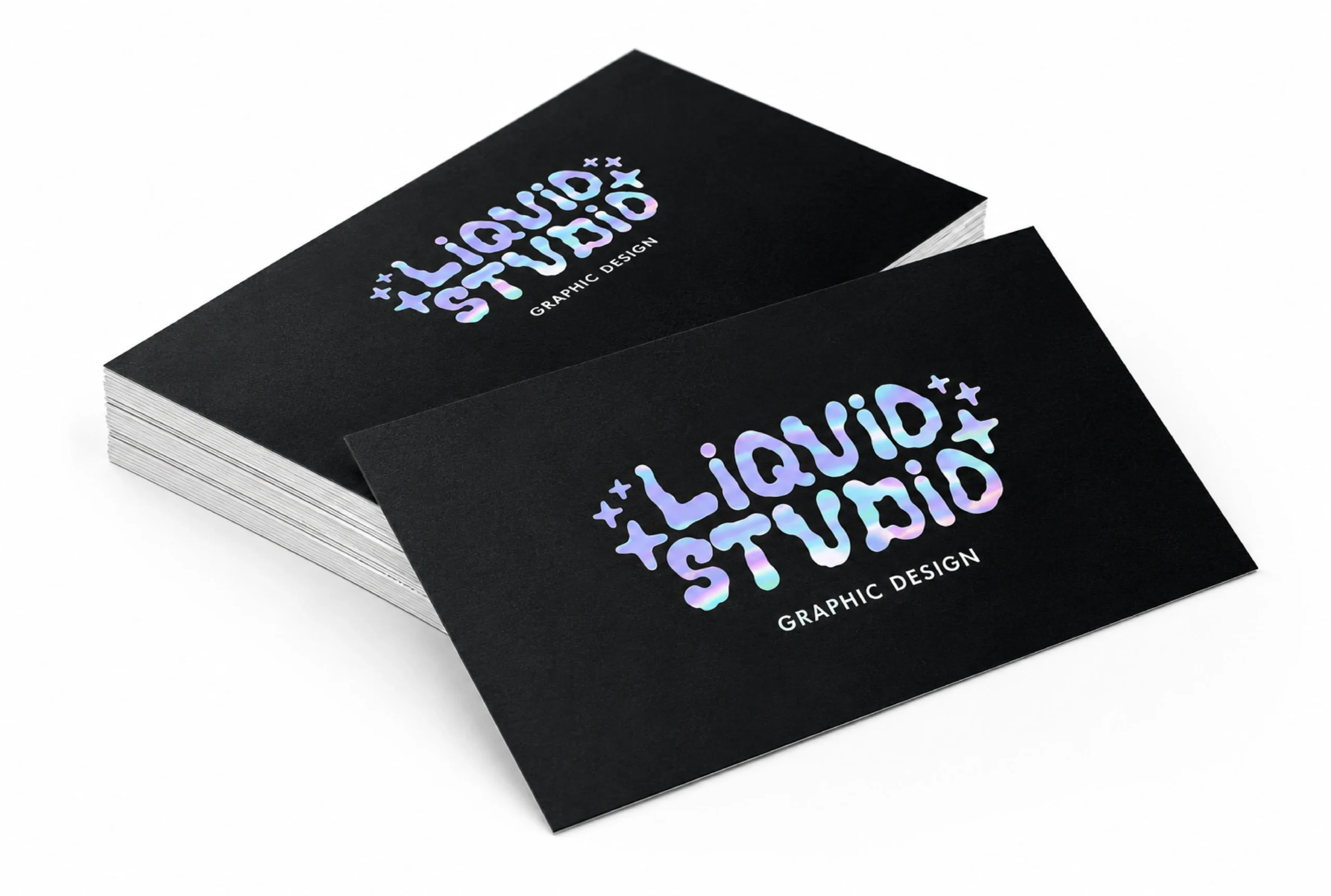
Holographic foil diffracts light and reveals the colors of the rainbow at various angles.
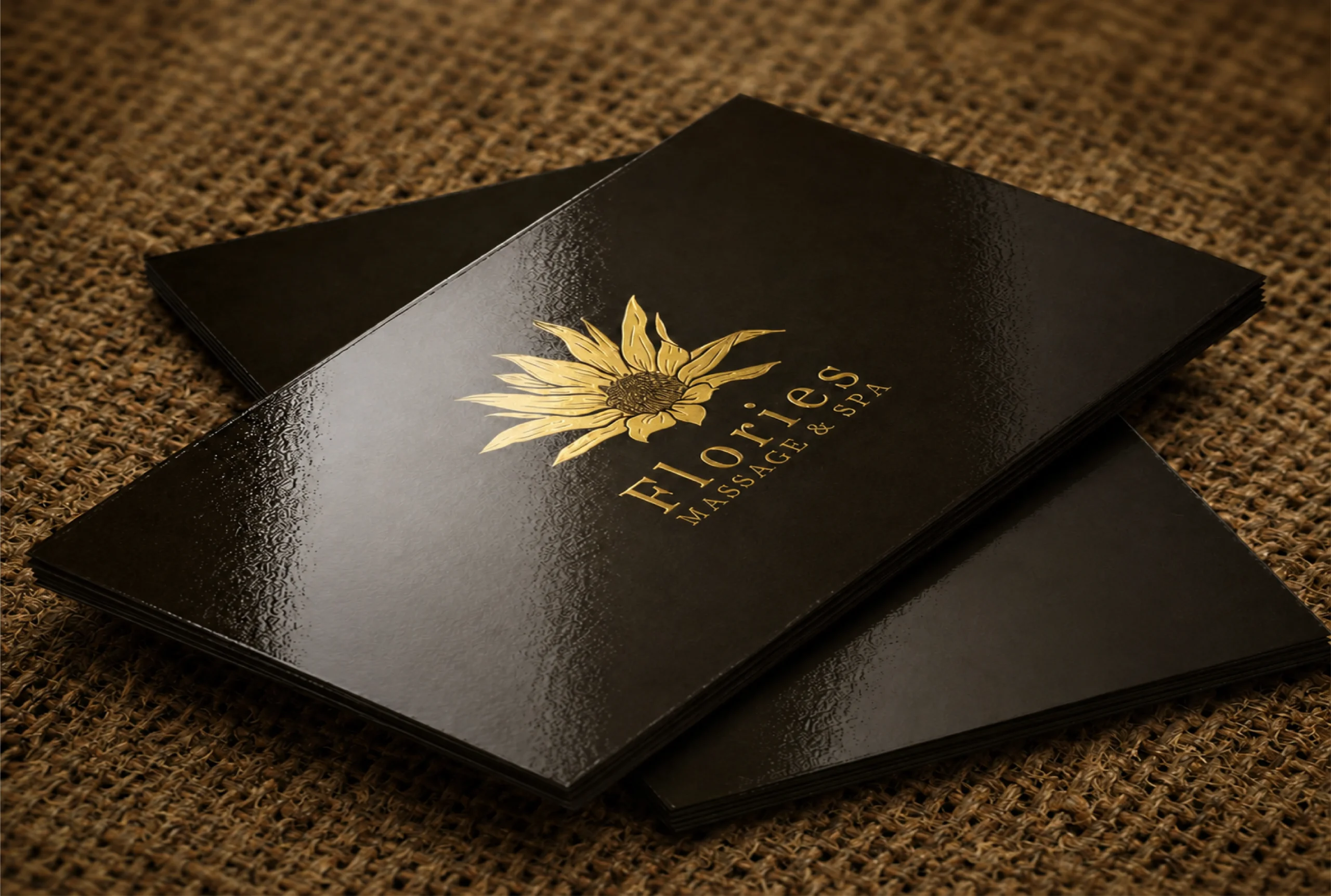
Our glossy finishing gives your packaging an extra layer of shine.
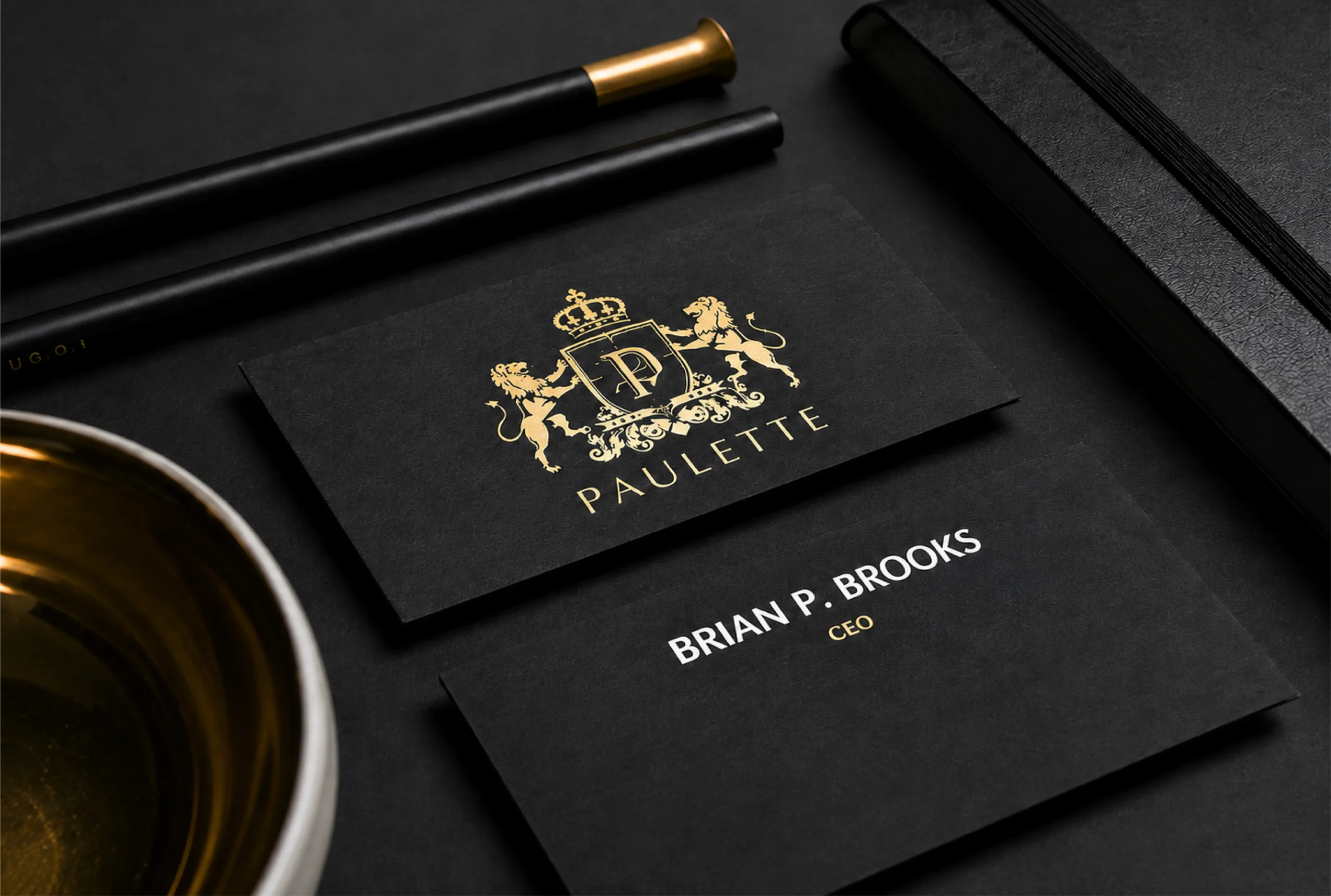
Decorate a wide range of your product packaging with our foil stamping.
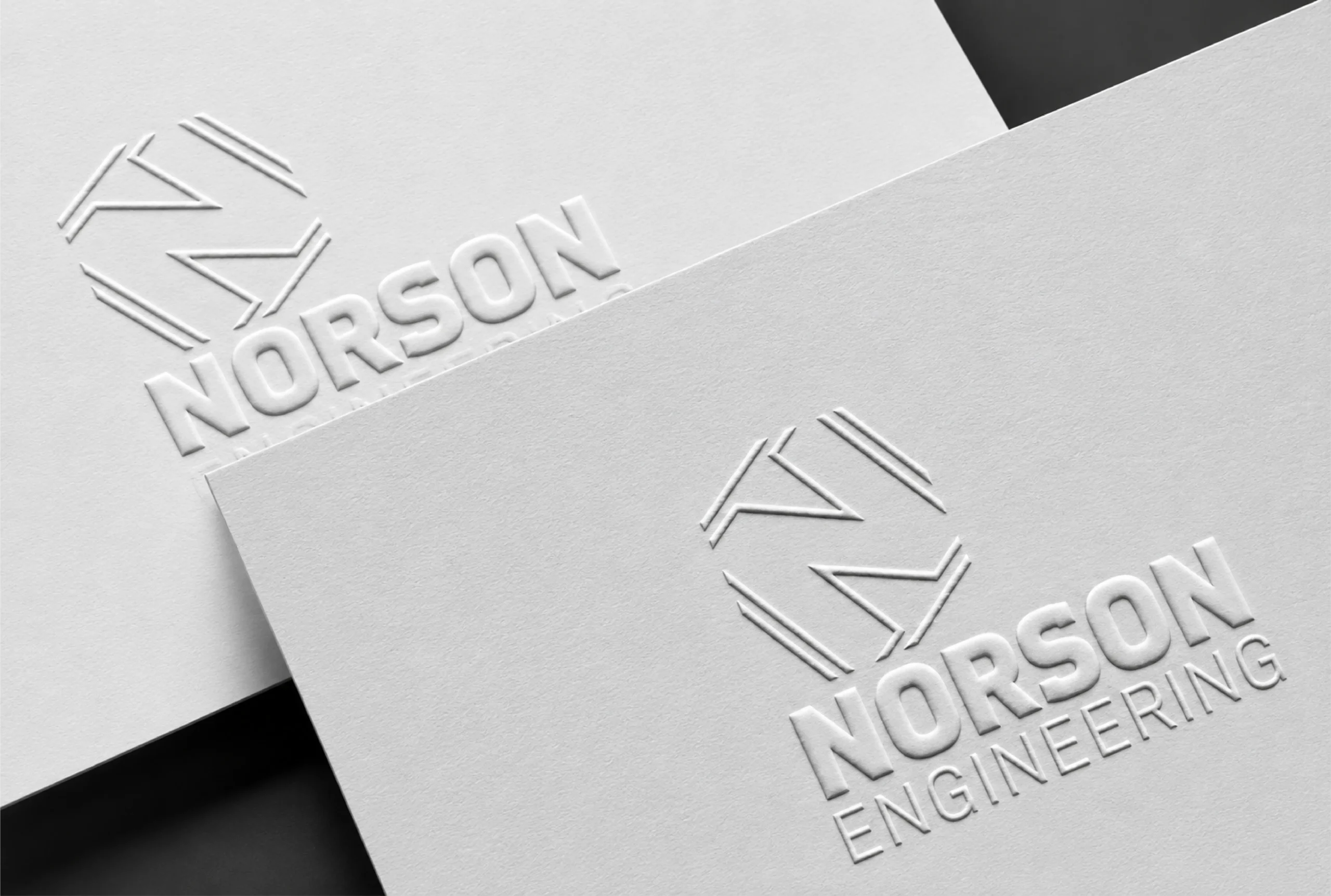
With our embossing technique, we transfer the finest details of your product on packaging.
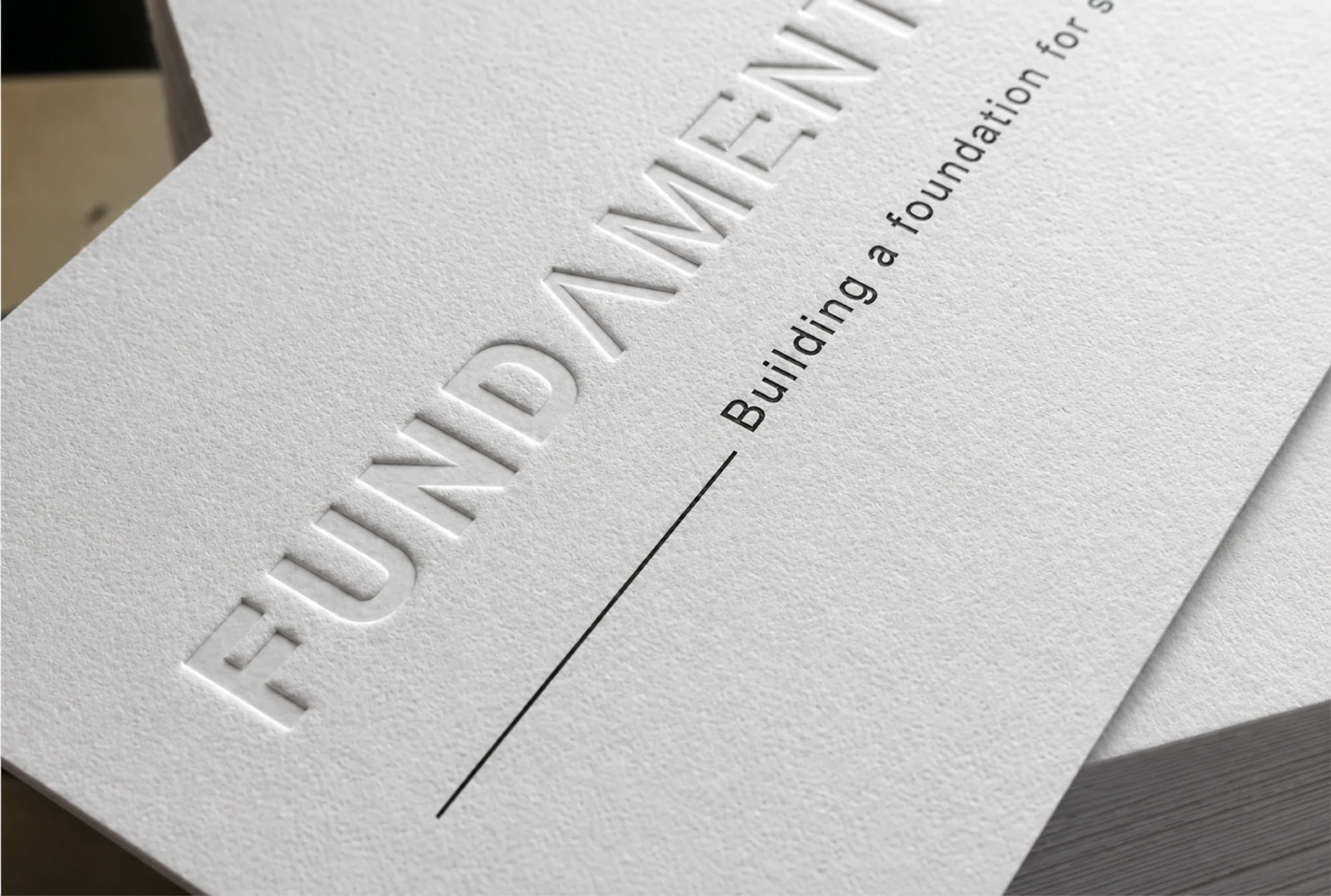
We use debossing technique to add unique graphics into your packaging.
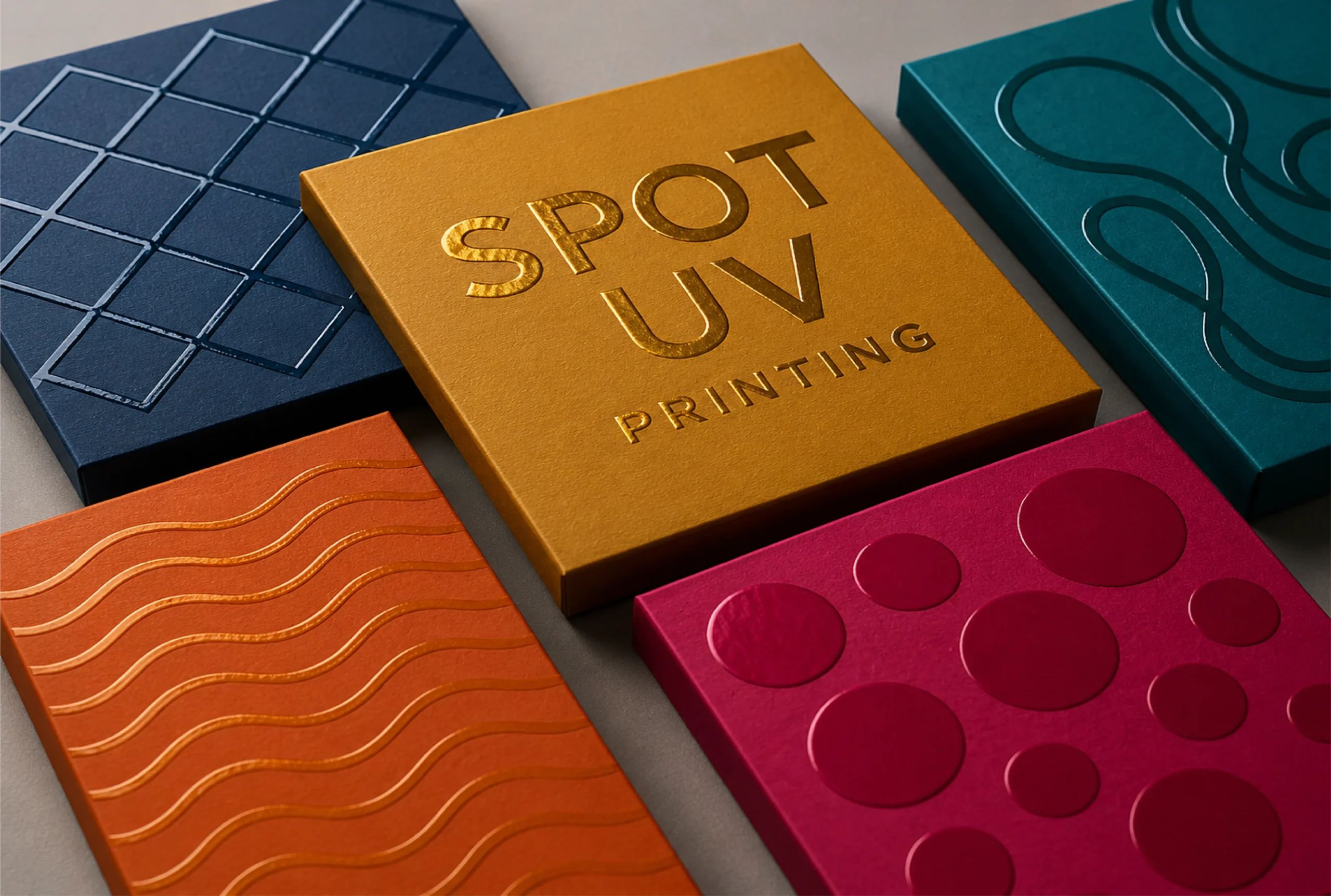
Our high-gloss UV coating gives light and shine to cure the printed material's varnish.
Still unsure? Email sales@packaginghubs.com and a packaging specialist will help.
Get your free quote today and see why Packaging Hubs is the most trusted name in U.S. custom packaging.