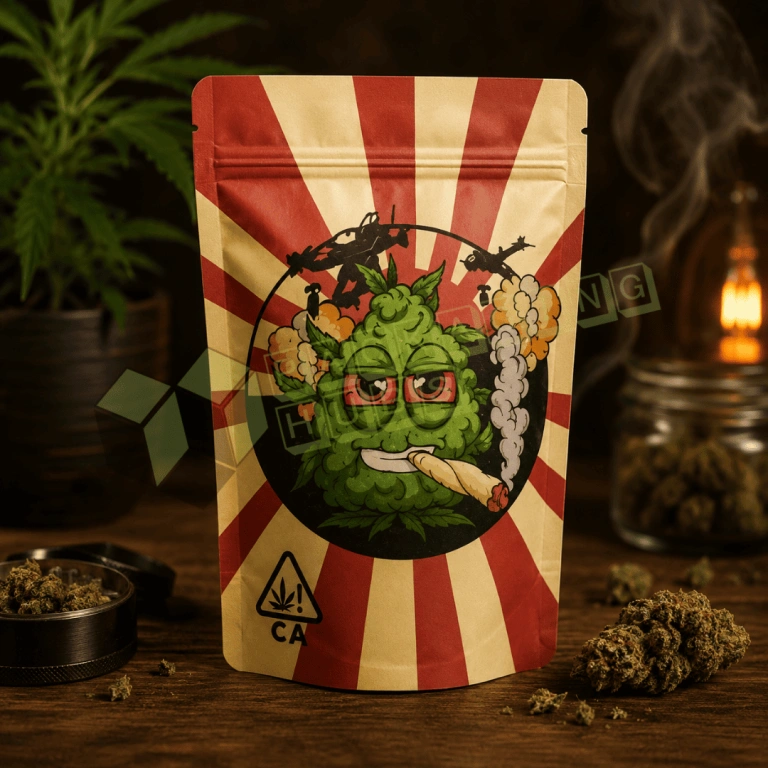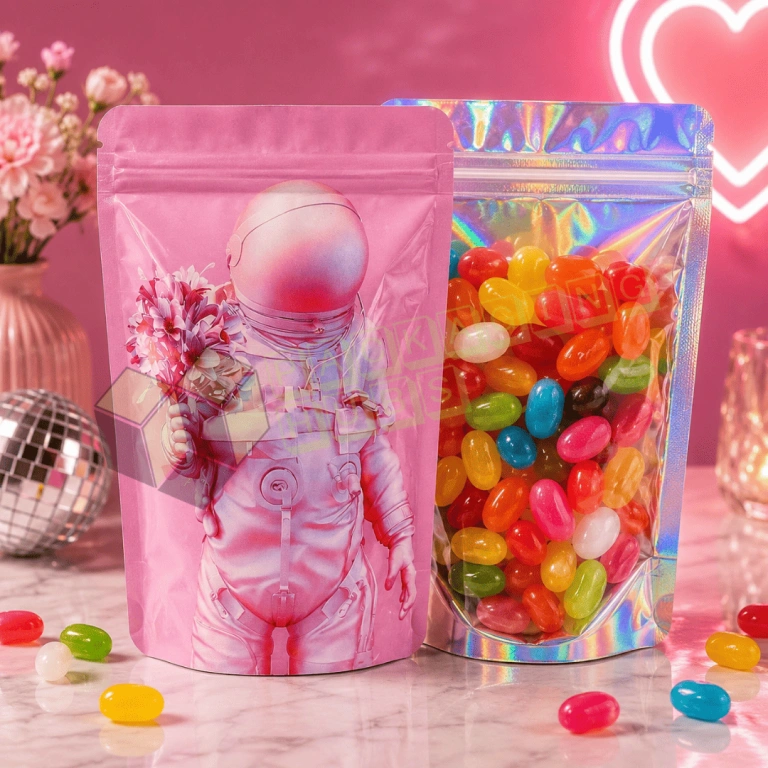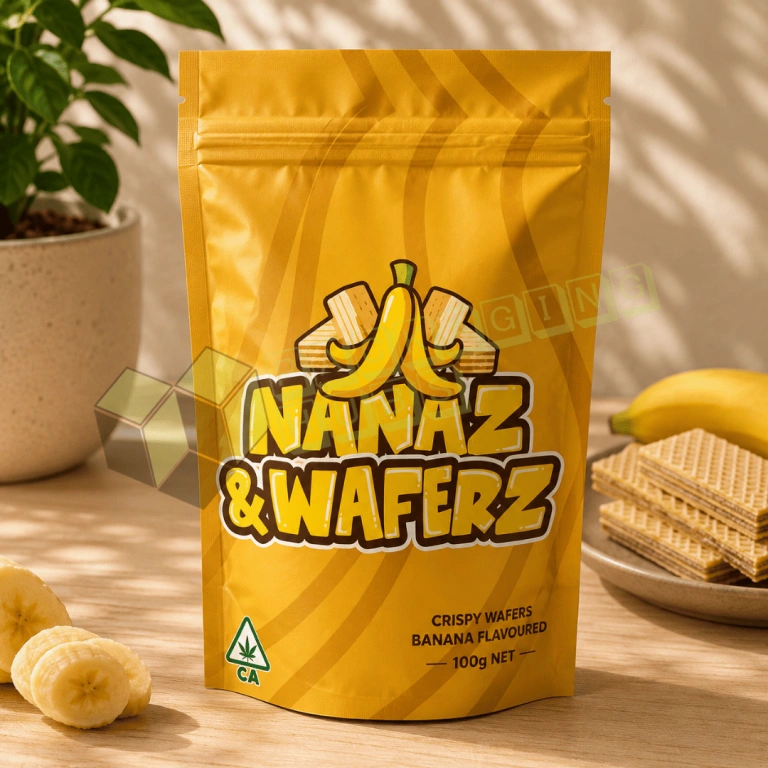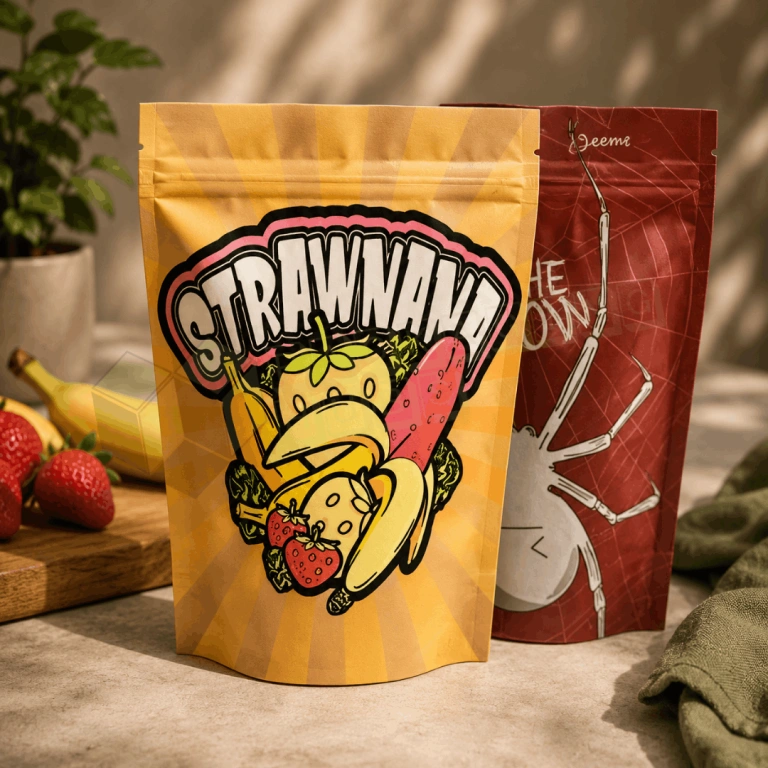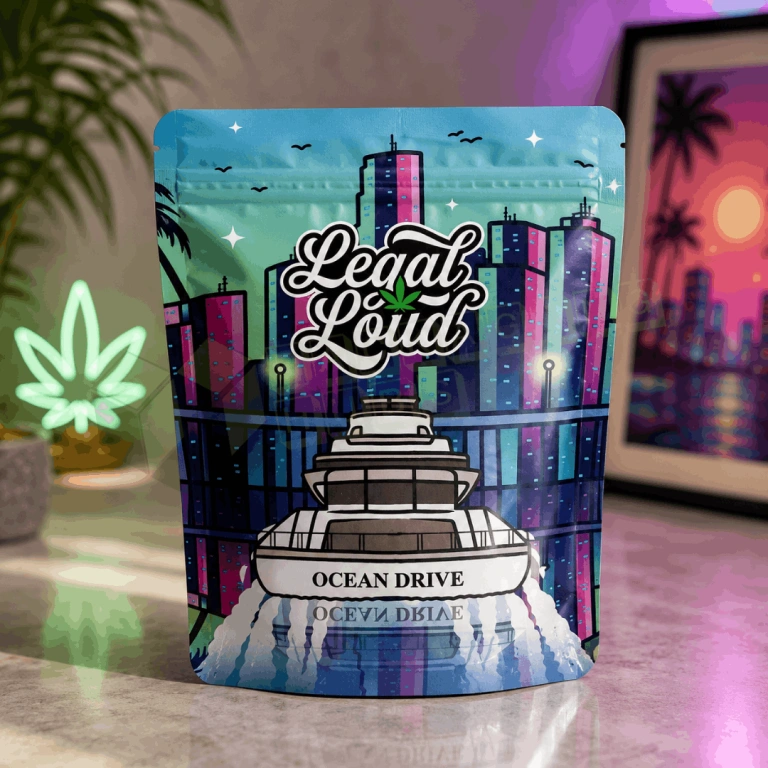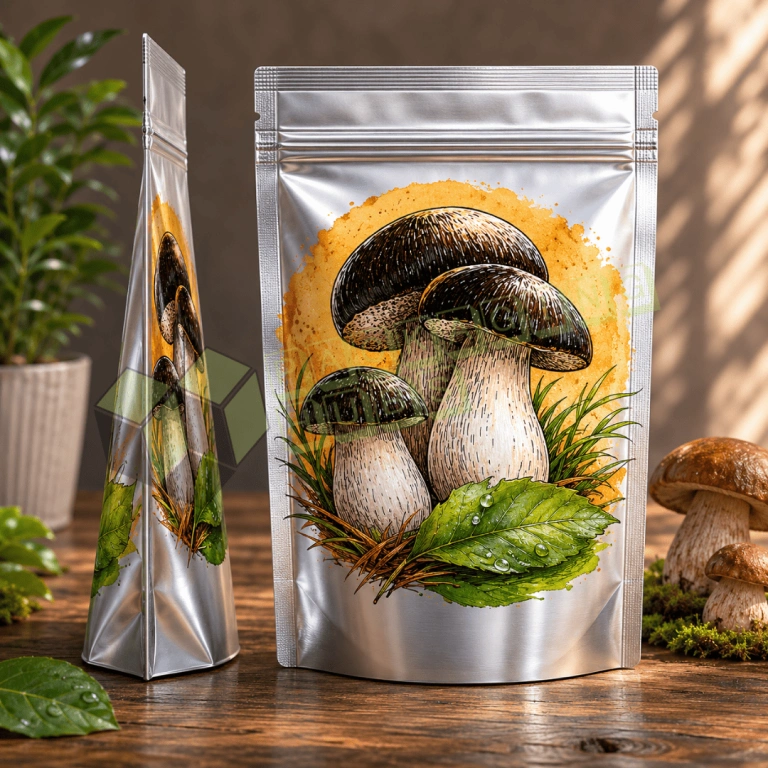
Free design support and free U.S. shipping. No minimum order.
Custom Mylar Ziplock Bags combine repeated-access convenience with product-specific barrier films, secure top sealing, custom printing, and retail-ready formats. Order with zero MOQ, free design services, flexible lead-time options, and free shipping.
Custom Mylar Ziplock Bags give food, supplement, pet-product, cosmetic, accessory, and specialty retail brands a package customers can open, press closed, and use again. Packaging Hubs develops each pouch around the product’s volume, texture, aroma, storage conditions, opening frequency, and display method. As a result, the zipper becomes part of the product experience rather than a generic feature added to a stock bag.
A California snack startup may need a short printed launch, while a Texas distributor may require several coordinated sizes for repeat supply. Our zero MOQ policy supports both situations. Moreover, free design services help prevent artwork and dieline errors, flexible lead-time options support different schedules, and free shipping throughout the United States helps businesses plan their packaging costs.
Customers judge a resealable pouch every time they use it. The opening must be easy to locate, the zipper tracks must align, and the package should close without forcing the customer to press repeatedly across the top. Therefore, Custom Mylar Ziplock Bags need enough grip area above the zipper, suitable stiffness around the opening, and a closure profile that matches the product and expected use.
Before selecting a zipper, buyers should consider how often customers will open the pouch, whether powder or crumbs may enter the tracks, and whether the product requires an initial tamper-evident heat seal. The following table explains how common closure choices affect filling, opening, and repeated use.
| Closure configuration | Best commercial use | Main customer benefit | Important design requirement |
| Press-to-close zipper | Snacks, powders, supplements, pet treats, and accessories | Familiar opening and repeated resealing | Leave enough grip area and protect the tracks from product contamination |
| Double-track zipper | Products needing stronger reclosure feedback | More noticeable engagement when customers press the tracks together | Match the zipper stiffness to the pouch size and user group |
| Slider zipper | Larger pouches and products opened frequently | Faster, more intuitive closing across a wide opening | Reserve space for the slider and confirm it will not interfere with filling |
| Zipper plus heat-sealed header | Retail foods, supplements, and tamper-sensitive products | Initial sealed protection with reuse after opening | Position the tear notch above the zipper and maintain a clean heat-seal zone |
| Specialized safety zipper | Selected regulated or safety-sensitive products | Controlled access when supported by the correct tested system | Confirm testing, instructions, and regulatory requirements before production |
This comparison shows that the zipper cannot be selected separately from the pouch. A small sample pack may not need a bulky slider, while a wide family-size bag may frustrate customers with a narrow single track. Packaging Hubs reviews the opening width, filled product, user group, and sealing process before recommending the closure.
A resealable closure supports customer convenience after opening. However, it does not automatically create tamper evidence or a permanent first closure. Brands commonly add a heat-sealed header above the zipper so the product reaches the buyer in a closed package. The customer removes the top strip at the tear notch and then uses the zipper during later access.
The filling team must keep powder, crumbs, oil, or product pieces away from both the zipper and top seal. Otherwise, the package may become difficult to close or develop weak areas in the heat seal. We can adjust headspace, zipper position, and seal width around the filling method.
We also avoid describing every standard zipper as airtight, leakproof, smell proof, or child resistant. Those claims depend on the full laminate, closure design, seals, product, and validated performance.
When the pouch will contact food, the inner film, adhesives, inks, coatings, and other components should suit the specific product and conditions of use. The FDA’s food-packaging information explains that packaging substances may require authorization according to their intended food-contact application.
Therefore, we do not rely on the vague statement that an entire finished pouch is simply “FDA approved.” Instead, Packaging Hubs can develop a food-contact structure around the food type, filling temperature, oils, acidity, storage plan, and required documentation. The responsible food business should then validate the filled and sealed package under its actual processing and distribution conditions.
Custom Mylar Ziplock Bags usually use laminated films because printing, stiffness, barrier protection, puncture resistance, and heat sealing require different material properties. The outer layer supports graphics and normal handling. Meanwhile, a middle layer may control light, moisture, oxygen, or aroma transmission, and the inner layer forms the product-contact and sealing surface.
The next table explains common material directions and the tradeoffs buyers should consider before choosing a structure.
| Material direction | Primary role | Suitable product direction | Practical limitation |
| PET or BOPET outer film | Supports printing, structure, and abrasion resistance | Branded snacks, supplements, cosmetics, and retail goods | It normally requires another layer for heat sealing |
| Metallized PET | Improves opacity and barrier performance | Coffee, dried foods, powders, and aroma-sensitive goods | The metallic base can affect printed colors without white ink |
| Aluminum foil laminate | Provides a stronger barrier for demanding applications | Selected long-storage, freeze-dried, or highly sensitive dry products | It prevents visibility, costs more, and can show creases |
| PE or LLDPE inner layer | Creates the flexible product-contact and sealing surface | Zippered and heat-sealed pouches | The grade must match the product and sealing conditions |
| CPP inner layer | Supports sealing and selected clarity or stiffness needs | Confectionery, snacks, and specialty retail structures | Performance depends on the complete laminate |
| Clear barrier film | Allows direct product visibility | Colorful foods, accessories, samples, and attractive ingredients | Transparent areas usually provide less light protection |
The correct construction depends on what the customer places inside the package. Sharp products may need greater puncture resistance, while oily products may require a different inner sealant. Likewise, a visually attractive snack may benefit from transparency, while a light-sensitive product may need a fully opaque structure. Packaging Hubs balances performance, appearance, and cost rather than treating film thickness as the only measure of quality.
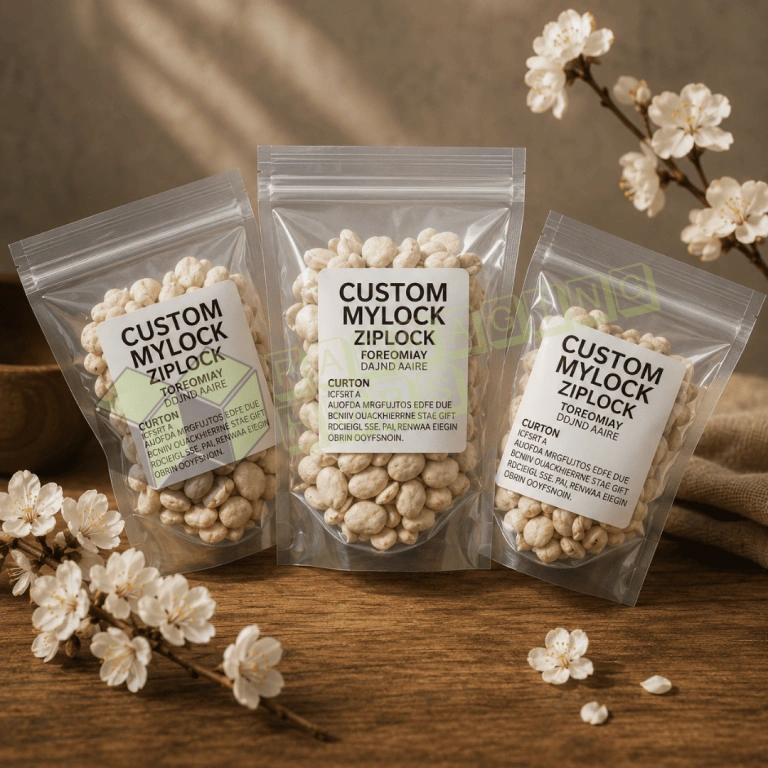
A clear stand up pouch can help customers inspect color, texture, size, and fill level before purchase. This format works well for candy, dried fruit, bakery items, accessories, craft products, and other goods whose appearance strengthens buying confidence.
However, transparency changes the performance and artwork plan. Clear areas reduce light blockage and leave less room for printed information. In addition, inconsistent product color, breakage, or settling becomes visible. A brand may choose a fully clear front, a controlled window, or a clear panel combined with an opaque back.
Our team can position the visible area away from zipper tracks, gusset folds, barcodes, and required text. This creates a cleaner presentation while protecting the functional parts of the pouch.
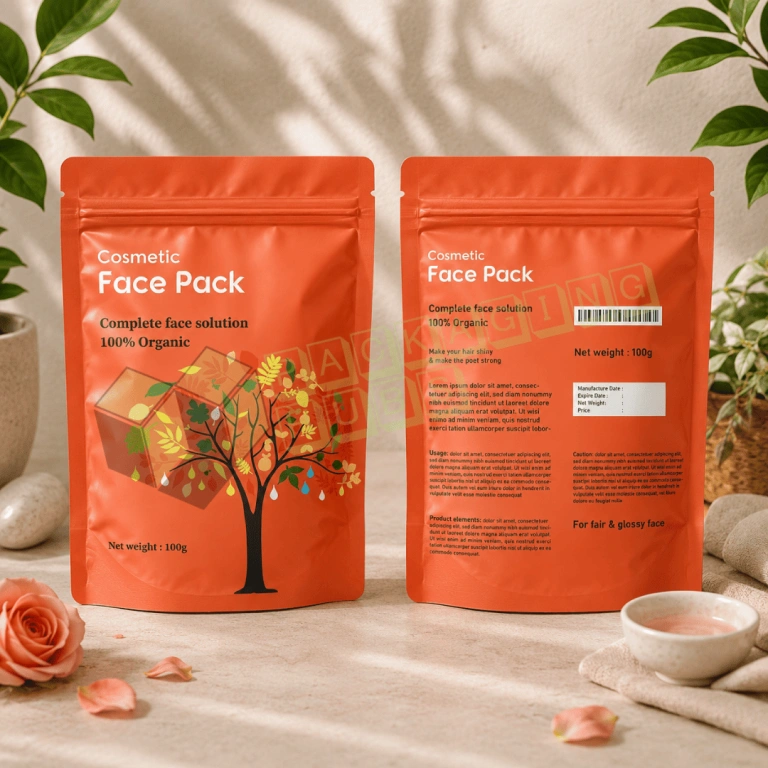
A stand pouch bag uses a bottom gusset that expands as the product enters the package. The gusset gives the pouch a broader base and allows it to remain upright when the fill weight and dimensions are balanced correctly.
This structure supports coffee, tea, snacks, supplements, pet treats, powders, and multi-use retail goods. However, a gusset that is too deep may make the pouch look underfilled, while a shallow gusset may create an unstable or tightly packed result. The zipper also needs enough distance from the product so customers can open and close it cleanly.
A Florida retailer may prioritize shelf visibility, while an Illinois eCommerce brand may focus on efficient carton packing. We adjust the footprint, height, and gusset around the dominant sales channel.
stock stand up pouches can help businesses test a product quickly, but fixed dimensions, generic film, limited closure choices, and applied labels may become restrictive as sales grow. A stock pouch may leave too much empty space, provide insufficient artwork area, or use a zipper that does not match the product.
Custom production allows the brand to control the width, height, gusset, film, print coverage, opening method, and finish. It can also reduce manual labeling and create a consistent appearance across several SKUs.
Packaging Hubs can start with the buyer’s existing stock format, identify what works, and redesign only the elements that create waste, filling problems, or weak shelf presentation.
Custom Mylar Ziplock Bags should fit both the initial fill and the way customers use the contents afterward. Weight alone cannot determine dimensions because a dense powder, lightweight snack, rigid accessory, and bulky pet treat can occupy different volumes at the same weight.
Before finalizing a dieline, buyers should review the product’s density, settling, headspace, gusset expansion, opening width, and required information. The following table provides practical starting directions rather than fixed universal sizes.
| Pouch direction | Common starting dimensions | Typical use | Main sizing priority |
| Sample or single-use pack | 3.5 x 5 to 4 x 6 inches | Samples, spices, accessories, and trial portions | Keep enough top space for the zipper and initial seal |
| Small retail pack | 4 x 6 to 5 x 8 inches | Candy, supplements, powders, and compact snacks | Prevent the product from entering the zipper tracks |
| Medium stand-up pack | 6 x 9 to 7 x 10 inches | Coffee, tea, pet treats, and multi-serving foods | Balance shelf footprint with repeated-access convenience |
| Large refill pack | 8 x 12 inches and above | Family sizes, bulk refills, and wholesale products | Increase film strength, zipper size, and seal width with filled weight |
| Custom shaped format | Developed from samples or exact fill data | Unusual products, kits, and promotional launches | Protect usable volume while preserving zipper and seal zones |
These ranges give buyers a starting point, but they do not replace fill testing. A large pouch with too little product can look weak, while a narrow opening can slow production. Our team can prepare custom dimensions from product samples, measurements, or controlled fill data so the final package supports filling, shelf display, and customer reuse.
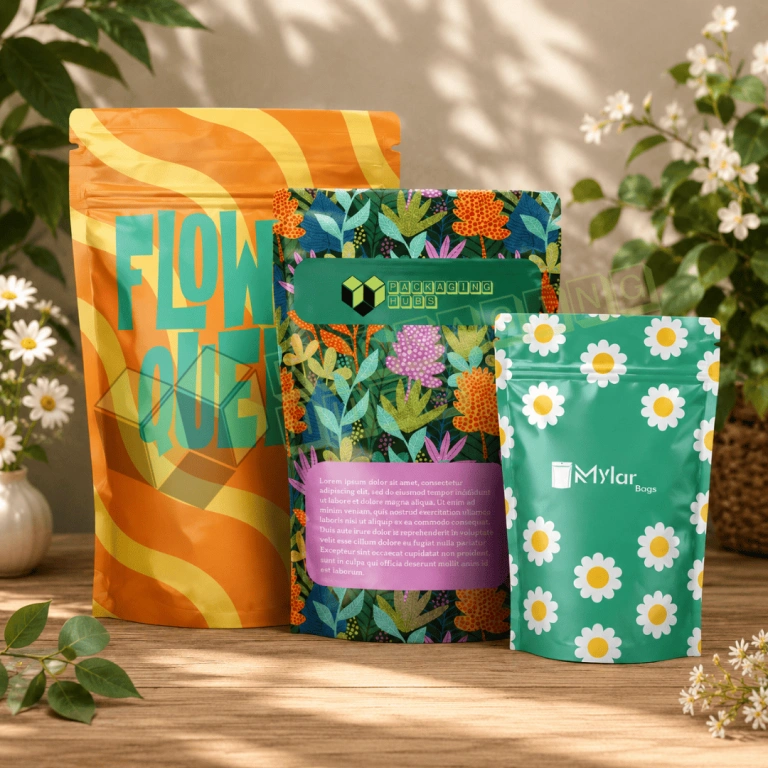
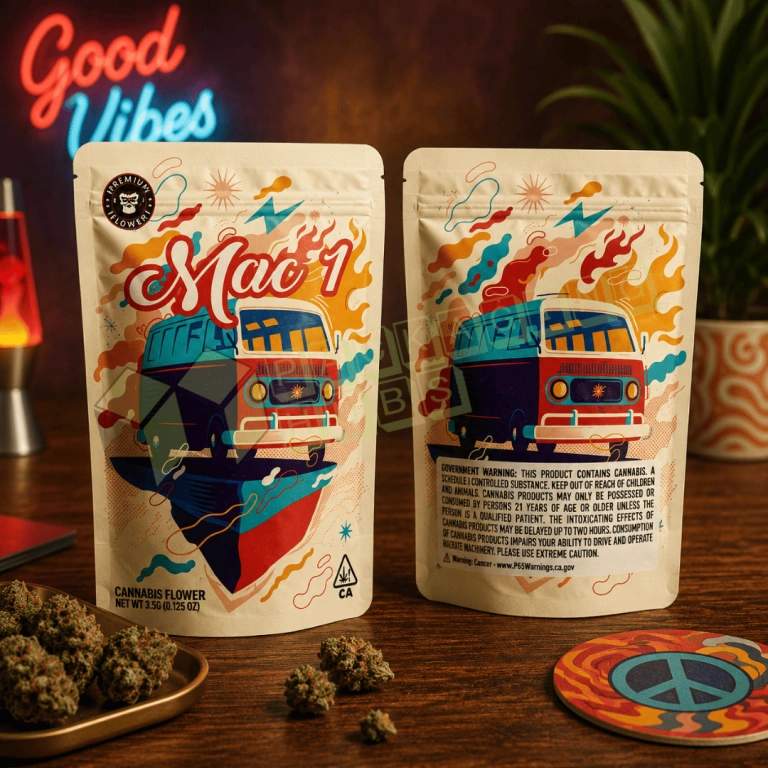
Custom Mylar Ziplock Bags can carry product names, flavor systems, directions, ingredients, barcodes, warnings, lot-code areas, and brand storytelling. Digital printing often suits short runs, regional tests, seasonal artwork, and several versions. Flexographic printing can support efficient repeat production, while rotogravure may fit substantial volumes that need highly consistent graphics.
Brands searching for printable mylar bags should also consider the film beneath the ink. CMYK supports photographs, gradients, and illustrations. PMS or Pantone colors can improve control over a critical brand shade. RGB remains a screen color mode, so designers should convert files and review how bright colors change before production.
Packaging Hubs provides free design services for dielines, bleed, image resolution, outlined fonts, white ink, barcode contrast, and zipper clearance. Therefore, the artwork fits the manufactured pouch rather than merely looking attractive on a flat screen.
A successful mylar bag design should remain readable while the pouch is flat, filled, held, opened, and resealed. Important text should not disappear into the top seal, zipper channel, gusset, or severe product folds. Likewise, the customer needs enough unprinted grip space to pull the opening apart comfortably.
Designers can use a stable logo position and information grid across several sizes. Then, color fields, illustrations, and product names can change by flavor or SKU. This approach strengthens recognition without making every pouch identical.
A physical sample gives buyers the clearest view of how the design behaves after filling. It can reveal distortion, awkward hand placement, or zipper interference that a digital proof cannot show.
Brands that want a coordinated visual system can explore Designer Mylar Bags for premium graphics, controlled finishes, and product-family planning. This direction works well when the zipper pouch belongs to a broader collection of flavors, scents, sizes, or seasonal releases.
The design system can standardize logo placement, typography, barcode areas, and information hierarchy while allowing each product to retain its own visual identity. Consequently, future SKUs can join the range without requiring a complete packaging redesign.
mylar bags with box can combine a flexible resealable pouch with the structure and communication area of a printed carton. The inner bag supports storage after opening, while the outer box can improve stacking, gifting, instructions, and unboxing.
This format suits subscription kits, promotional launches, premium foods, supplement systems, cosmetics, and products sold with accessories. The carton may also protect the pouch from abrasion and control movement during shipping.
Packaging Hubs can coordinate the two dielines, colors, finishes, and opening sequence. As a result, customers receive one planned presentation rather than a pouch and carton that appear unrelated.
A mylar bag with box can give one flagship item more shelf presence without forcing every product into rigid packaging. The pouch handles repeated access and much of the barrier function, while the carton carries detailed instructions, storytelling, or premium paper finishes.
The components need a controlled fit. Too much space allows movement and scuffing, while an overly tight carton may distort the zipper or gusset. We size the filled pouch and box together and can add a paperboard insert when the product requires better alignment.
This coordinated format can support high-value launches in New York, gift programs in Georgia, and direct-to-consumer kits shipped nationwide.
A zipper helps customers close the opening, but aroma control depends on the laminate, side seals, top seal, zipper profile, storage environment, and repeated use. Brands with strong-smelling products can review Custom Smell Proof Mylar Bags for a more barrier-focused direction.
The phrase “smell proof” should not function as an unsupported absolute promise. Packaging Hubs can specify stronger barrier layers and suitable closure options, while the buyer tests the filled package under expected storage and use conditions.
Brands choosing between full transparency and an opaque print surface can compare Clear and White Mylar Bags. Clear film reveals the product, while white film creates a controlled base for color, privacy, and detailed artwork.
A combined design can use a white printed panel with a custom clear window. This gives customers product visibility without sacrificing the entire front panel to transparency. The right choice depends on light sensitivity, branding, fill consistency, and retail strategy.
Businesses launching character-based products, limited editions, gift items, or unusual accessories can consider Die Cut Mylar Bags for a silhouette beyond the standard rectangle.
However, the custom outline must leave enough room for the zipper, top seal, gusset, artwork, and product. Narrow points can reduce capacity or create difficult seal areas. Therefore, we refine the shape around production and customer handling rather than approving a decorative outline that performs poorly.
A normal press-to-close zipper does not qualify as child-resistant simply because a young child may find it difficult to open. Products covered by special-packaging rules need a package that meets the applicable test and final configuration requirements. The U.S. Consumer Product Safety Commission’s Guide to Special Packaging explains that special packaging must be significantly difficult for children under five to open while remaining usable for normal adults.
Therefore, regulated businesses should provide the required protocol, closure type, instructions, and test documentation before production. We can manufacture an agreed safety structure, but we do not present a standard zipper as automatic compliance.
Resealability can help customers close a package after opening, but it does not automatically make the pouch reusable, recyclable, biodegradable, or environmentally preferable. Many high-barrier bags combine several films, inks, adhesives, zippers, and coatings that local recovery programs may not accept.
The Federal Trade Commission’s Green Guides summary advises businesses to support environmental claims and qualify recyclable statements when access to suitable facilities remains limited.
We can discuss reduced-material or mono-material directions where they suit the product. However, the final marketing language should match the documented structure and the recovery options available where customers will discard the package.
Many resealable-package failures begin with the relationship between the product, zipper, dimensions, and filling method. Before selecting decorative finishes, buyers should identify which failure would create the greatest cost or customer frustration.
The following table connects common pain points to practical pouch decisions and commercial outcomes.
| Customer problem | Packaging response | Commercial outcome |
| Customers struggle to reopen the pouch | Add suitable grip space, opening stiffness, and a zipper matched to the width | Easier use and a better repeat-purchase experience |
| Powder or crumbs block the tracks | Increase headspace and improve filling control | More reliable reclosing and fewer complaints |
| The pouch arrives without tamper evidence | Add a heat-sealed header and tear notch above the zipper | Clear initial closure before customer use |
| A stock size looks empty or compressed | Develop dimensions from actual fill volume | Stronger shelf presentation and lower material waste |
| The bag falls over after opening | Adjust the bottom gusset, footprint, and fill distribution | Better shelf and pantry stability |
| Artwork enters the closure area | Use a production dieline and prepress review | Cleaner manufacturing and clearer branding |
| High minimums make launches risky | Use zero MOQ and suitable short-run printing | Easier tests, regional launches, and seasonal editions |
| Separate pouch and carton vendors create fit issues | Coordinate both components under one project | Better alignment and simpler purchasing |
This table shows that zipper performance depends on more than the closure profile. Product particles, opening width, pouch stiffness, gusset balance, and artwork placement all influence the customer experience. Packaging Hubs reviews these factors together so the final package supports filling, retail display, repeated use, and brand presentation.
Custom Mylar Ziplock Bags are available in flat, stand-up, gusseted, transparent, opaque, printed, shaped, and coordinated carton formats. Packaging Hubs serves startups, small businesses, retailers, contract packers, wholesalers, and established B2B brands across the United States while also supporting worldwide custom packaging projects.
Our zero MOQ policy supports samples and controlled launches, while scalable production supports recurring commercial supply. Free design services help prepare dielines and artwork. In addition, flexible lead-time options support urgent, standard, and planned orders, while free U.S. shipping simplifies landed-cost planning.
Send the product type, fill weight, desired dimensions, order quantity, zipper preference, film needs, artwork, finish, compliance requirements, and delivery target. Our team will review the information and recommend a practical production direction.
Order Now to begin your project, or Get a Free Quote to compare materials, sizes, zipper systems, printing methods, and finishes.
| Box Style | Custom Mylar Ziplock Bags |
| Dimension (L + W + H) | All Custom Sizes & Shapes |
| Quantities | No Minimum Order Required |
| Stock | Material, MOPP/VMPET/PE/BOPP/ALU, THICKNESS: 100/120/150 microns/sid |
| Printing | Digital/ Gravure |
| Finishing | Gloss/ Matt/ Spot uv |
| Included Options | Die Cutting, Gluing, Scored, Perforation |
| Additional Options | Eco-Friendly, Recycled Boxes, Biodegradable |
| Proof | Flat View, 3D Mock-up, Physical Sampling (On request) |
| Turnaround | 4 – 8 Business Days, RUSH |
| Shipping | FLAT |
Pick the stock and the finish that suit your product. We’ll confirm both on your proof before anything is printed.
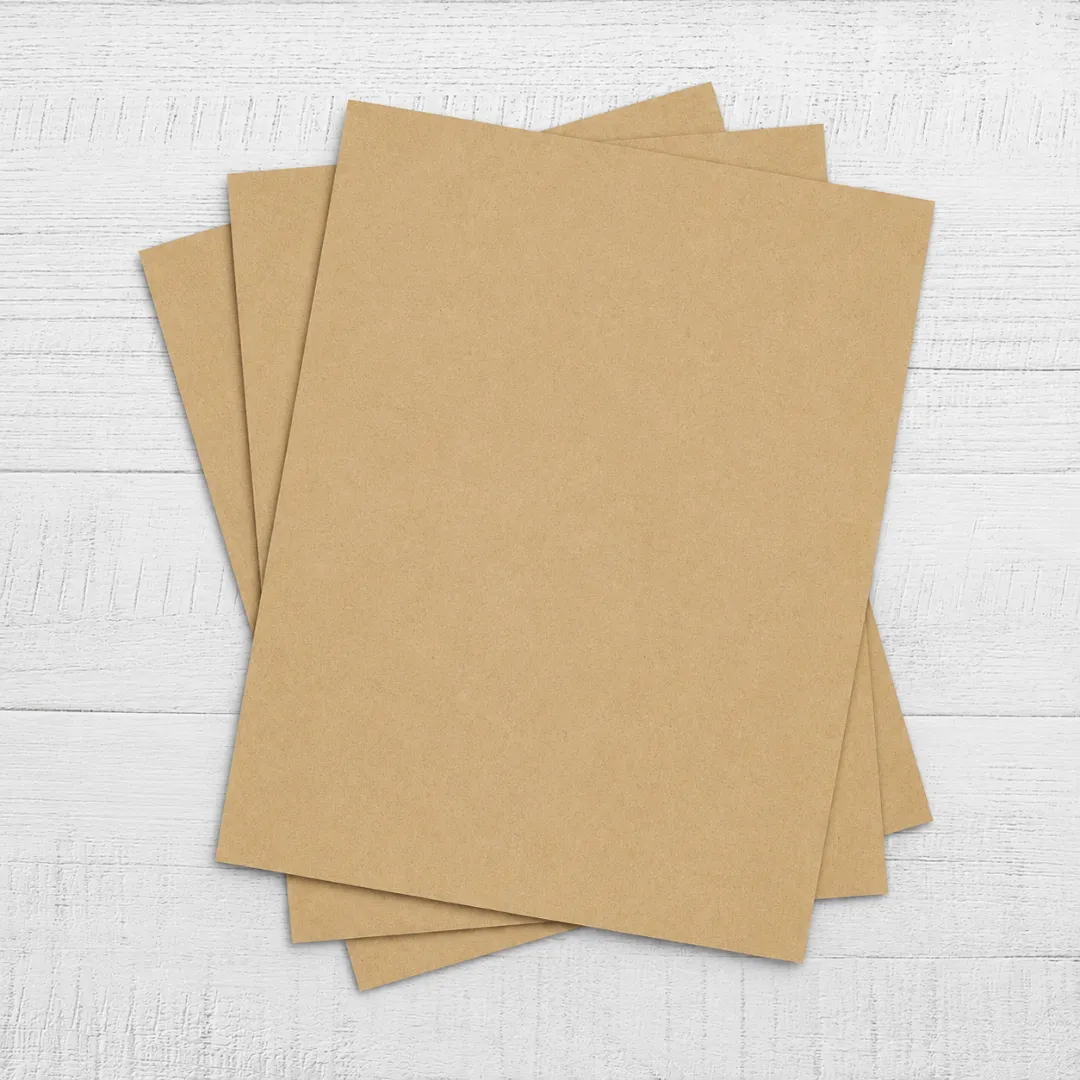
Kraft paper is a strong, durable and reliable material that is widely used across many different industries.
We use cardboard material with the least environmental impact and minimizes waste generation.
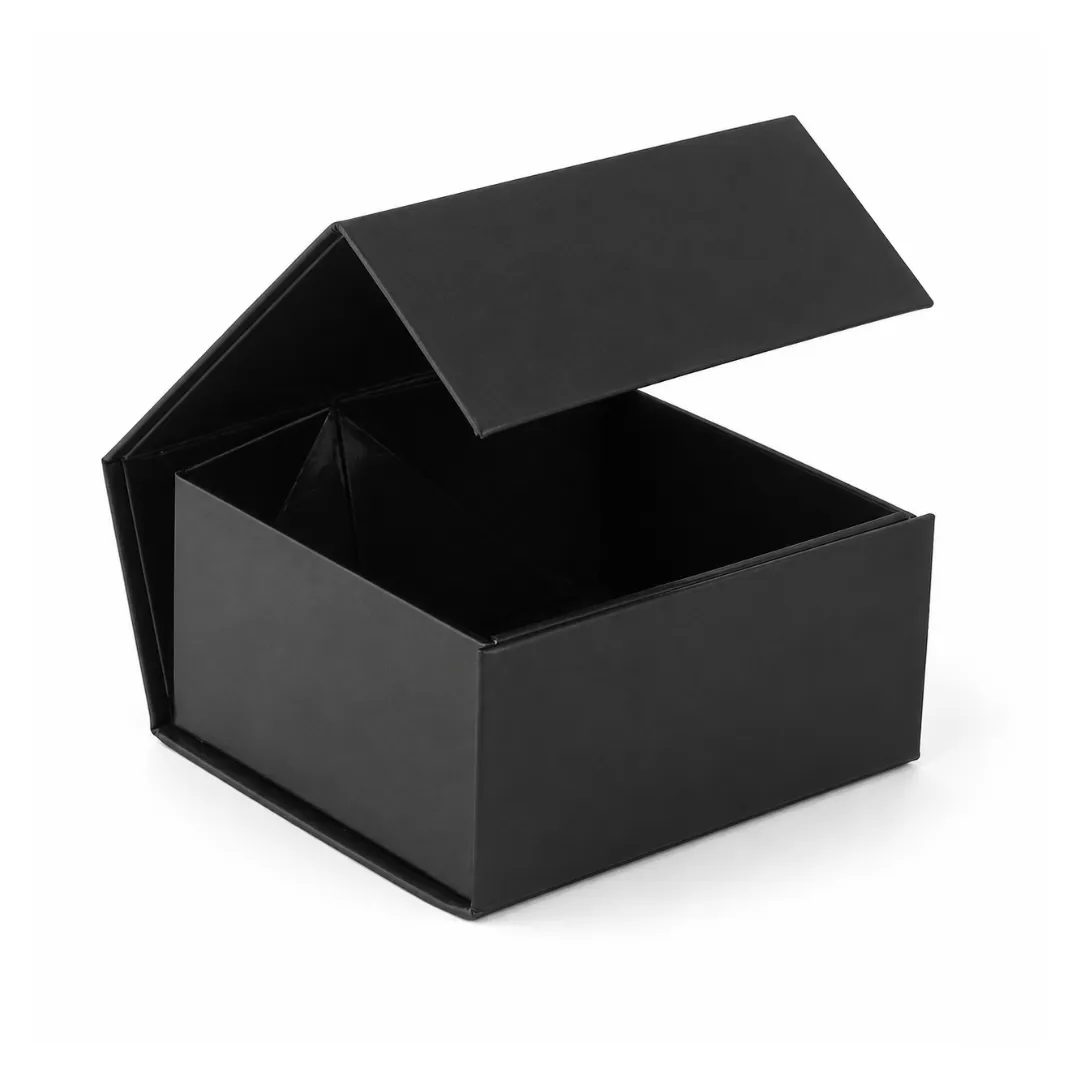
Rigid is highly protective, affordable and recyclable material. These boxes provide maximum protection.
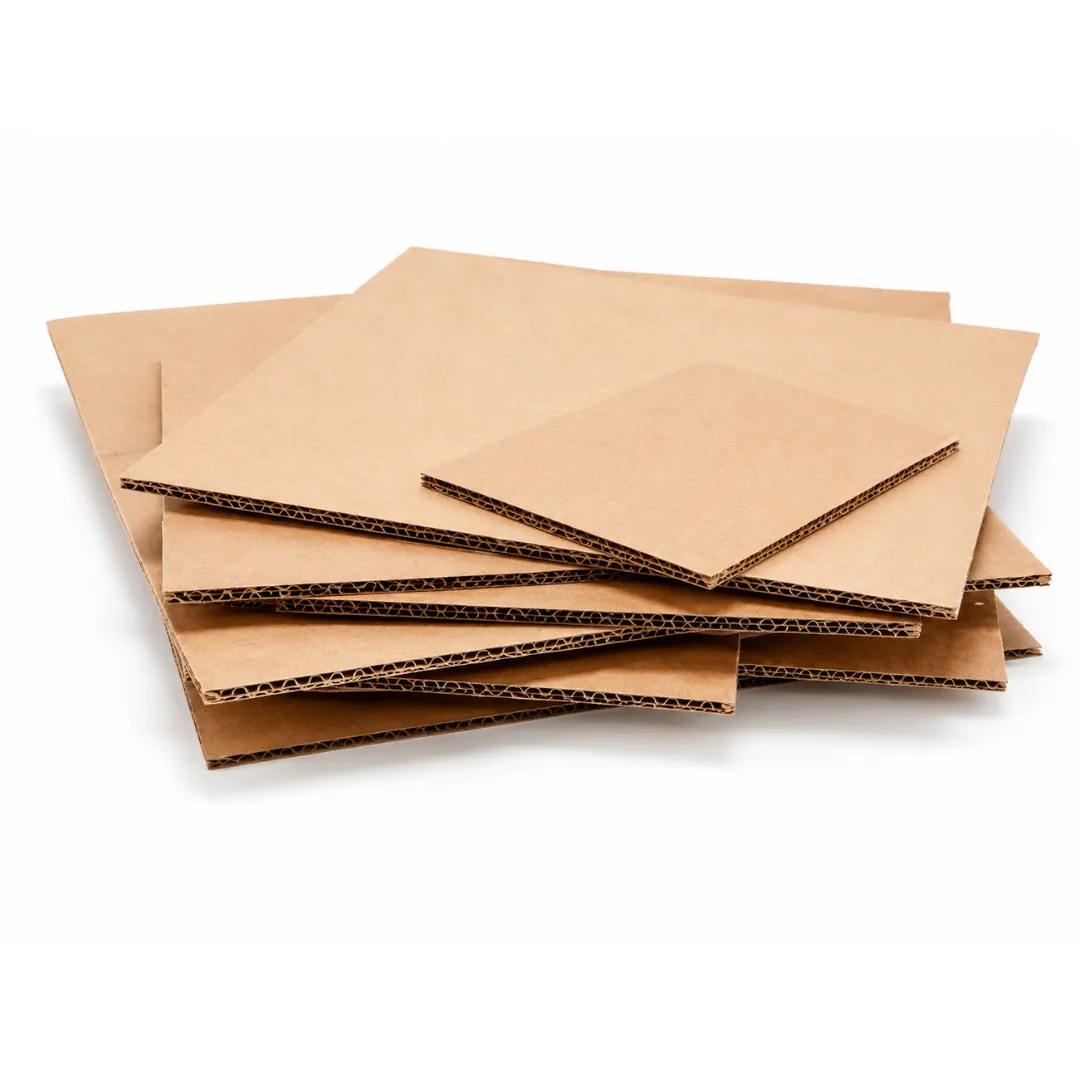
Corrugated material is easy to customize, cost effective and sustainable. It is also great for branding purposes.
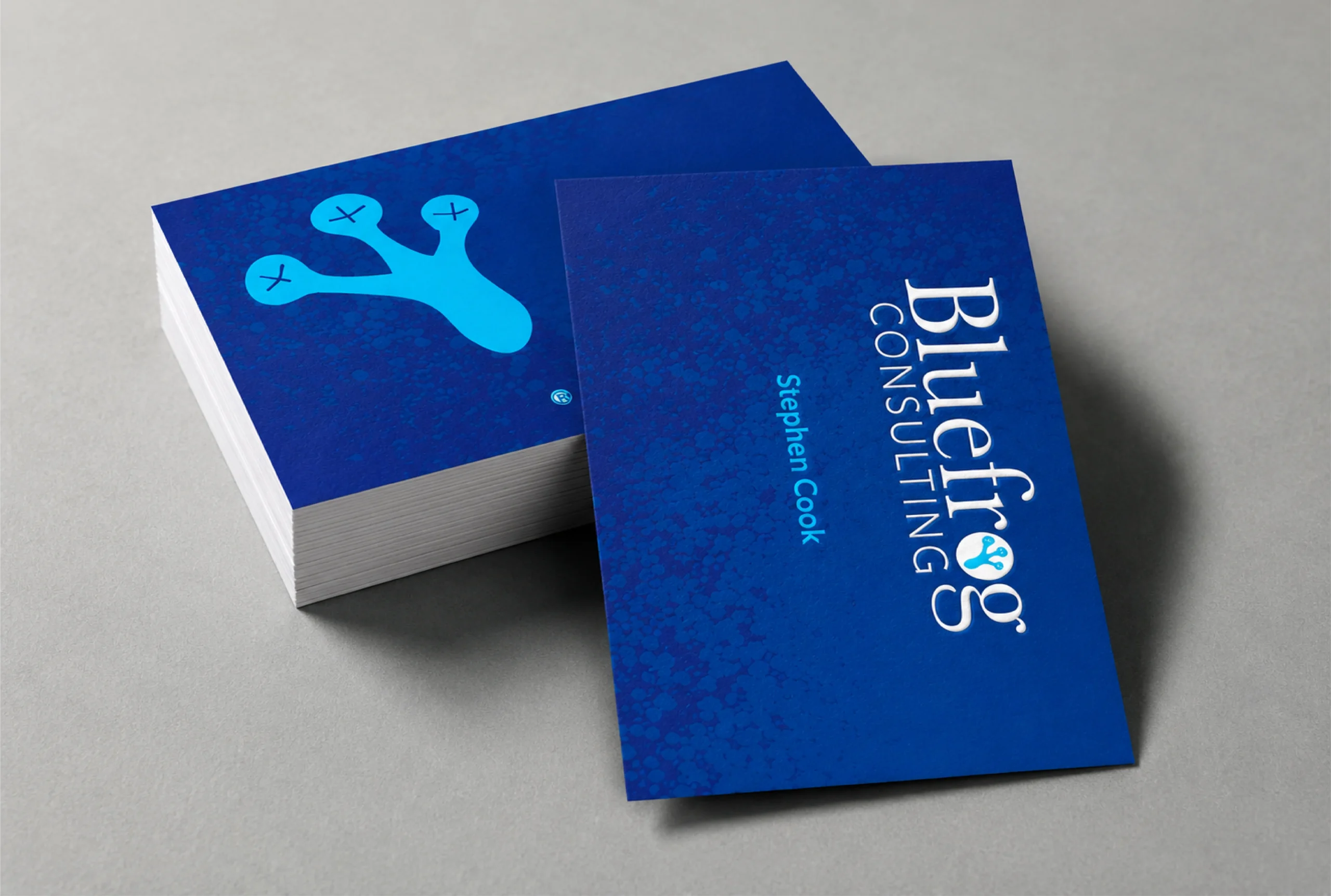
We add additional layer of protection with soft touch lamination from toner chipping.
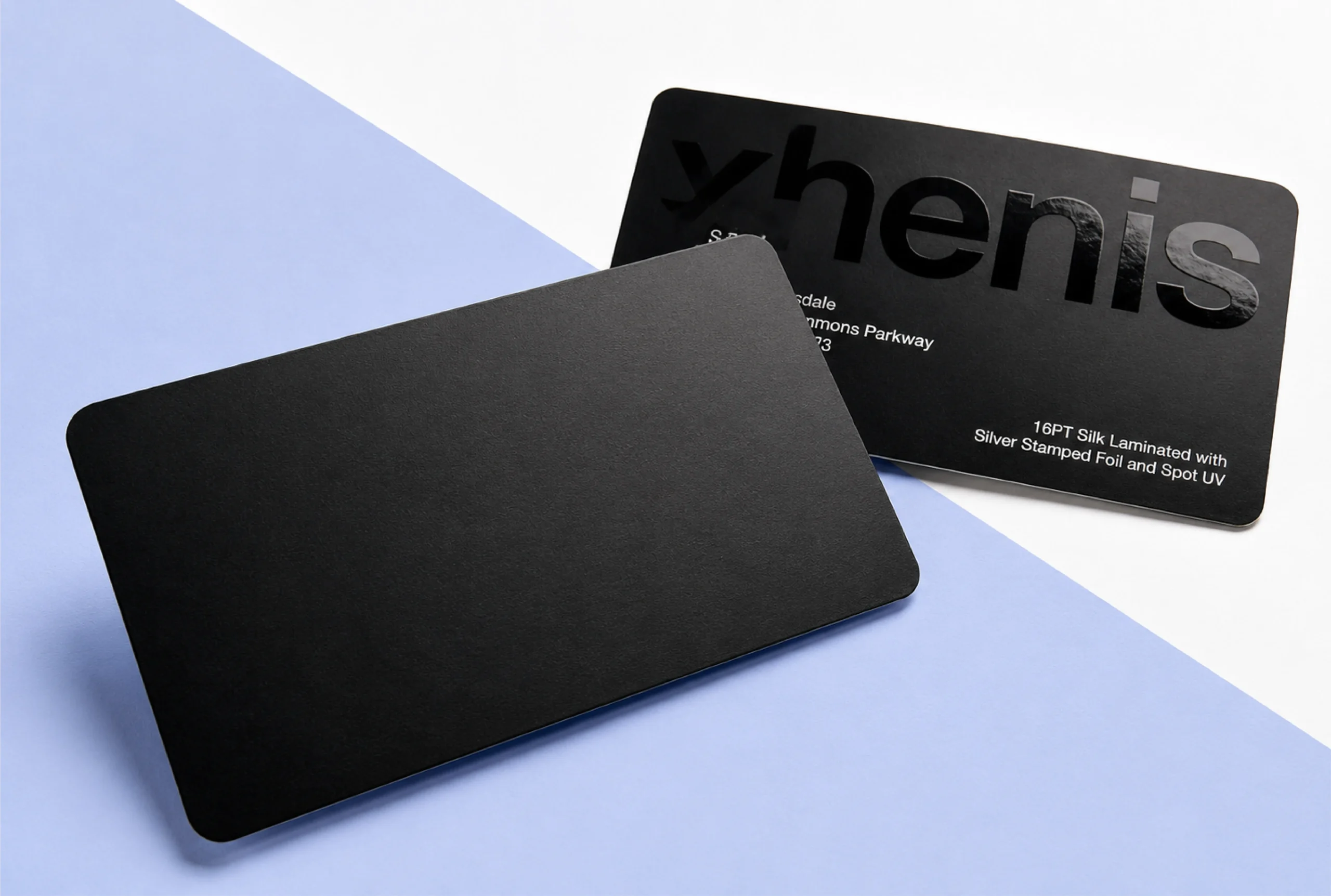
With our matte finish, fingerprints and smudges will now be less visible on the packaging.
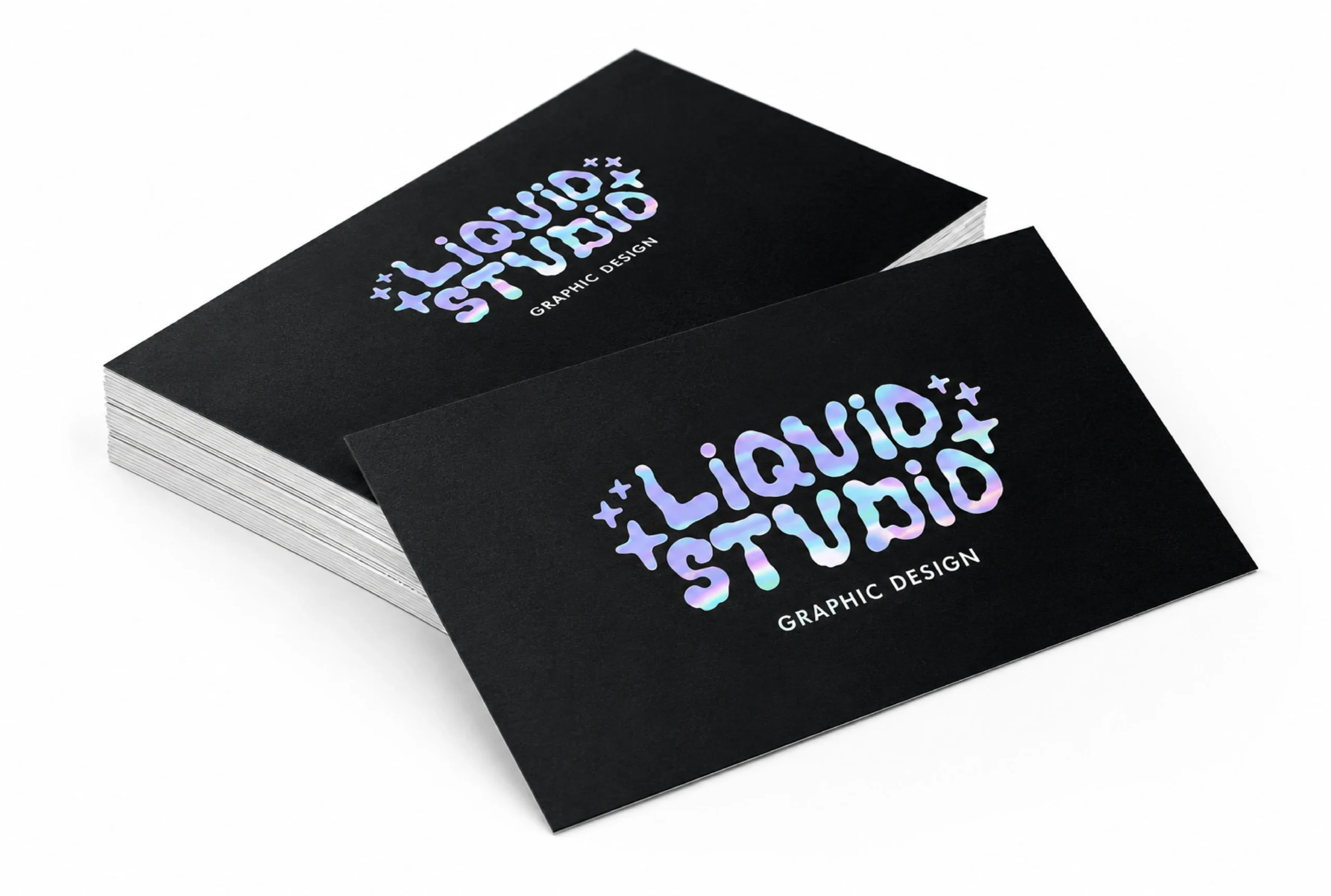
Holographic foil diffracts light and reveals the colors of the rainbow at various angles.
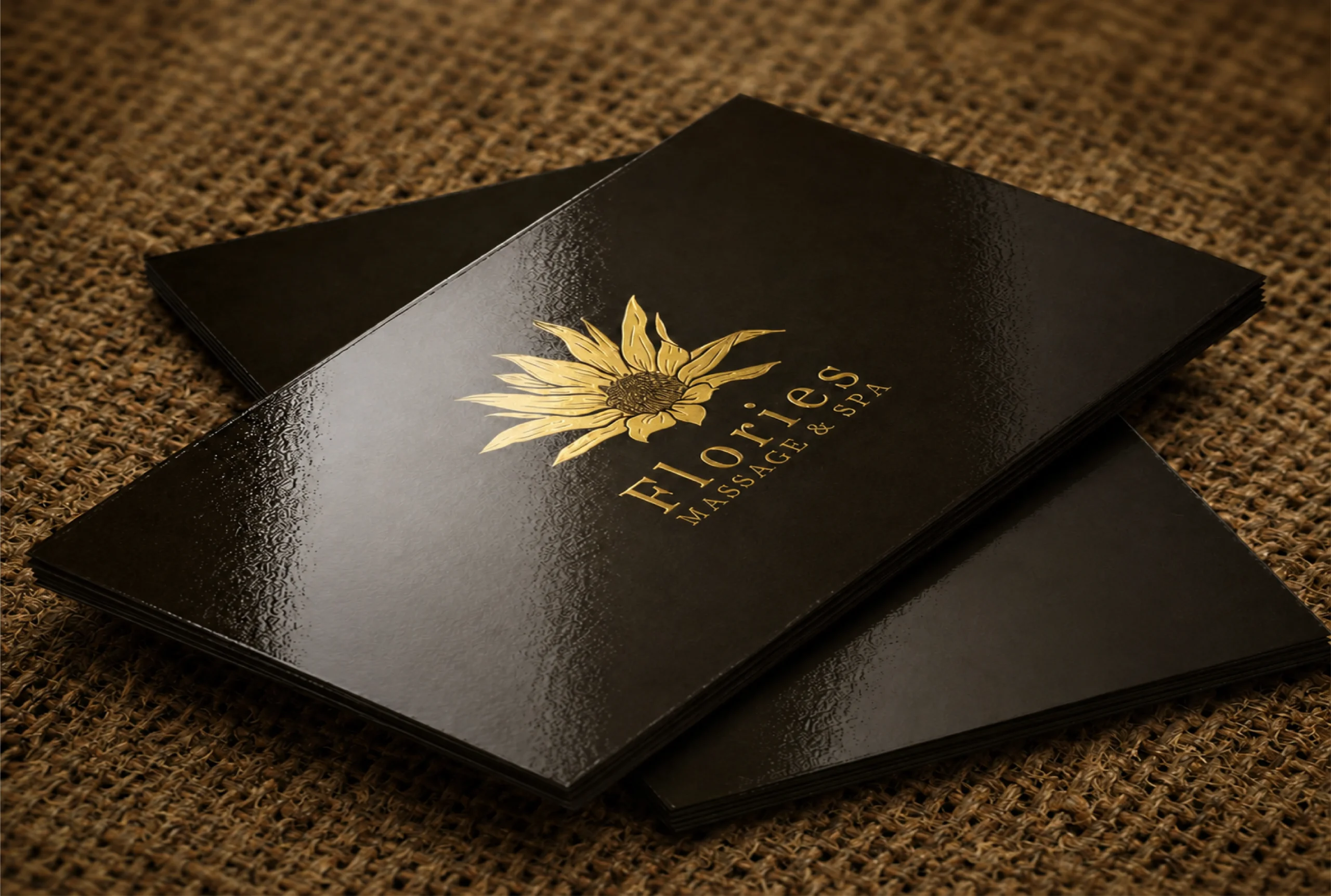
Our glossy finishing gives your packaging an extra layer of shine.
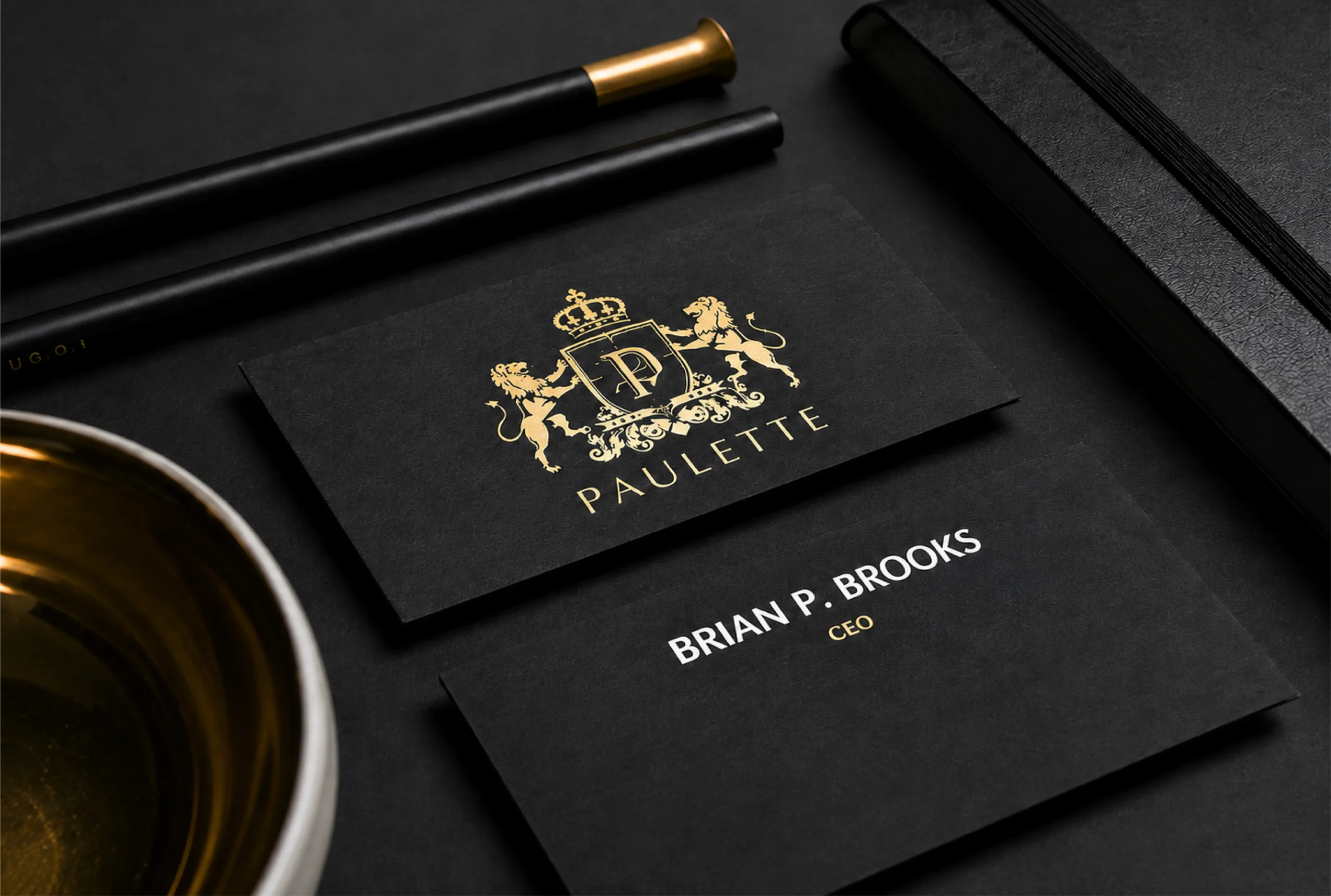
Decorate a wide range of your product packaging with our foil stamping.
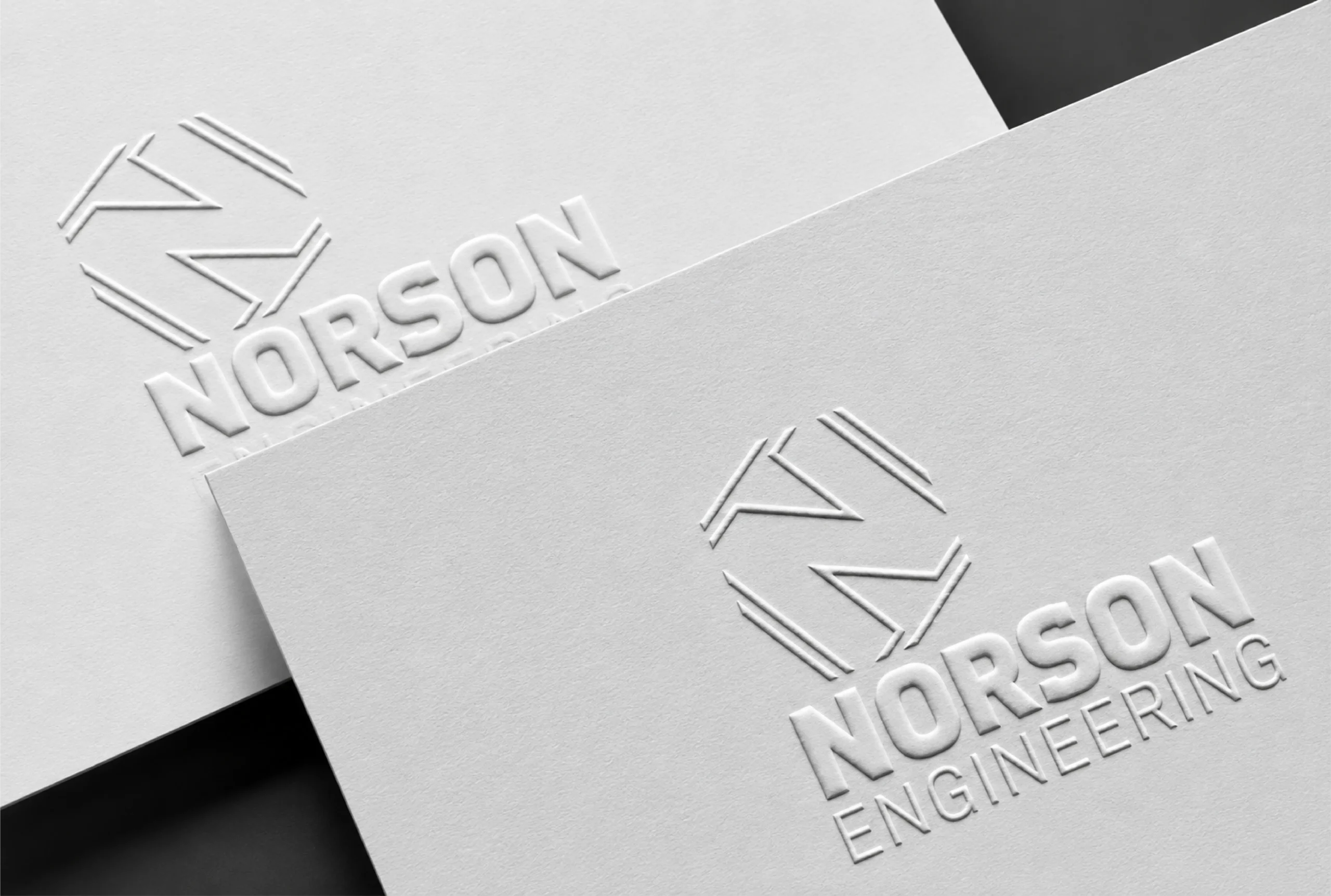
With our embossing technique, we transfer the finest details of your product on packaging.
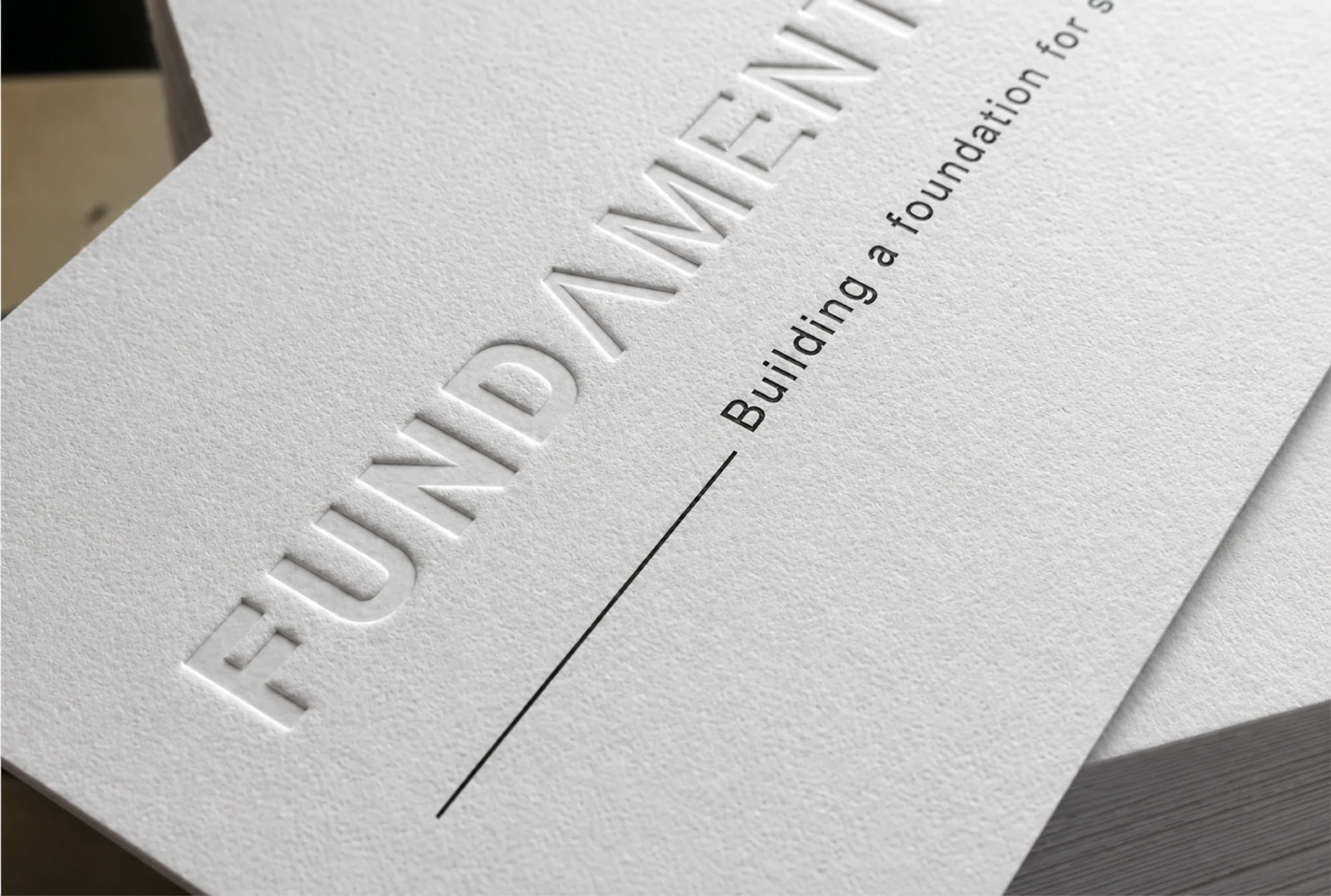
We use debossing technique to add unique graphics into your packaging.
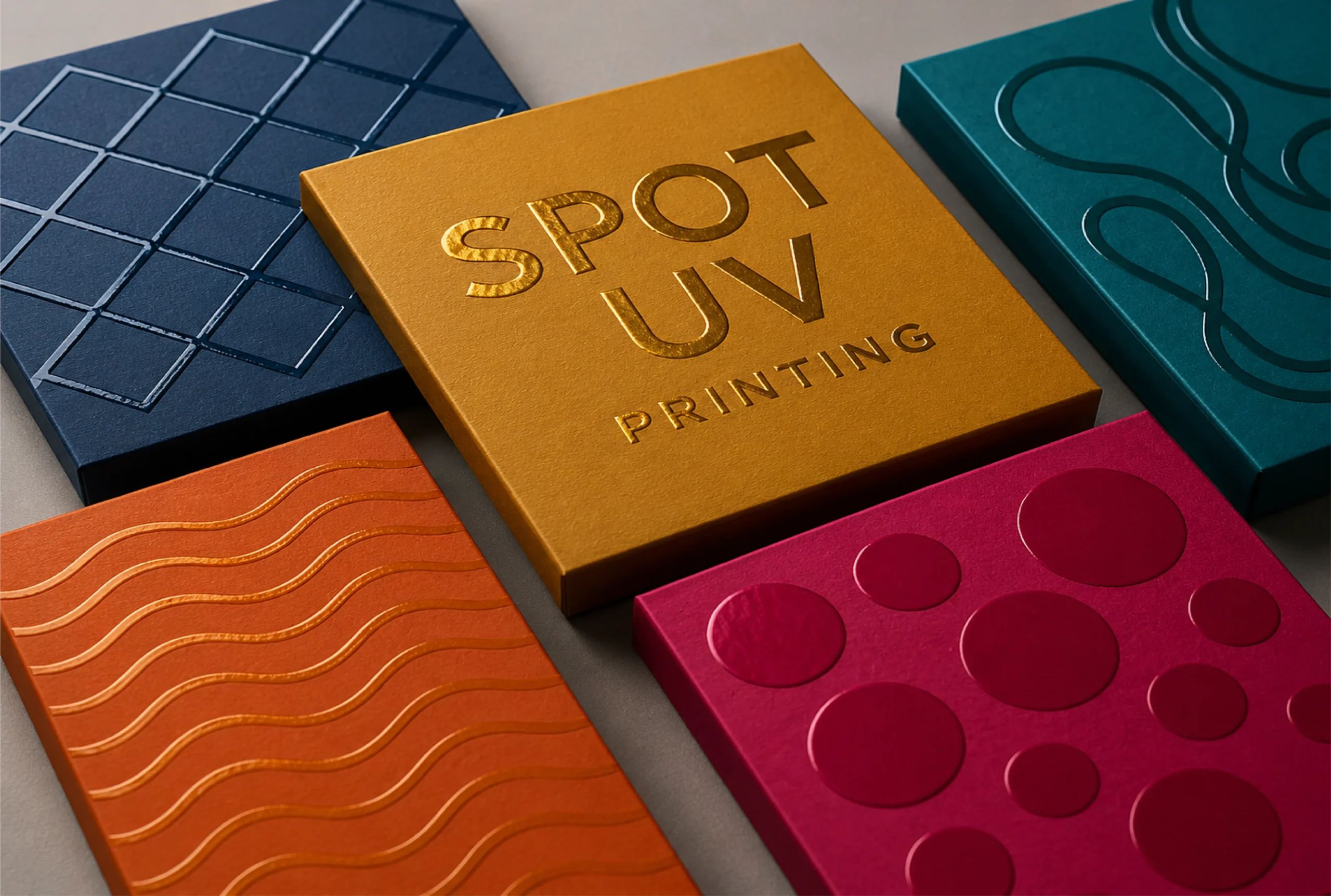
Our high-gloss UV coating gives light and shine to cure the printed material's varnish.
Still unsure? Email sales@packaginghubs.com and a packaging specialist will help.
Get your free quote today and see why Packaging Hubs is the most trusted name in U.S. custom packaging.