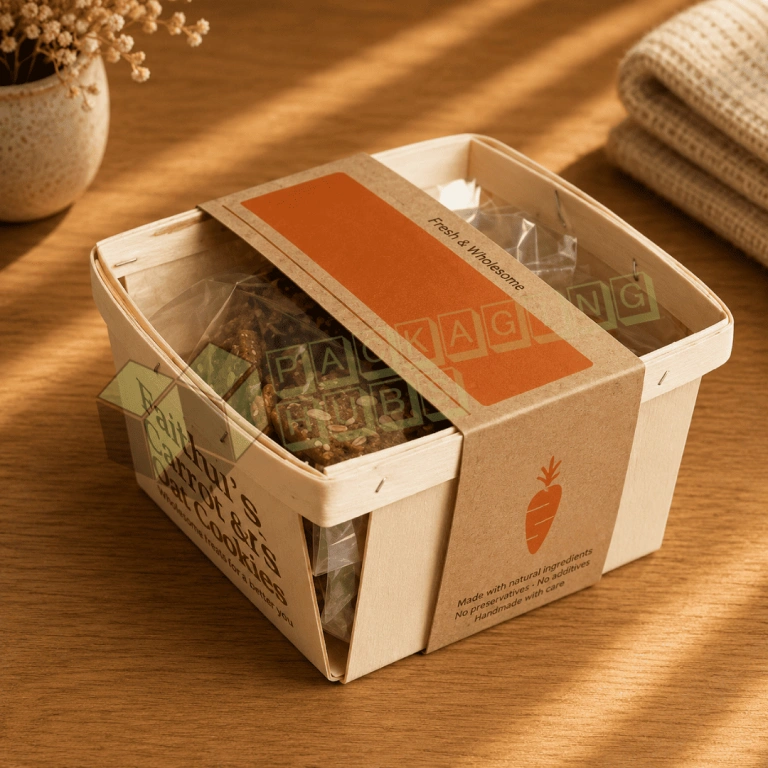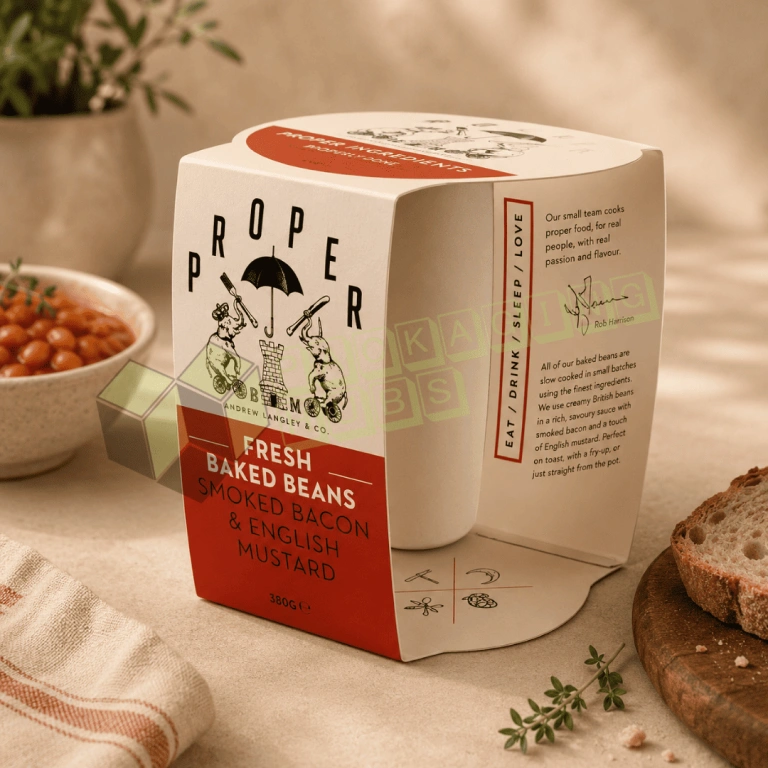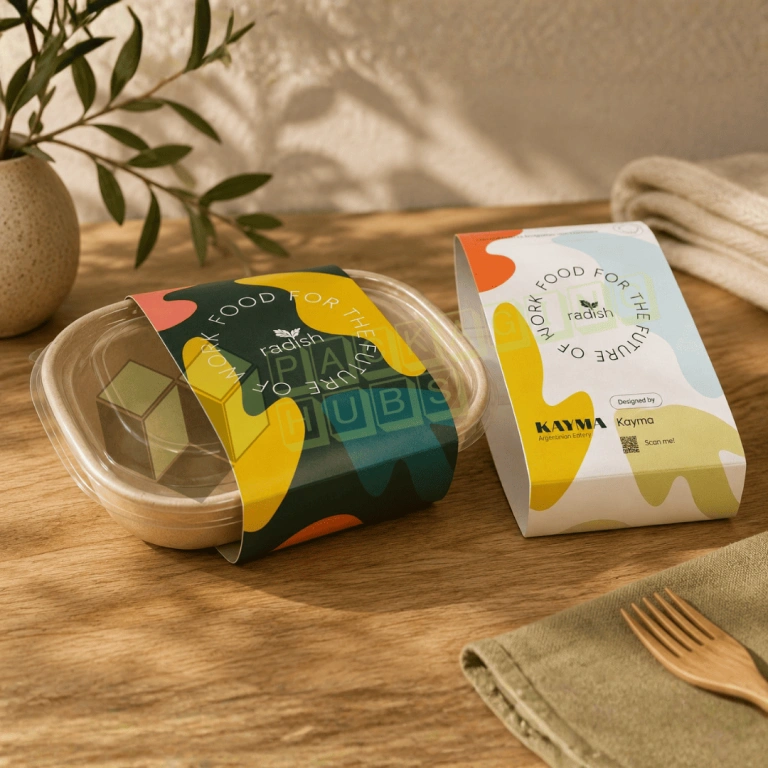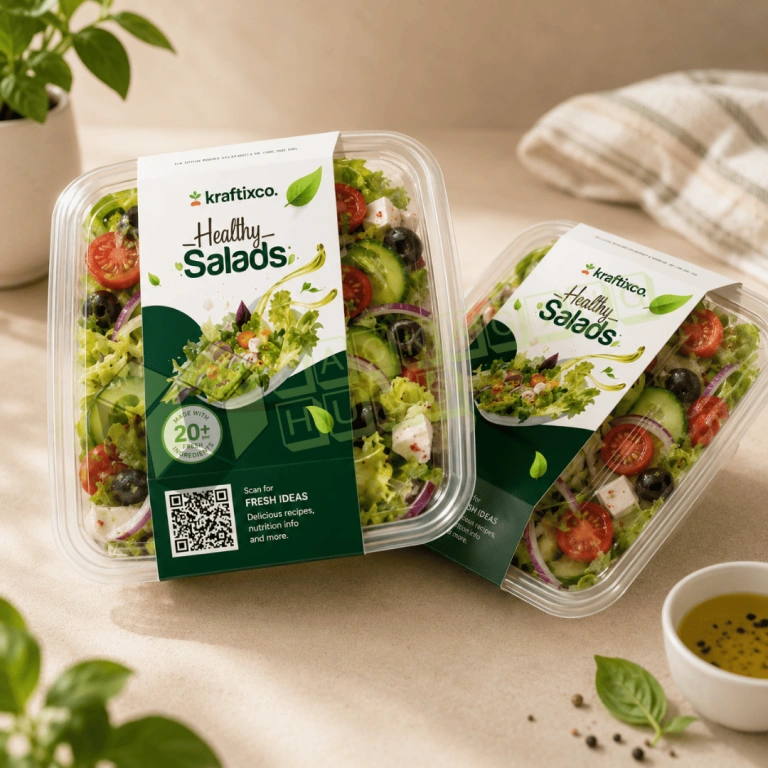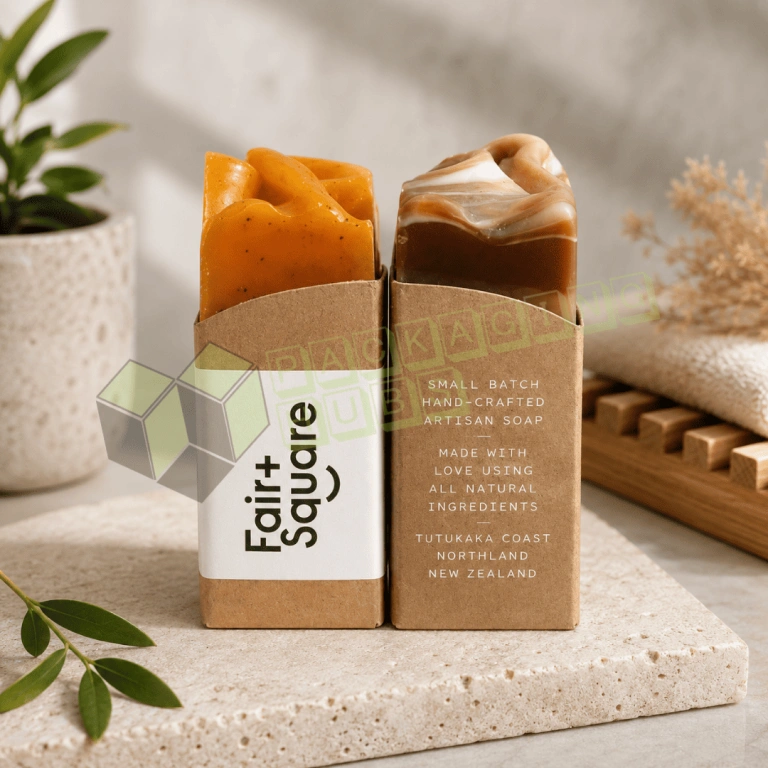
Custom to go box sleeves help food brands turn plain takeout containers into branded packaging without changing the entire box.
A sleeve can do more than show a logo. It can hold the lid, identify menu items, separate flavors, add a QR code, display reheating steps, support pickup names, and make delivery photos look cleaner. However, the sleeve must fit the container correctly. A loose band slides. A tight wrap bends the corners. A weak stock tears during busy service.
Packaging Hubs manufactures to go box sleeves for restaurants, cafés, bakeries, caterers, meal prep brands, dessert shops, food trucks, ghost kitchens, and grab-and-go retailers across the USA. We support custom sizing, kraft stock, SBS paperboard, cardstock, food sleeve dielines, CMYK printing, PMS color matching, QR panels, barcode zones, locking tabs, sticker seals, matte coating, gloss coating, aqueous coating, water-based coating, and wholesale sleeve programs.
You get zero MOQ, free design support, free shipping across the USA, 3D mockups, and flexible production options.
To go box sleeves need the right grip before artwork begins.
The sleeve should hug the container without crushing it. It should hold the lid without blocking the opening. It should show the brand without covering labels, vents, windows, or seals. Therefore, the first test is not color. The first test is fit.
A loose sleeve can rotate, slip, or fall off during pickup. It can also shift inside a delivery bag. As a result, the logo looks crooked and the package feels careless.
Measure the container while it is closed. Include the lid height, folded corners, side walls, raised edges, and stacking pressure. That measurement gives the sleeve a real grip.
A tight band can crush bakery boxes, salad cartons, sandwich containers, and paper takeout trays. This problem appears quickly during lunch rushes because staff need fast assembly.
Leave enough tolerance for container variation. Also consider steam, heat, and folded edges. A sleeve should secure the box, not fight the box.
Hot meals create steam and surface moisture. Fried foods can add grease. Refrigerated meals can create condensation. These conditions affect paper, coating, and print clarity.
Choose stock and coating based on the food environment. A cold salad tray may need different sleeve planning than a hot pasta box or bakery sleeve.
A plain box can hold food, but it rarely builds memory. A printed sleeve adds the logo, offer, QR code, flavor cue, event name, or reorder link without forcing the restaurant to print every container.
A Los Angeles café can use one plain box and several sleeve designs. A New York restaurant can use sleeve colors to separate lunch, dinner, catering, and delivery orders.
Different food containers need different sleeve styles. A burger box does not need the same sleeve as a sushi tray, dessert box, or catering meal.
| Container Type | Sleeve Risk | Better Sleeve Move | Best Use |
| Burger box | Lid pressure | Medium-height wrap with logo panel | Quick-service meals |
| Sandwich box | Sliding band | Tight-width sleeve with side grip | Cafés and delis |
| Sushi tray | Tray movement | Long horizontal sleeve | Grab-and-go retail |
| Bakery box | Corner bending | Soft-fit band with wider tolerance | Pastries and desserts |
| Meal prep tray | Stacking pressure | Stronger paperboard sleeve | Subscription meals |
| Salad box | Condensation and label needs | Coated sleeve with barcode zone | Refrigerated retail |
| Pasta box | Heat and steam | Vent-aware sleeve placement | Hot takeout meals |
| Catering tray | Large surface area | Wide branded wrap or double band | Events and bulk orders |
This table helps buyers avoid generic belly bands. A Miami meal prep brand may need sleeves for chilled trays. A Chicago deli may need takeout box sleeves for sandwiches. A Dallas bakery may need food box sleeves that protect corners and still show the brand clearly.
Custom to go box sleeves need production details before printing starts. The sleeve’s length, width, stock, seam, coating, and label space all affect the final fit.
| Build Area | Options | Best Use | Production Note |
| Sleeve width | Narrow band, medium band, full wrap | Logo display or lid control | Wider sleeves need stronger board |
| Sleeve length | Custom by container perimeter | Any box or tray size | Measure around the closed container |
| Board thickness | 12pt, 14pt, 16pt, 18pt, 20pt, 22pt, 24pt | Food trays, bakery boxes, meal prep | Hot meals need stronger stock |
| Stock type | Kraft, SBS, cardstock, paperboard | Different brand styles | Kraft looks natural; SBS prints bright |
| Sleeve format | Open-ended sleeve, belly band, locking band, tray wrap | Different container shapes | Locking tabs can reduce glue use |
| Sealing method | Glue seam, locking tab, sticker seal, tuck lock | Pickup and delivery | Sticker seals add tamper-evident cues |
| Coating | Matte, gloss, aqueous, water-based coating | Moisture and handling needs | Avoid glare on QR codes |
| Printing | Digital, offset, CMYK, PMS | Short or bulk runs | PMS keeps restaurant colors consistent |
| Add-ons | QR code, barcode, coupon panel, die-cut window, tear notch | Marketing and retail use | Add only when it helps customers |
| Inside print | Heating tip, thank-you note, reorder code | Premium experience | Works well for catering and gift meals |
Packaging Hubs can create custom printed to go box sleeves with exact dielines, menu panels, QR zones, barcode areas, flavor bands, pickup labels, and food-specific sleeve widths. This helps restaurants brand plain containers without buying a fully printed box for every menu item.
Food sleeve packaging should match how the sleeve touches the container.
FDA explains that a food contact substance can include food packaging and its components. Brands can review FDA’s food packaging and food contact substance information before choosing materials for sleeves used around food packaging.
Many restaurant box sleeves wrap around the outside of a closed container. These sleeves mainly support branding, lid hold, QR codes, item names, and pickup labels.
Even then, food conditions matter. Heat, steam, grease, refrigeration, delivery bags, and condensation can affect paper strength and print clarity.
Some sleeves may touch food-contact surfaces, open tray edges, inserts, or windows. In those cases, review material suitability, adhesive placement, ink migration concerns, and coating choice.
Packaging Hubs manufactures packaging, not food-safety certification. Your team should confirm food-contact needs, local food-service rules, and material suitability before production.
Restaurants often use sleeves for QR menus, pickup names, allergen notes, reheating instructions, loyalty offers, and order codes. Keep these areas easy to scan. Do not place QR codes on curved corners, glossy glare zones, or folded seams.
A sleeve system can help staff pack faster and help customers remember the brand.
A restaurant can use one plain container with several sleeves. For example, one sleeve can mark breakfast boxes, another can mark dinner orders, and another can support catering trays. This reduces container SKUs while keeping presentation consistent.
Fast-casual restaurants need sleeves that staff can apply quickly. The sleeve should slide on smoothly, hold the lid, and show the logo at a glance.
A Houston burger shop may use bold custom food sleeves for lunch rushes. A Phoenix taco brand may use color-coded bands for spicy, mild, and vegetarian items.
Bakery box sleeves need a softer fit because pastry boxes can bend. A dessert sleeve can show flavor, event name, date, gift message, or logo without covering a window.
A San Diego bakery may use kraft to go box sleeves for brownies, pastries, and cookies. A New Jersey dessert shop may use custom printed food sleeves for retail displays.
Catering sleeves can add event names, corporate logos, menu notes, or guest names. They work well for boxed lunches, wedding welcome meals, VIP food kits, and corporate meal programs.
For a more elevated food presentation, custom gift boxes can support premium dessert assortments, corporate food gifts, and event-ready boxed meals.
Sleeve style affects speed, sealing, display, and customer perception.
| Sleeve Style | Best Product Match | Display Advantage | When to Avoid |
| Narrow belly band | Small bakery or snack box | Simple logo branding | Heavy or hot meals |
| Medium sleeve | Sandwich, salad, or dessert box | Better lid hold | Very tall containers |
| Full wrap sleeve | Meal prep tray or catering box | Strong visual coverage | Low-budget runs |
| Locking tab sleeve | Boxes needing no glue | Cleaner assembly | Rounded containers |
| Sticker-sealed sleeve | Pickup and delivery orders | Tamper-evident cue | Luxury unboxing only |
| Window sleeve | Bakery and dessert packaging | Shows product style | Saucy or messy foods |
| Die-cut handle sleeve | Carry-style boxes | Easier handling | Thin paperboard |
| Double band system | Large catering trays | Extra hold and branding | Small single meals |
A Denver catering company may need wide sleeve wraps for boxed lunches. A Las Vegas dessert shop may prefer window sleeves for giftable sweets. A Seattle meal prep company may choose sticker-sealed sleeves for pickup confidence.
For luxury food sets that need more structure than a sleeve, custom rigid boxes can support premium dessert kits, branded event boxes, and high-end food gifting.
The sleeve’s surface controls color, feel, durability, and price.
Kraft board works well for natural cafés, bakeries, food trucks, farmers markets, and eco-style brands. SBS paperboard gives bright white print and strong color. Cardstock works well for daily restaurant branding. Thicker board helps with hot meals, large wraps, and catering trays.
Matte coating gives a clean modern finish. Gloss coating creates brighter color. Aqueous or water-based coating can improve handling where suitable. Spot UV can highlight a logo, but it may create glare on QR codes. Foil can work for premium food gifting, though it may feel excessive for everyday takeout.
A Portland café may choose kraft food sleeves with black ink. A California meal prep brand may use matte-coated sleeves with QR codes and barcode zones. A New York restaurant may choose white SBS sleeves with bold PMS colors.
If your brand sells café retail items with matching soap or wellness products, similar sleeve logic can support product bands and compact retail wraps. For those non-food retail lines, custom soap boxes can support matching branded packaging.
Restaurant packaging needs change as the menu grows.
A first menu launch may need a small sleeve run. A catering company may need event-specific sleeve wraps. A multi-location restaurant may need bulk sleeves with strong color matching. A bakery may need seasonal designs for holidays.
| Business Stage | Sleeve Priority | Recommended Move | Commercial Benefit |
| First menu launch | Low risk | Small quantity to go box sleeves | Test branding and fit |
| Local café pickup | Logo clarity | Kraft or printed belly bands | Improve counter presentation |
| Bakery retail line | Product identification | Flavor bands and barcode zones | Speed up display sales |
| Meal prep startup | Item organization | QR and heating panels | Reduce customer confusion |
| Catering program | Event branding | Wide custom food sleeves | Improve premium presentation |
| Multi-location restaurant | Color consistency | PMS-matched sleeve runs | Keep stores aligned |
| Delivery-heavy brand | Lid confidence | Sticker-sealed sleeve bands | Add pickup trust |
| Wholesale food program | Repeat consistency | To go box sleeves wholesale | Support reorder cycles |
This planning helps food brands avoid one sleeve for every use. It also helps teams order the correct size, board, coating, and artwork for each container.
The best food brands do not treat sleeves as decoration only. They use them to improve operations.
A growing café used plain boxes for sandwiches, salads, pastries, and catering meals. Staff added stickers by hand, customers confused menu items, and delivery boxes looked inconsistent in photos.
Packaging Hubs created custom to go box sleeves for three container sizes. Each sleeve used a clear logo panel, item name area, QR code, and color band for menu categories.
Within 45 days, packing errors dropped by 15%, and repeat catering inquiries increased by 11%. The café kept the same food containers. The sleeve system made the brand easier to recognize, pack, and reorder.
Kraft sleeves and paperboard bands can create a natural look, but environmental claims need proof.
A kraft sleeve does not automatically make packaging recyclable, compostable, biodegradable, sustainable, or eco-friendly. The claim depends on paper source, coating, ink, adhesive, food residue, and local recovery systems.
The FTC Green Guides help marketers avoid misleading environmental claims. Use careful wording when discussing recyclable, compostable, recycled-content, or renewable-material claims.
Packaging Hubs can discuss kraft stock, right-sized sleeves, water-based coating options, minimal ink coverage, and paperboard alternatives when available. Keep claims specific and supportable.
| Box Style | To Go Box Sleeves |
| Dimension (L + W + H) | All Custom Sizes & Shapes |
| Quantities | No Minimum Order Required |
| Paper Stock | 10pt to 28pt (60lb to 400lb) Eco-Friendly Kraft, E-flute Corrugated, Bux Board, Cardstock |
| Printing | No Printing, CMYK, CMYK + 1 PMS color, CMYK + 2 PMS colors |
| Finishing | Gloss Lamination, Matte Lamination, Gloss AQ, Gloss UV, Matte UV, Spot UV, Embossing, Foiling |
| Included Options | Die Cutting, Gluing, Scored, Perforation |
| Additional Options | Eco-Friendly, Recycled Boxes, Biodegradable |
| Proof | Flat View, 3D Mock-up, Physical Sampling (On request) |
| Turnaround | 4 – 8 Business Days, RUSH |
| Shipping | FLAT |