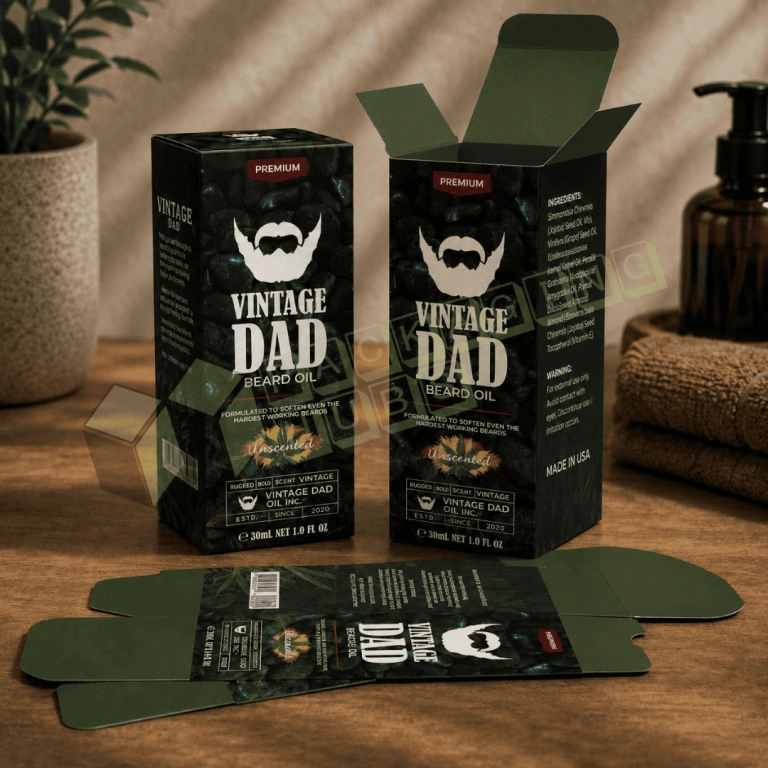
Free design support and free U.S. shipping. No minimum order.
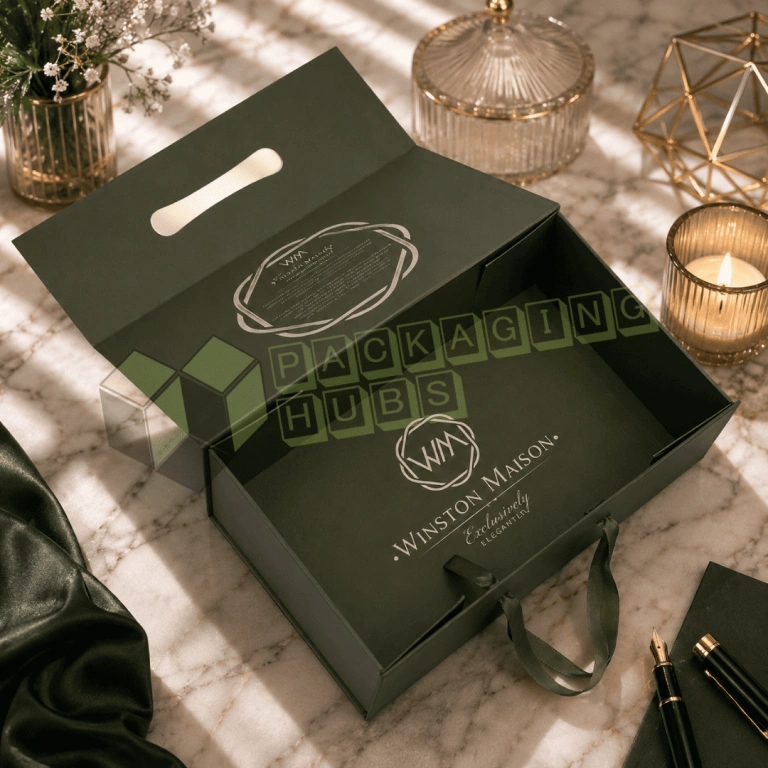
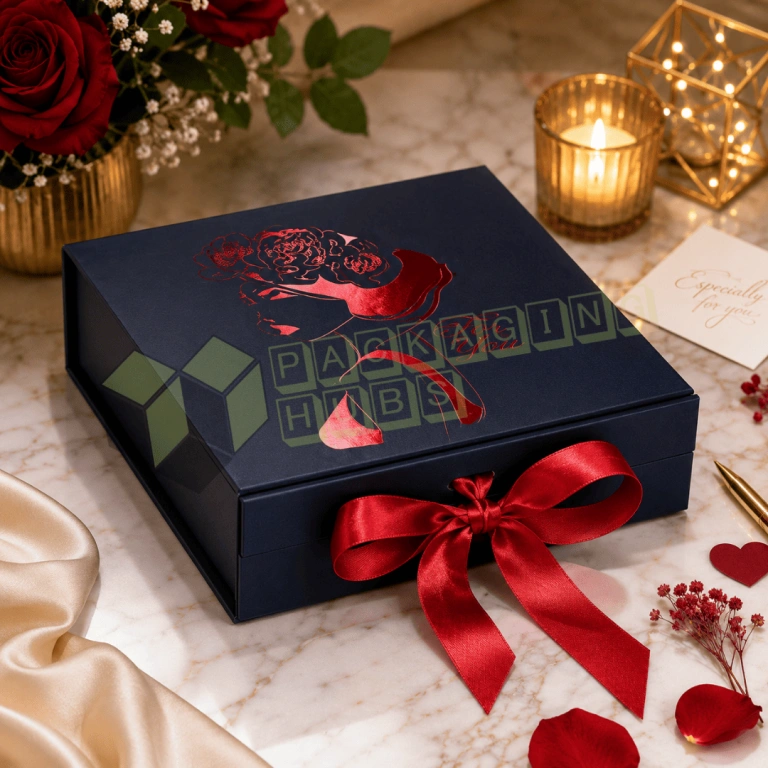
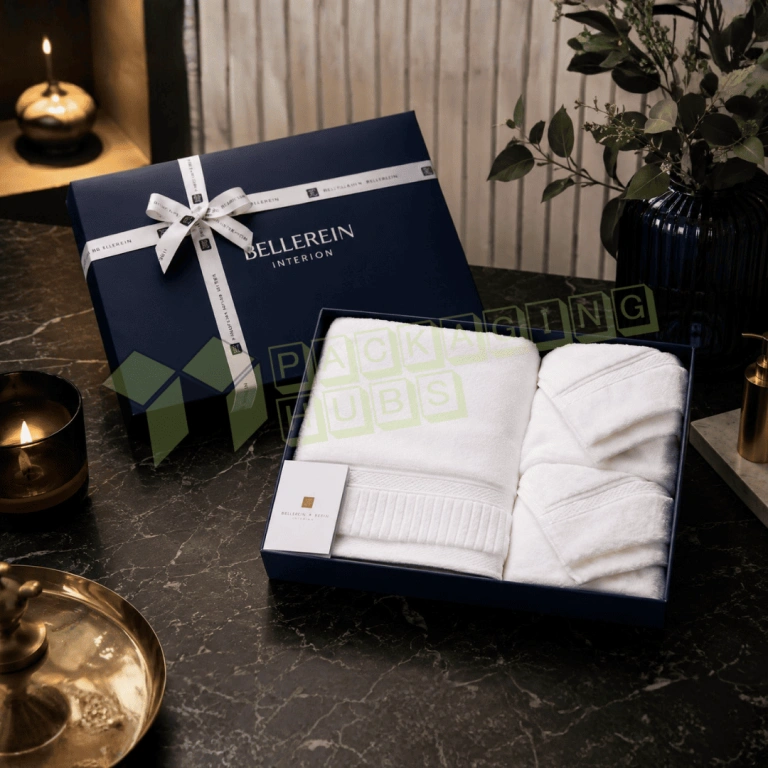
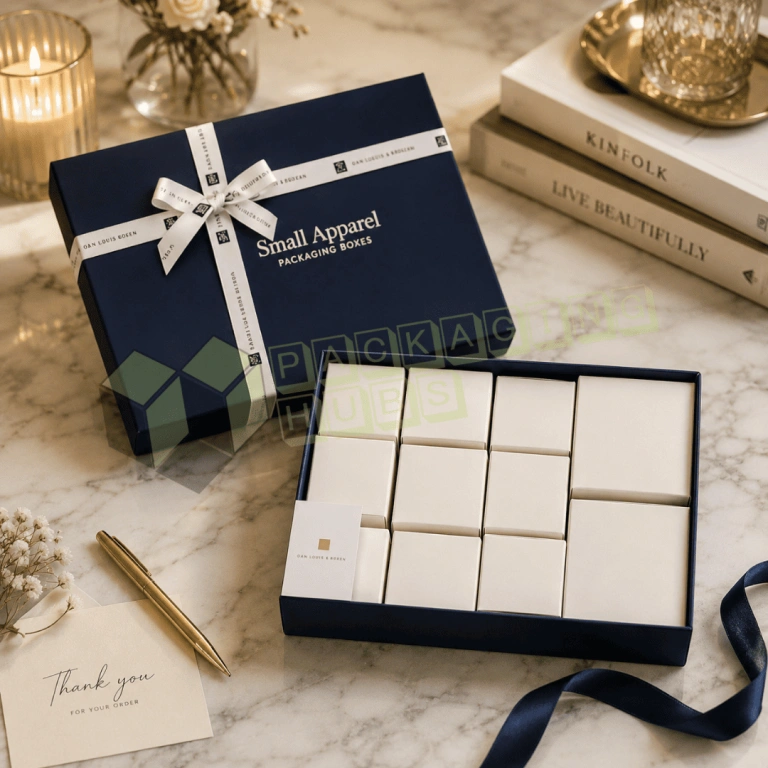
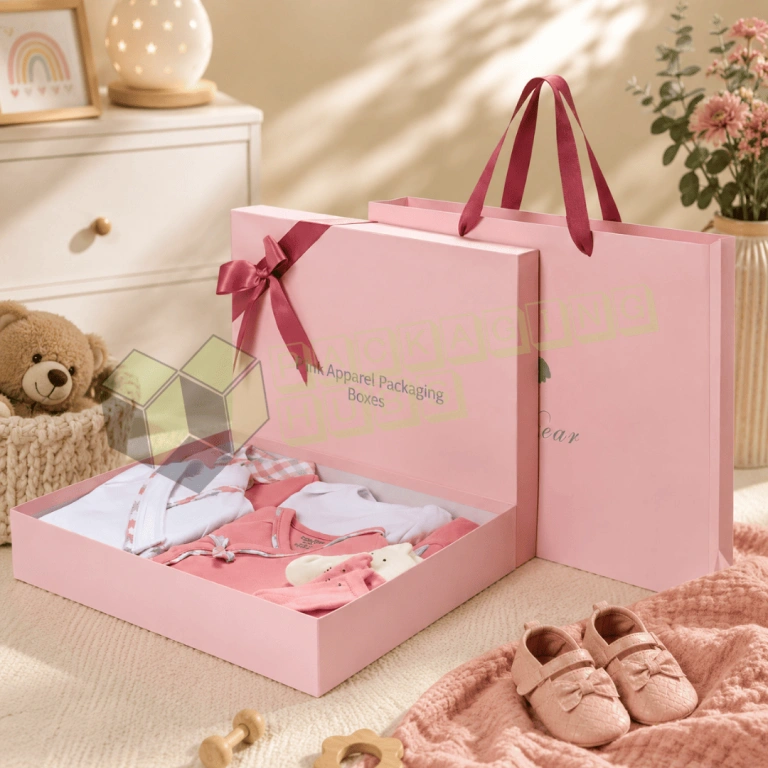
Apparel gift boxes help fashion labels, boutiques, ecommerce sellers, uniform suppliers, and corporate gifting teams package shirts, hoodies, dresses, knitwear, robes, accessories, and garment sets with cleaner folds, stronger presentation, branded printing, and shipping-ready protection.
Apparel gift boxes give clothing a more deliberate presentation before customers touch the fabric. A garment may feature excellent stitching, premium material, and careful finishing, yet weak packaging can lower its perceived value. Crushed collars, loose folds, scuffed surfaces, and oversized interiors make clothing feel less thoughtfully prepared.
Packaging Hubs manufactures apparel gift boxes for fashion labels, boutiques, department-store vendors, streetwear brands, uniform suppliers, subscription companies, corporate gifting teams, ecommerce sellers, and growing businesses throughout the USA. As a direct manufacturer, we plan every structure around the folded garment, fabric thickness, product count, retail channel, shipping method, and desired unboxing experience.
Every order can include custom dimensions, zero MOQ, free design services, digital or offset printing, premium finishes, garment-friendly inserts, tissue allowance, and free shipping across the USA. Flexible lead-time options also help businesses plan ordinary replenishment, seasonal releases, and time-sensitive campaigns. Request a free quote today to create apparel gift boxes that protect the fold, strengthen brand presentation, and make clothing feel ready to give.
A stock carton only provides empty space. A well-designed garment box controls the fold, protects the visible surface, gives the customer easy access, and supports the brand story. Clothing remains flexible during handling, so it can shift, crease, flatten, or collect lint even when it does not suffer obvious physical damage.
The correct package begins with the finished fold rather than the garment’s labeled size. A medium cotton shirt and a medium fleece sweatshirt may require completely different depths. Likewise, a silk robe needs smoother interior contact than a denim jacket, while a beaded dress needs clearance around raised details.
Good apparel packaging also supports the packing team. Tissue dimensions, label positions, garment cards, belly bands, and opening direction should remain easy to repeat across orders. When every employee packs the product differently, the customer experience becomes inconsistent. Packaging Hubs solves this problem by coordinating the garment, structure, print layout, inner presentation, and shipping layer before production begins.
The following table identifies the problems clothing brands face most often and shows how Packaging Hubs addresses them through custom structural planning.
| Packaging Problem | Why It Happens | Packaging Hubs Solution | Customer Benefit |
| Collars arrive crushed | The box is too shallow or lacks support | Correct depth, tissue allowance, and garment cards | Shirts open with a cleaner fold |
| Hoodies lose their loft | Thick fabric is compressed tightly | Deeper walls based on the final packed volume | Bulky garments retain a fuller appearance |
| Clothing shifts to one side | The interior contains excessive open space | Right-sized dimensions, belly bands, or raised platforms | Products remain centered |
| Delicate fabric catches | Rough edges or tight sidewalls touch the garment | Smooth contact surfaces and controlled clearance | Garments lift out more easily |
| Gift boxes arrive scuffed | The decorative box acts as the only shipping layer | A protective corrugated outer shipper | Premium surfaces reach customers cleaner |
| Sizes and colors become mixed | SKU details are difficult to find | Flat barcode, size, color, and style panels | Fulfillment becomes faster and more accurate |
| Gift-set items collide | Several products share one open compartment | Dividers, pockets, or layered trays | Sets remain organized |
| Repeat orders vary | Approved production details are not standardized | Retained dielines, board grades, colors, and finishes | Reordering becomes more consistent |
The table shows that a heavier board does not solve every problem. A rigid box can still compress knitwear when its depth is wrong, while a beautiful carton can still frustrate customers when the garment is difficult to remove. Packaging Hubs selects the material and finish only after the structure addresses the real product risk.
The specifications below provide a practical manufacturing framework. Final selections should follow the garment, folded dimensions, quantity, sales channel, and desired presentation.
| Specification | Available Options |
| Box dimensions | Fully custom length, width, and depth |
| Common structures | Two-piece, folding carton, sleeve and tray, drawer, magnetic rigid, collapsible rigid, window carton, and corrugated mailer |
| Paperboard options | Cardstock, SBS paperboard, kraft stock, corrugated board, rigid board, and specialty paper wraps |
| Common thickness | Approximately 10pt to 28pt for folding stock, with flute or rigid-board selection based on structure |
| Printing methods | Digital, offset, flexographic, screen printing, outside printing, inside printing, or both |
| Color systems | CMYK, PMS color matching, one-color printing, multiple spot colors, or no printing |
| Finishes | Matte, gloss, soft touch, anti-scratch, aqueous coating, UV coating, spot UV, foil, embossing, and debossing |
| Add-ons | Tissue allowance, belly bands, ribbon lifts, garment cards, dividers, document pockets, windows, magnetic closures, and QR-code panels |
| Proofing | Flat proof, 3D mockup, and physical sample when appropriate |
| Quantity | Zero MOQ with scalable wholesale production |
| Support | Free design services, flexible lead-time options, and free shipping across the USA |
These specifications are not interchangeable. For example, a folding carton can ship flat and support efficient storage, while a rigid magnetic box creates a heavier presentation but needs more assembly and space. Similarly, digital printing suits short runs and multiple designs, whereas offset printing often becomes more practical for larger repeat orders.
Apparel gift boxes improve more than appearance. Their first advantage is fold control. Accurate interior dimensions help shirts, knitwear, dresses, and accessories remain positioned instead of moving through unused space.
The second advantage is stronger perceived value. Customers often judge care and quality through the opening experience. A clean lid, organized tissue, smooth garment removal, and controlled interior message can make a clothing purchase feel more intentional.
The third advantage is brand consistency. Custom apparel boxes with logo printing allow fashion businesses to coordinate exterior colors, typography, interior messages, care cards, labels, and seasonal artwork. As a result, retail purchases and ecommerce orders can feel connected.
These boxes also improve fulfillment. Clearly reserved barcode and SKU areas help teams identify sizes, colors, collections, and styles without opening every package. Meanwhile, standardized dimensions simplify storage and repeat packing.
Finally, suitable apparel shipping boxes can reduce transit-related presentation problems. When brands separate the premium gift box from the corrugated shipping layer, labels, tape, abrasion, and carrier handling remain away from the decorative surface. This gives customers a cleaner box that they may also retain for storage or gifting.
Different garments need different structures because their fold, thickness, and surface behavior vary.
| Garment Type | Recommended Structure | Main Packaging Priority |
| T-shirts and polos | Folding carton, shallow two-piece box, or sleeve | Maintain a flat rectangular fold |
| Dress shirts | Two-piece box, drawer, or rigid presentation box | Protect the collar, buttons, and front panel |
| Hoodies and sweatshirts | Deep corrugated mailer or reinforced gift box | Preserve fabric volume |
| Sweaters and knitwear | Medium-depth lid-and-base box | Reduce compression and movement |
| Dresses and robes | Wide presentation box with tissue | Protect larger folds and delicate surfaces |
| Lingerie and hosiery | Drawer, sleeve, or compact rigid box | Create privacy and organized presentation |
| Uniform sets | Sturdy paperboard or corrugated carton | Control multiple pieces and visible size information |
| Scarves, ties, and belts | Compact drawer or tray box | Keep small accessories arranged |
| Multi-garment sets | Layered tray or compartmented rigid box | Separate items and control removal order |
A shallow folding carton may be ideal for a single tee, but it will not provide enough depth for heavyweight streetwear. Conversely, placing one thin shirt inside a large rigid box can make the product look underfilled. Packaging Hubs uses the table as a starting point, then adjusts the structure around the actual packed sample.
Custom boxes for clothing should follow the final packing method, not a generic size chart. First, fold the garment exactly as the fulfillment team will prepare it. Then measure the maximum length, width, and natural depth without forcing the fabric flatter than it should sit.
The measurement should include tissue, hang tags, collar supports, garment cards, return information, styling cards, ribbons, and accessories. Brands should also allow a small practical tolerance because hand-folded products may vary slightly from one unit to another.
Custom shirt boxes need special attention around collars, plackets, and buttons. The collar should not press against the lid, and the front should remain smooth when the customer lifts the shirt. Boxes for garments with embroidery, beads, sequins, or raised trims need additional clearance so decoration does not receive direct pressure.
A New York formalwear label may prioritize collar protection and a restrained reveal, while a California streetwear company may need deeper custom apparel packages for heavyweight hoodies. Measuring the finished fold helps both brands avoid unnecessary empty space, excessive compression, and avoidable shipping volume.
Fashion brands rarely sell only one clothing format. A collection may include shirts, hoodies, dresses, underwear, scarves, uniforms, accessories, and seasonal gift sets. Each product can use a different structure while sharing one visual system.
Brands developing a broader product family can connect apparel gift packaging with Custom Apparel Boxes. This related range supports garment cartons, retail formats, clothing boxes, and product-specific structures beyond presentation-focused gift packaging.
A connected system can standardize logo placement, typography, colors, size-label areas, barcode zones, tissue, interior messages, and finish rules. Therefore, a small accessory carton and a large knitwear box can still look like products from the same company. This approach also makes custom apparel packaging easier to update because the brand can adapt an approved visual language instead of redesigning every package from the beginning.
SBS paperboard provides a smooth white surface for detailed graphics, fashion photography, small text, and premium finishes. It works well for lightweight apparel boxes, custom shirt boxes, and polished retail presentation.
Cardstock offers an efficient option for tees, accessories, promotions, and short-run custom clothing packaging. However, large panels need suitable thickness or reinforcement to avoid bowing.
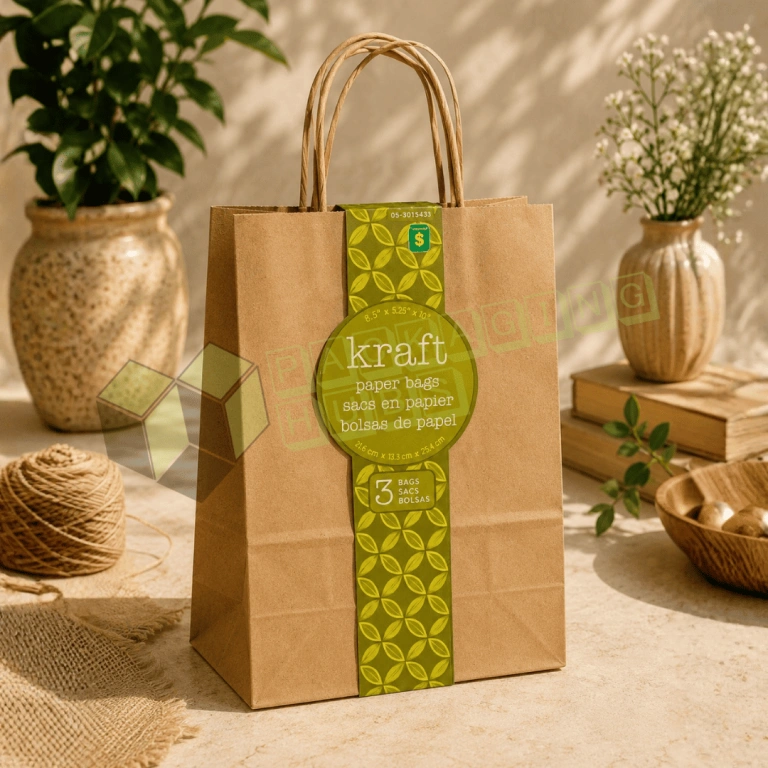
Kraft paperboard creates a warmer, natural appearance. It works well for handmade fashion, organic-style branding, workwear, and restrained print designs. Since the brown base changes color reproduction, pale shades and exact brand colors may require special preparation.
Corrugated board adds edge and stacking strength for apparel shipping boxes, subscriptions, hoodies, uniforms, and direct-to-customer orders. E-flute supports compact branded mailers, while heavier flutes can serve wholesale garment boxes and master cases.
Rigid board creates custom luxury apparel boxes for designer clothing, bridal garments, executive gifts, and limited collections. It provides strong shape retention and a substantial hand feel, although it requires more storage, assembly, and budget than folding stock.
White apparel boxes give fashion brands a neutral surface that works with black typography, pastel artwork, photography, metallic foil, or minimal logos. They also create strong contrast around colorful garments and can make folded products feel cleaner and more organized.
However, white packaging deserves careful finish and handling decisions. Large unprinted areas can reveal dirt, abrasion, or production marks more quickly than patterned surfaces. Matte lamination, anti-scratch treatment, clean packing conditions, and a suitable outer shipper can improve the final presentation, although no paper surface becomes completely mark-proof.
A Los Angeles streetwear brand may use a plain white exterior with bright inside printing, while a Florida resort label may choose soft color accents and a small foil logo. In both cases, the box succeeds because the brand controls the entire experience instead of relying only on white stock.
White stock can also help custom apparel boxes with logo printing remain clear across multiple collections. The brand can change garment colors, seasonal graphics, or product photography while keeping one recognizable packaging base.
Digital printing suits prototypes, limited drops, personalized campaigns, zero-MOQ orders, and several low-volume designs. It gives startups and small businesses flexibility when collections change frequently.
Offset printing supports larger custom apparel boxes wholesale programs that need fine detail and closer repeat consistency. It works well for full exterior printing, inside messages, fashion patterns, and multi-SKU retail programs.
Flexographic printing provides an efficient method for corrugated mailers, wholesale cases, and simpler high-volume artwork. Screen printing can support rigid boxes, specialty wraps, and bold spot-color designs when the artwork does not require complex photographic detail.
CMYK reproduces photographs, patterns, gradients, and full-color campaign artwork. PMS, also called Pantone matching, provides greater control over important brand colors. RGB belongs to digital screens and should normally be converted to CMYK or matched to PMS references before printing.
Packaging Hubs provides free design services for dielines, bleed, safe zones, image resolution, fonts, barcode placement, QR-code contrast, and color preparation. This review helps custom garment packaging reproduce more cleanly around folds, closures, and finishing areas.
Luxury packaging for clothing should feel refined rather than overloaded. Matte lamination creates a low-glare surface, while gloss lamination increases shine and color intensity. Soft-touch coating adds a velvety feel that suits designer garments and executive gift programs.
Foil stamping can emphasize a logo, collection name, monogram, or border. Embossing raises selected details, while debossing presses them into the surface. Spot UV adds controlled gloss contrast over logos or patterns, especially when the base has a matte finish.
Inside printing can introduce a campaign story, styling guidance, thank-you message, or return information after the customer opens the lid. Tissue controls the reveal, belly bands hold folds together, and ribbon lifts improve product access in shallow boxes.
For multi-product sets, paperboard dividers and document pockets can separate shirts, ties, socks, accessories, or printed material. Magnets, ribbons, and mixed materials should only be added when they improve the opening experience enough to justify the extra cost and complexity. Well-planned custom luxury apparel boxes often rely on one tactile surface and one focused logo treatment rather than several competing effects.
Packaging can repeat care guidance, but it does not automatically replace the permanent care label attached to covered textile apparel. The Federal Trade Commission explains that when packaging or folding prevents customers from seeing or easily finding required care instructions, the information may also need to appear outside the package or on a hang tag. Brands can review the official FTC Care Labeling Rule guidance before approving package panels and hang-tag placement.
Packaging Hubs can reserve a flat area for customer-supplied washing symbols, care summaries, QR codes, return guidance, and garment information. These areas should remain away from folds, textured finishes, and strong glare so customers can read them easily.
A garment-care panel also improves the buying experience. Customers do not need to unfold the product in a store simply to find basic maintenance information. Nevertheless, the clothing brand and its compliance advisors remain responsible for confirming the accuracy and legal sufficiency of every care statement.
Fashion collections often include caps, beanies, scarves, belts, and garments under the same brand. These products can share artwork and finishes, but hats need shape protection that a shallow garment carton cannot provide.
Brands can pair apparel gift boxes with Custom Hat Boxes for structured caps, wide-brim designs, premium felt products, and gift-ready headwear. The garment box can control folds, while the hat box protects crowns and brims.
This product-specific approach prevents businesses from placing every item inside one oversized carton. Instead, each product receives the support it needs while the logo, color palette, typography, and unboxing message remain connected.
A Chicago boutique may use a shallow box for knitwear and a taller structure for hats within the same winter collection. Customers still recognize one brand family, but each package protects the product correctly.
A decorative gift box and a parcel shipper perform different jobs. Pale paper, wrapped corners, magnetic lids, and premium finishes can become scuffed, labeled, or crushed during delivery even when the garment remains undamaged.
For direct-to-customer orders, Custom Apparel Mailer Boxes can provide a corrugated outer layer or a shipping-focused branded structure for folded clothing, subscriptions, influencer orders, and ecommerce deliveries.
Premium inner packaging may need a closely fitted mailer with paper cushioning or corner support. More economical custom clothing packaging may use one reinforced corrugated box that combines transit strength with inside printing and a clean opening experience.
The shipping label should remain away from the main opening instructions and primary logo whenever possible. Tear strips, return strips, and double adhesive closures can also support ecommerce workflows when the chosen structure allows them. The correct solution depends on packed weight, route, carrier handling, and the arrival condition the brand wants the customer to see.
Soft products still face stacking, vibration, drops, pressure, sorting equipment, and changing weather during delivery. Therefore, brands should not assume that decorative apparel gift boxes can ship directly without testing or outer protection.
The United States Postal Service advises shippers to use appropriately sized packaging, suitable cushioning, and secure tape. Apparel sellers can review the official USPS package preparation guidance when planning outer cartons, label areas, and shipping closures.
A Texas ecommerce seller sending heavyweight hoodies may need a stronger corrugated structure than a Miami boutique shipping one lightweight resort shirt. Right-sizing reduces movement, while tissue or a suitable inner wrap helps preserve the fold.
Paperboard should not be described as waterproof unless the complete tested package supports that statement. If moisture exposure presents a significant risk, the brand should evaluate the entire packing system, storage conditions, route, and any inner protective layer rather than relying on a decorative coating alone.
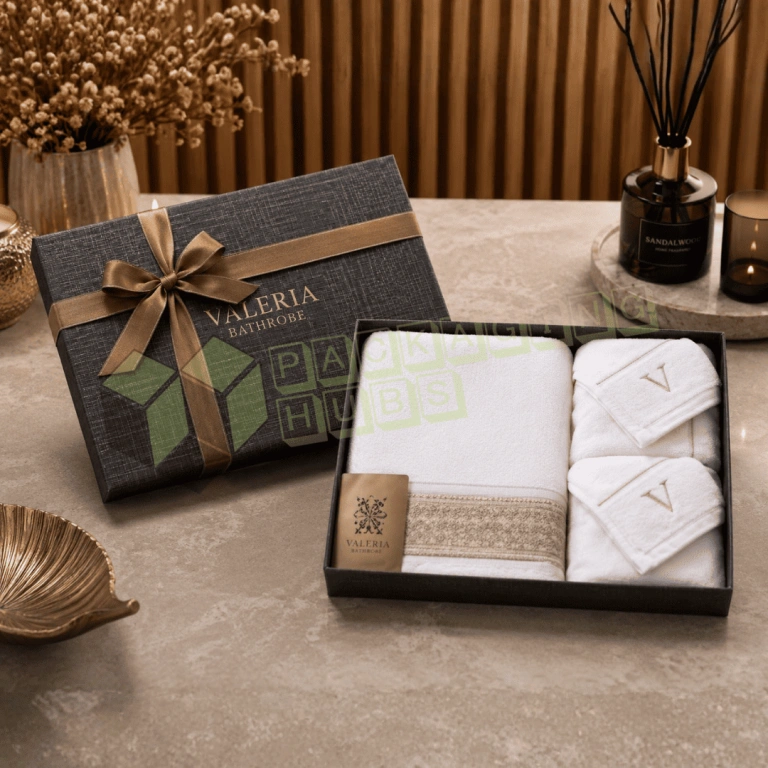
Fashion, hospitality, wellness, and spa brands often package clothing beside towels, robes, wraps, and fabric gift sets. These products share fold and presentation requirements, although thick towels usually need more depth than shirts.
Brands creating a coordinated textile range can use custom towel boxes for bath sets, hair towels, spa products, hospitality gifts, and ecommerce orders. Matching colors, logo positions, interior messages, tissue, and paper choices can connect the towel packaging with the main apparel packaging system.
A hotel supplier in Ohio may use one design language for robes, branded towels, and employee uniforms while changing the dimensions and structure around each product. This creates consistency without sacrificing fit.
The approach also helps gift programs. A robe and towel set may share one larger compartmented box, while separate retail products use their own right-sized cartons. Packaging Hubs can recommend the structure based on how the textiles will be folded, displayed, carried, and delivered.
Most textile and wool products sold in the United States require labels that disclose information such as fiber content, country of origin, and the manufacturer or another responsible business. The carton can repeat approved information or make it easier to find, but it should not conflict with the garment label, hang tag, ecommerce listing, or import documentation.
The FTC provides official Apparel and Labeling resources for businesses reviewing textile, wool, fur, leather, and care-label obligations.
Packaging Hubs can organize customer-supplied size, color, style, fiber, origin, SKU, and barcode information on flat, scan-friendly panels. These details help retailers, warehouses, and customers identify products without opening every box.
However, final legal approval remains the responsibility of the apparel company and its compliance team. Packaging should support the approved information hierarchy rather than inventing claims or replacing the product’s required permanent labels.
Wholesale apparel gift boxes work best when brands standardize fewer, better sizes instead of creating a separate carton for every product. A compact format can cover ties, scarves, socks, and lingerie. A standard size can support tees, shirts, lightweight dresses, and uniforms. A deeper format can hold hoodies, sweaters, and multi-piece sets.
This grouping reduces inventory confusion and makes packing instructions easier to repeat. Visible size, color, style, season, and barcode panels also help retailers and distributors manage wholesale garment boxes without opening them.
Custom apparel boxes wholesale programs can keep one approved dieline while changing artwork, labels, collection names, or SKU details. Apparel boxes wholesale buyers can also standardize tissue dimensions, master-carton counts, and label locations across stores.
Packaging Hubs supports both small tests and wholesale apparel boxes. Zero MOQ allows a startup to validate a new structure, while larger quantities may improve per-unit economics. Flexible lead-time options help buyers plan ordinary replenishment, holiday releases, uniforms, subscription programs, and retail launches.
The price depends on the complete package rather than size alone.
| Pricing Factor | Why It Changes Cost | Practical Cost-Control Approach |
| Dimensions | Larger panels use more material and storage space | Measure the final fold and remove unnecessary empty volume |
| Material and thickness | Premium and stronger stocks cost more | Match the grade to the garment and structure |
| Quantity | Setup costs spread differently across order sizes | Compare short digital runs with larger offset production |
| Structure | Rigid, drawer, and magnetic boxes need more assembly | Use folding cartons when heavy construction adds little value |
| Print coverage | Interior and exterior printing add production steps | Place color where it creates the strongest impact |
| Finishes | Foil, spot UV, and embossing require extra processes | Select focused effects instead of every option |
| Inserts and presentation pieces | Tissue, trays, ribbons, and bands add material and labor | Use them where they improve fit or access |
| Shipping format | Assembled boxes occupy more space | Consider flat-shipped options for apparel boxes wholesale orders |
Right-sizing usually creates the strongest cost-control opportunity because it affects board usage, storage, master cases, and shipping. However, compressing the garment too tightly to reduce material can create wrinkles and weaken presentation.
Packaging Hubs prepares custom pricing after reviewing the folded dimensions, quantity, material, printing, finish, insert, assembly, and delivery needs.
A careful review helps custom apparel packaging move from artwork to production without unresolved fit or usability problems. Packaging Hubs can examine the final folded dimensions, fabric depth, tissue allowance, closure, board strength, interior contact surfaces, artwork placement, barcode zones, finish coverage, shipping protection, and master-carton plan.
The review should also consider customer access. A box may keep the garment neat but still create frustration if the customer cannot lift it without pulling tags, ribbons, buttons, or delicate trim. Finger clearance, tissue placement, ribbon lifts, and tray height can create a smoother reveal.
For repeat custom apparel packages, retained dielines, approved colors, material specifications, and finish instructions support consistency. Brands should still review proofs whenever artwork, garment folds, materials, or production requirements change.
This quality-control process supports both the customer and the fulfillment team. Once the structure works, related collections can reuse the same design language while changing dimensions, season names, artwork, or product information.
Packaging Hubs manufactures apparel gift boxes for shirts, T-shirts, hoodies, knitwear, dresses, robes, lingerie, uniforms, accessories, subscription orders, corporate gifts, and retail collections throughout the United States.
Share the final folded length, width, and depth, fabric type, product count, quantity, preferred structure, tissue or insert needs, artwork, printing, finishes, packing method, and delivery destination. Our team can then recommend custom shirt boxes, folding cartons, rigid presentation boxes, drawers, magnetic structures, sleeves, or mailers.
Available options include custom sizes, SBS paperboard, kraft stock, corrugated material, rigid board, specialty wraps, digital printing, offset printing, CMYK, PMS matching, matte or gloss lamination, soft-touch coating, anti-scratch finishes, foil stamping, embossing, debossing, spot UV, interior printing, tissue allowance, dividers, garment cards, ribbon lifts, and document pockets.
Packaging Hubs offers zero MOQ, free design services, flexible lead-time options, and free shipping across the USA. Call (855) 611-8876 or email sales@packaginghubs.com to order now or request a free quote for apparel gift boxes built around your garments and brand.
| Box Style | Apparel Gift Boxes |
| Dimension (L + W + H) | All Custom Sizes & Shapes |
| Quantities | No Minimum Order Required |
| Paper Stock | 10pt to 28pt (60lb to 400lb) Eco-Friendly Kraft, E-flute Corrugated, Bux Board, Cardstock |
| Printing | No Printing, CMYK, CMYK + 1 PMS color, CMYK + 2 PMS colors |
| Finishing | Gloss Lamination, Matte Lamination, Gloss AQ, Gloss UV, Matte UV, Spot UV, Embossing, Foiling |
| Included Options | Die Cutting, Gluing, Scored, Perforation |
| Additional Options | Eco-Friendly, Recycled Boxes, Biodegradable |
| Proof | Flat View, 3D Mock-up, Physical Sampling (On request) |
| Turnaround | 4 – 8 Business Days, RUSH |
| Shipping | FLAT |
Pick the stock and the finish that suit your product. We’ll confirm both on your proof before anything is printed.
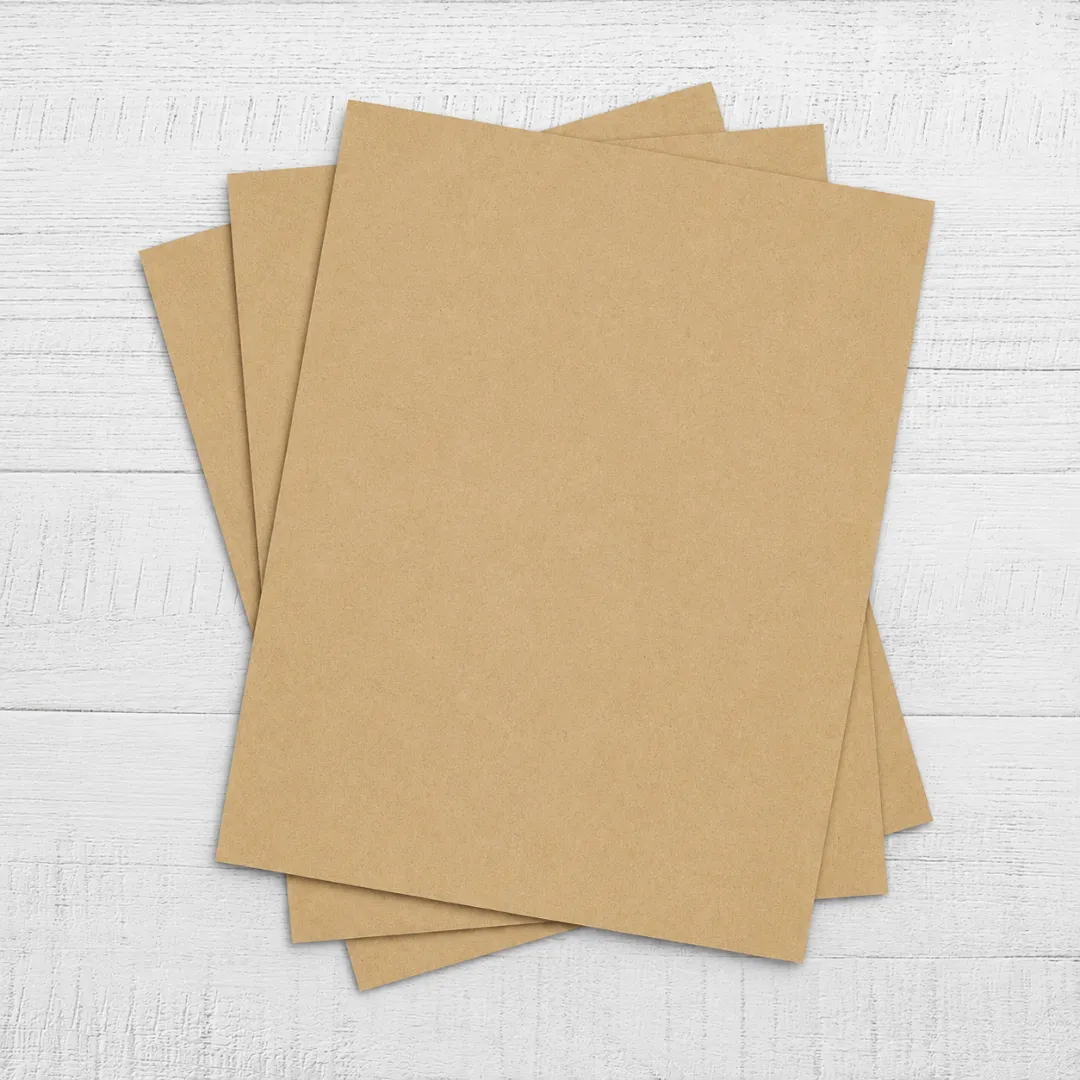
Kraft paper is a strong, durable and reliable material that is widely used across many different industries.
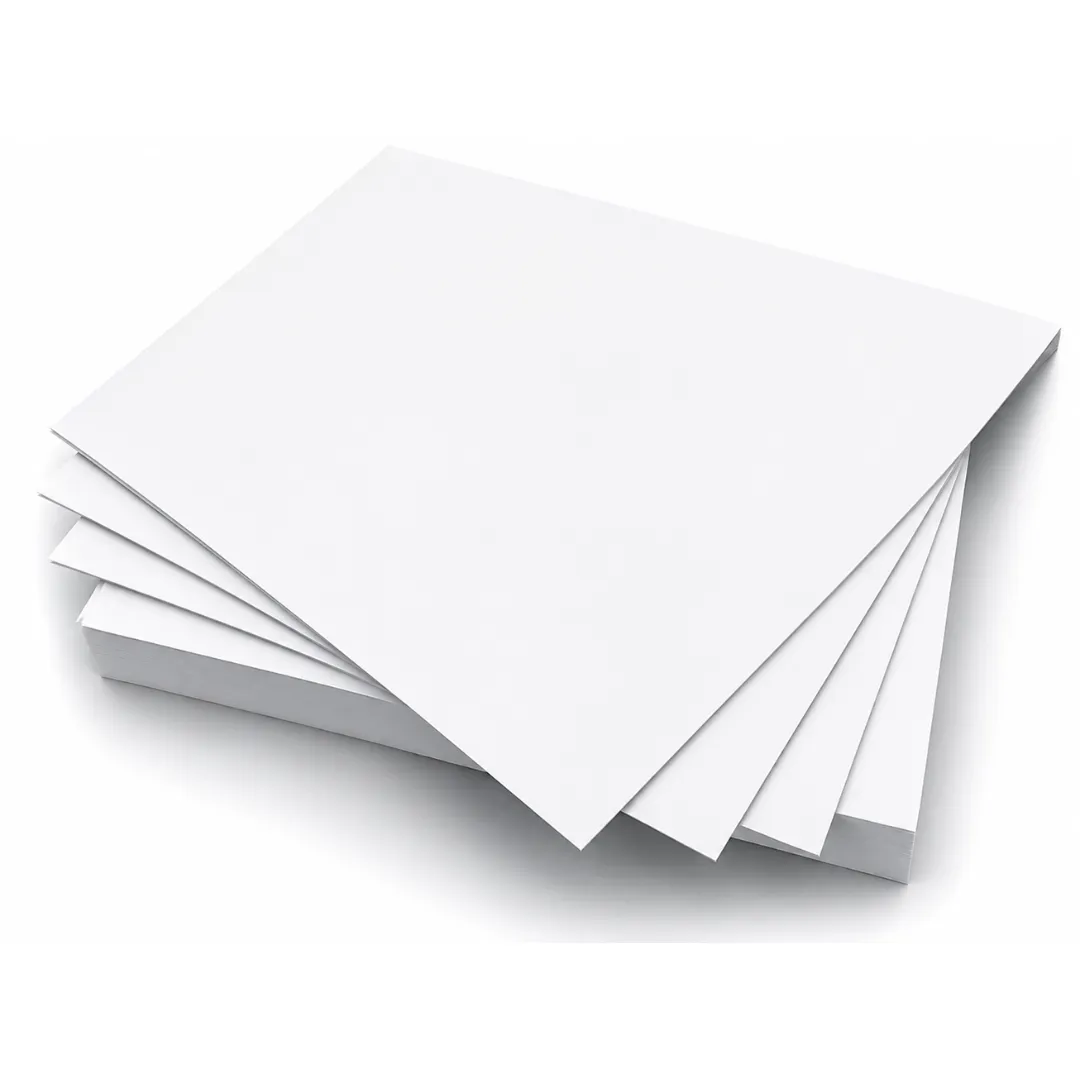
We use cardboard material with the least environmental impact and minimizes waste generation.
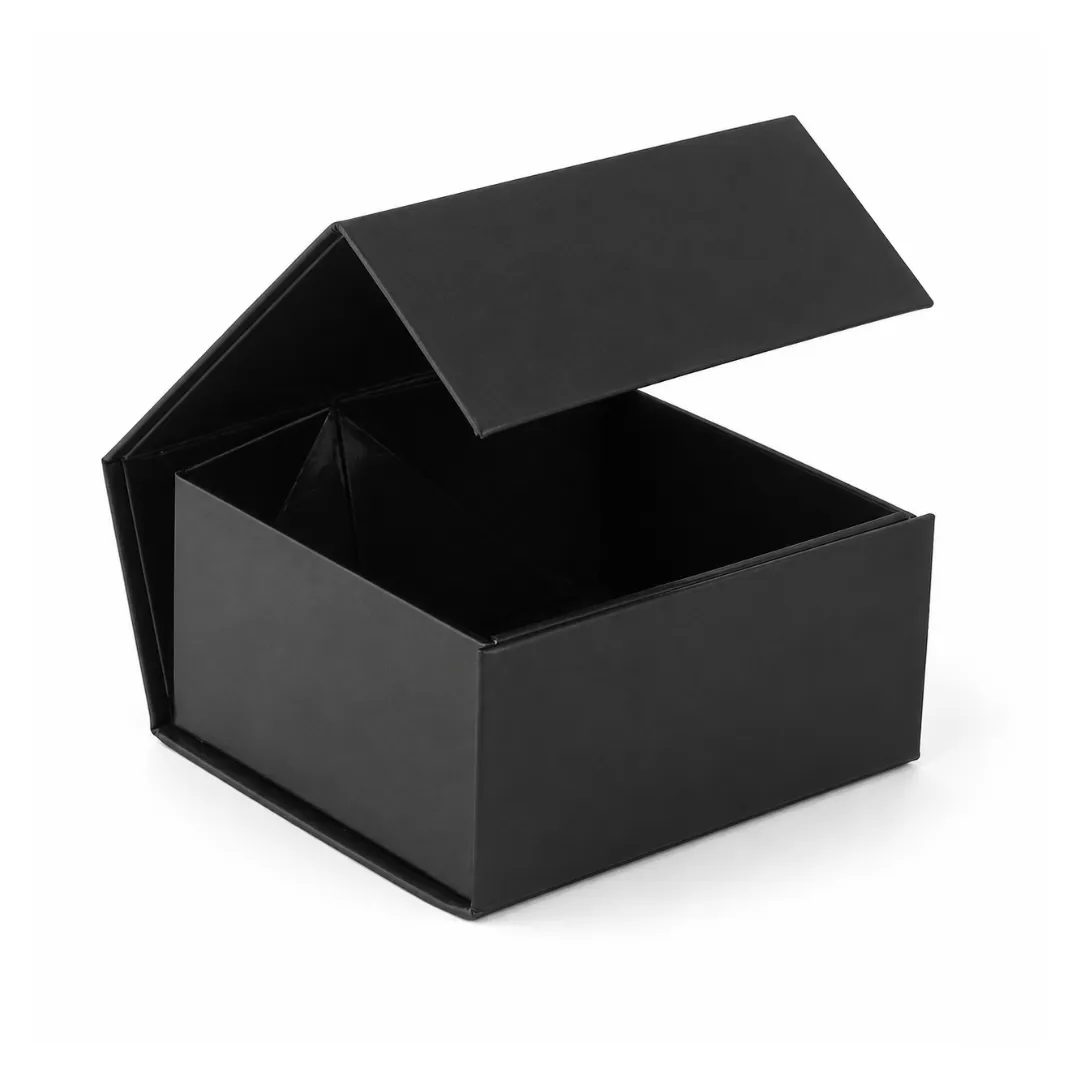
Rigid is highly protective, affordable and recyclable material. These boxes provide maximum protection.
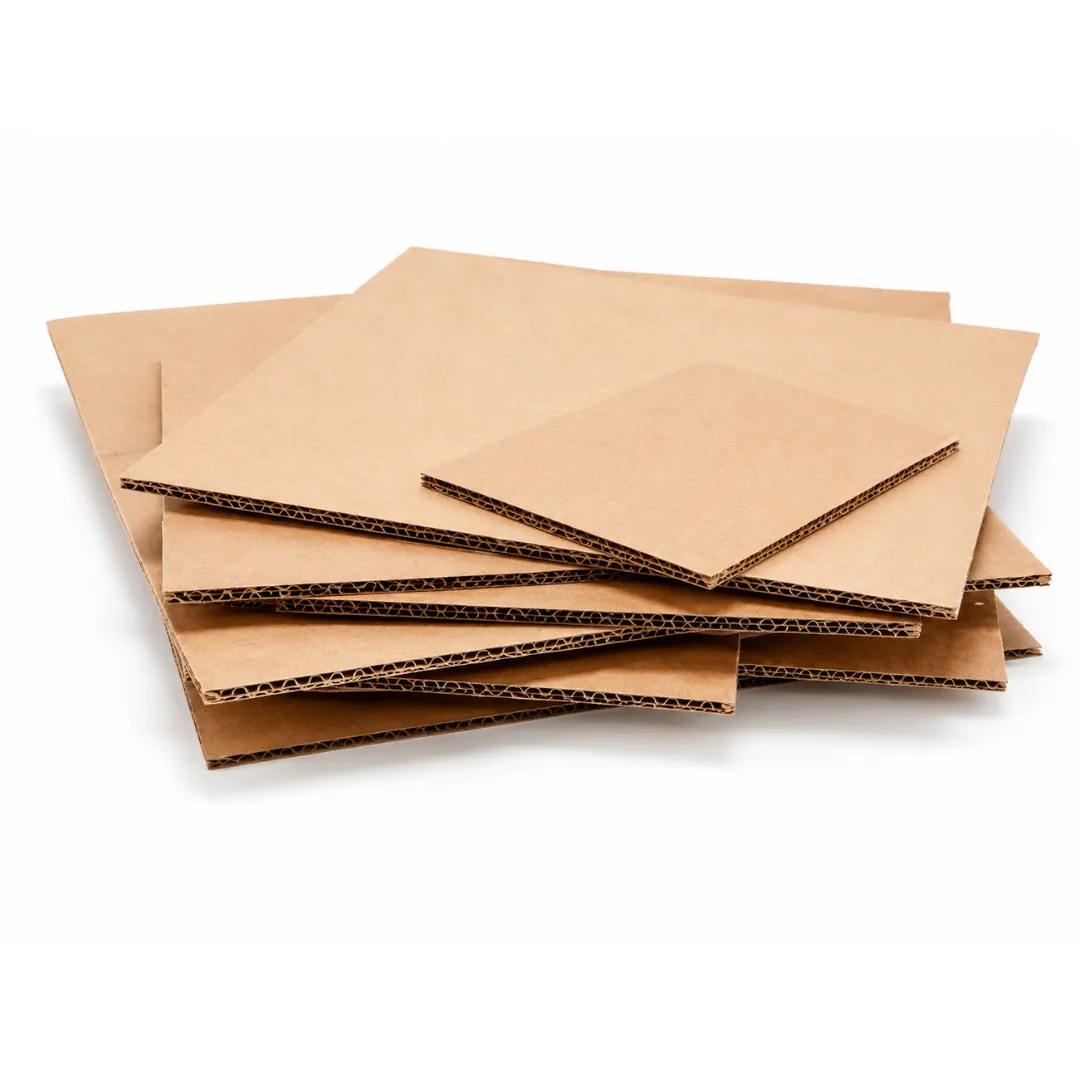
Corrugated material is easy to customize, cost effective and sustainable. It is also great for branding purposes.
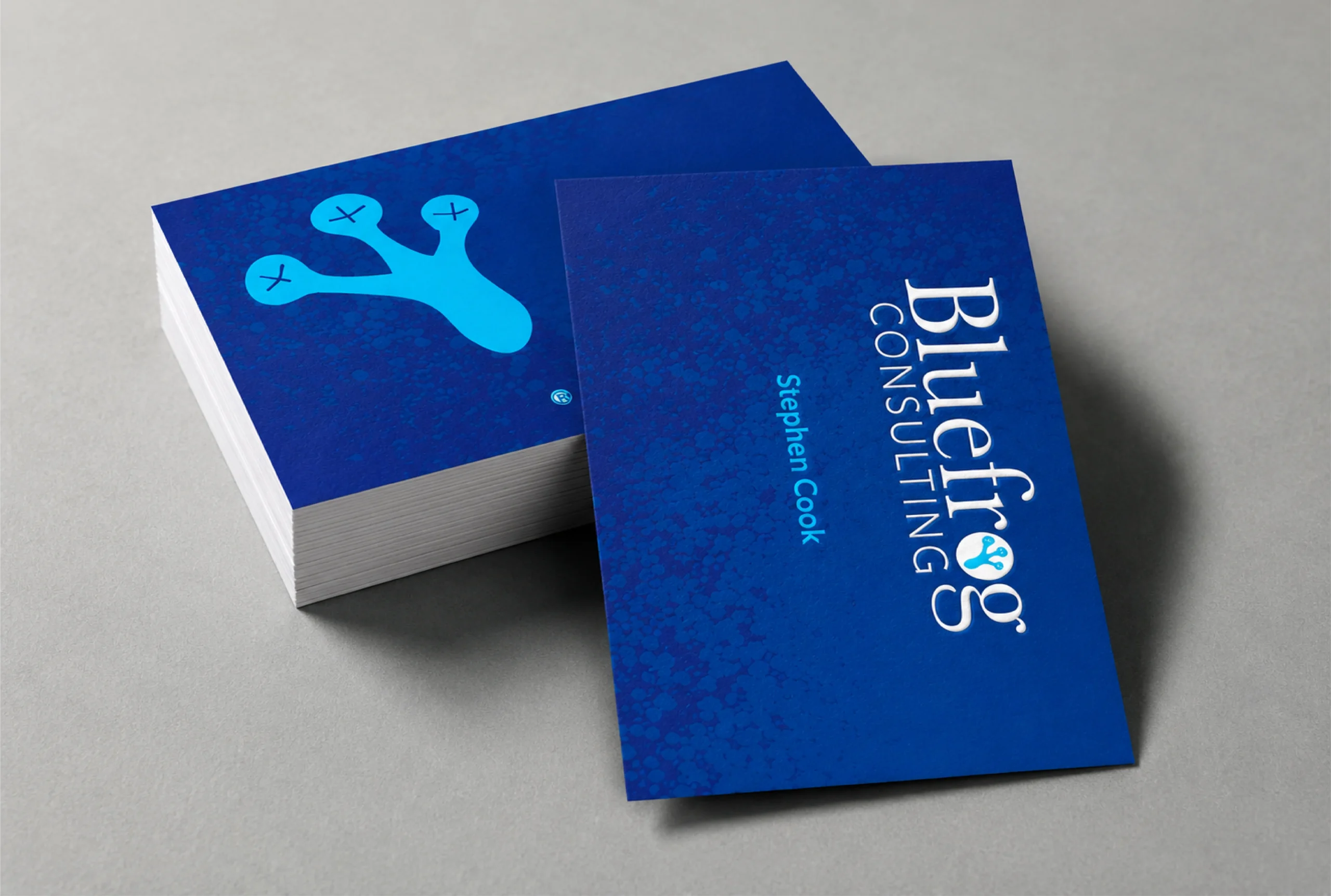
We add additional layer of protection with soft touch lamination from toner chipping.
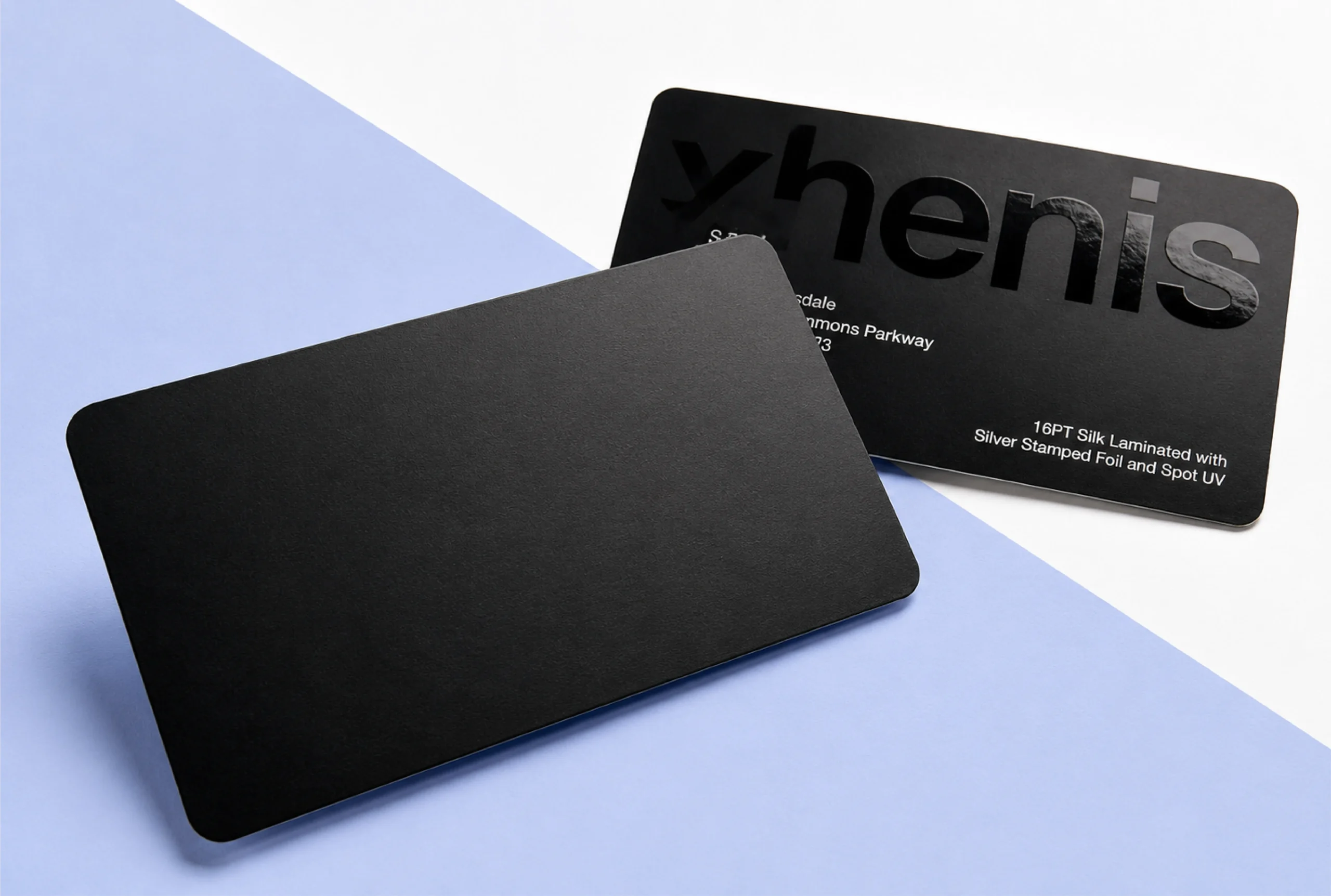
With our matte finish, fingerprints and smudges will now be less visible on the packaging.
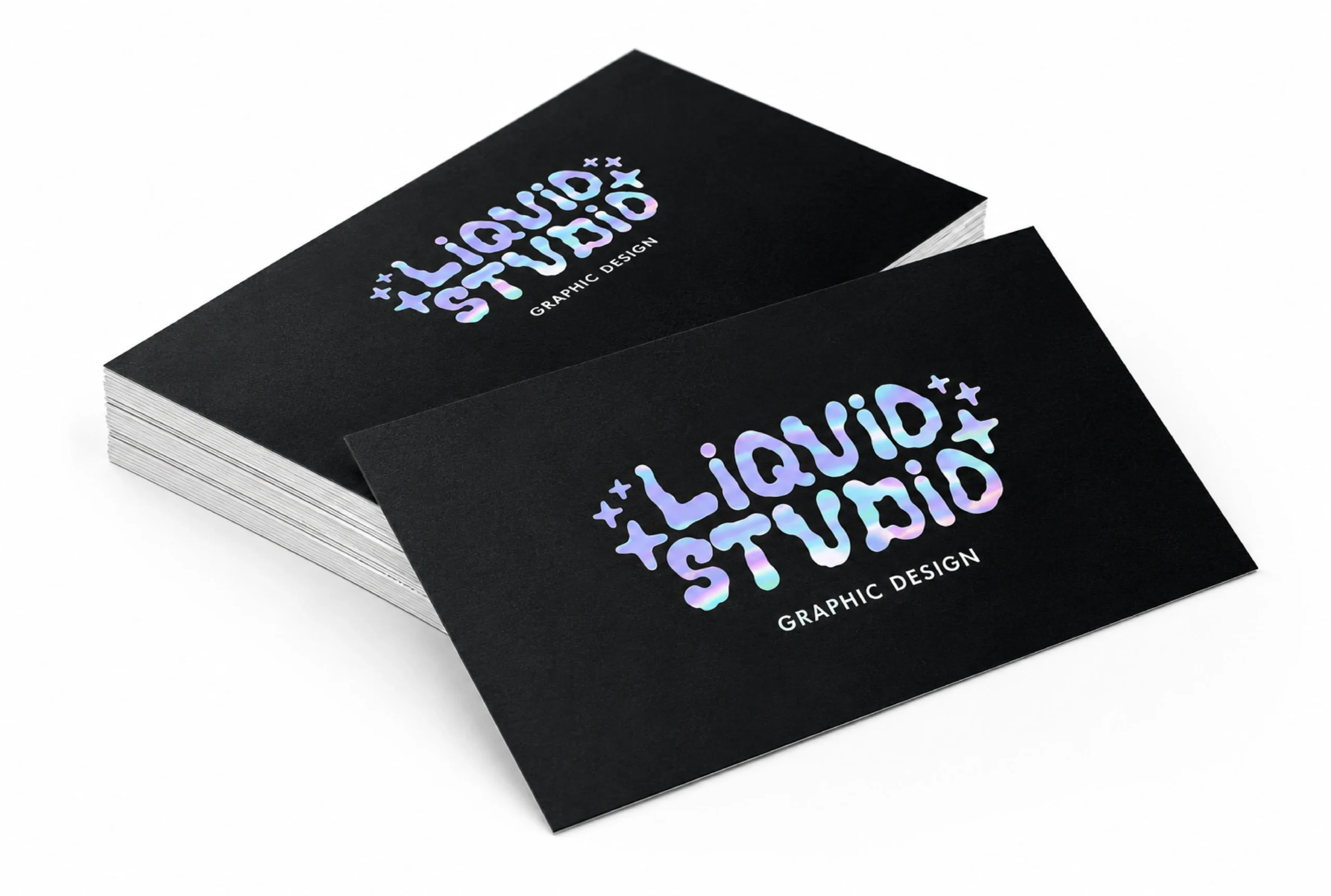
Holographic foil diffracts light and reveals the colors of the rainbow at various angles.
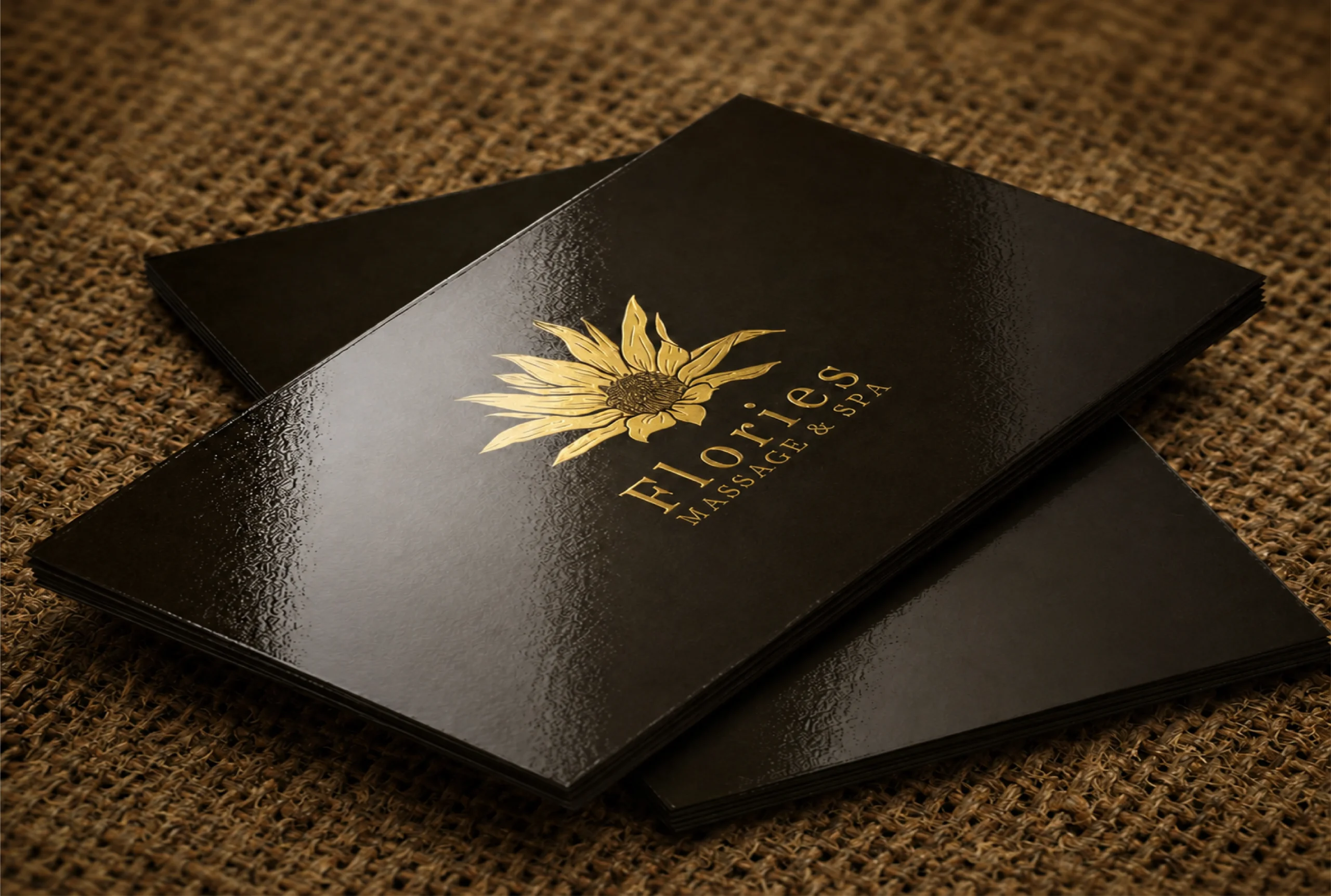
Our glossy finishing gives your packaging an extra layer of shine.
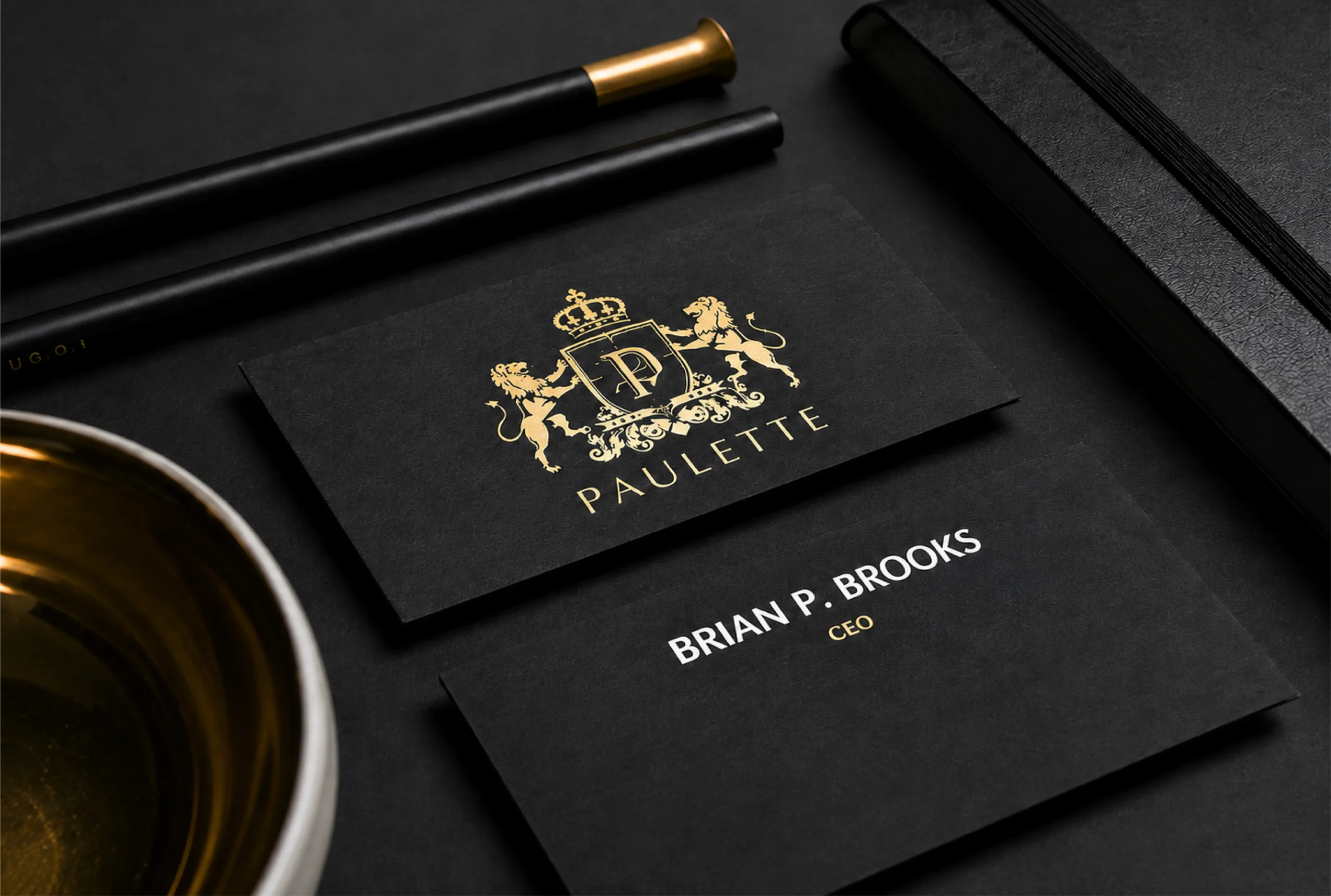
Decorate a wide range of your product packaging with our foil stamping.
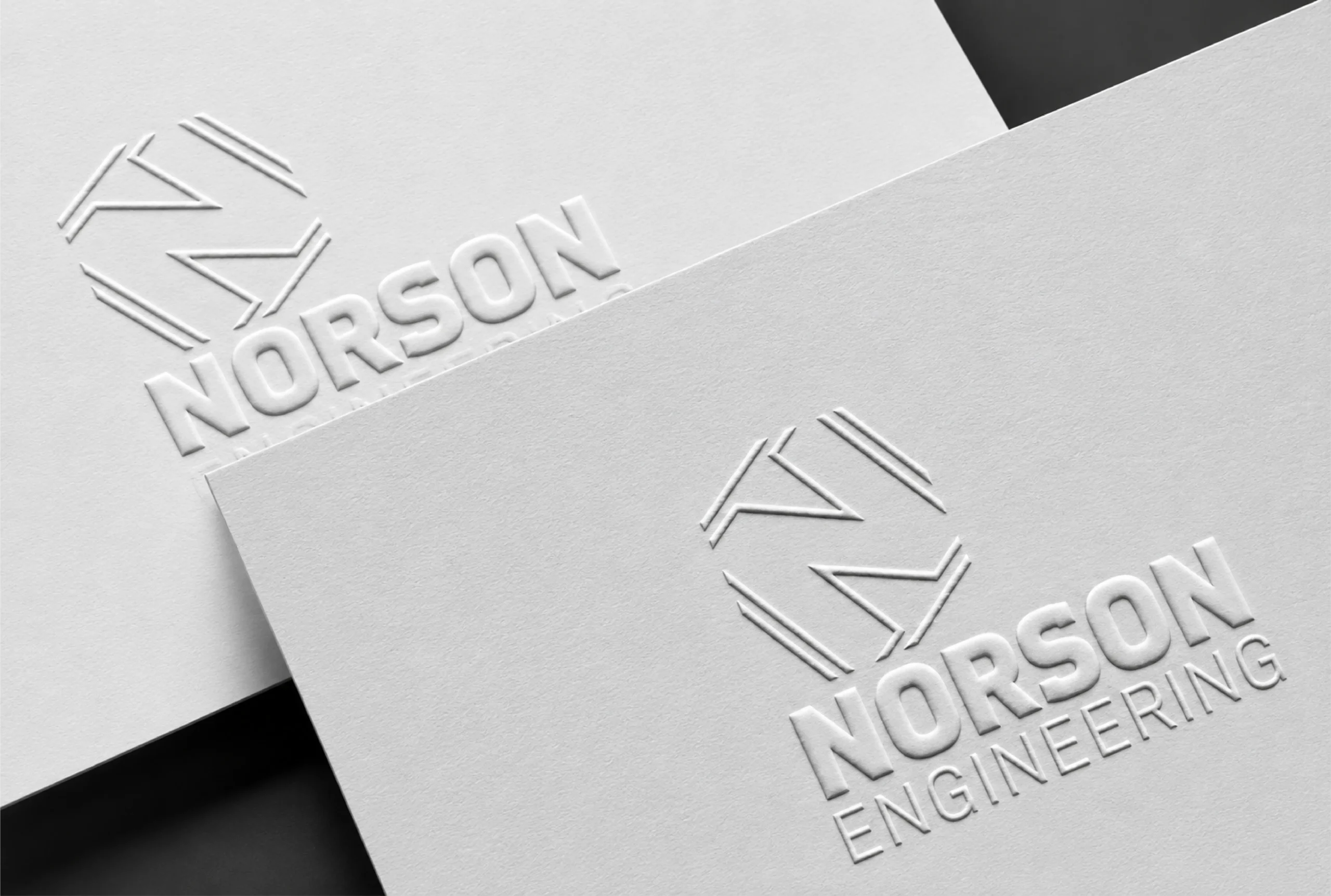
With our embossing technique, we transfer the finest details of your product on packaging.

We use debossing technique to add unique graphics into your packaging.
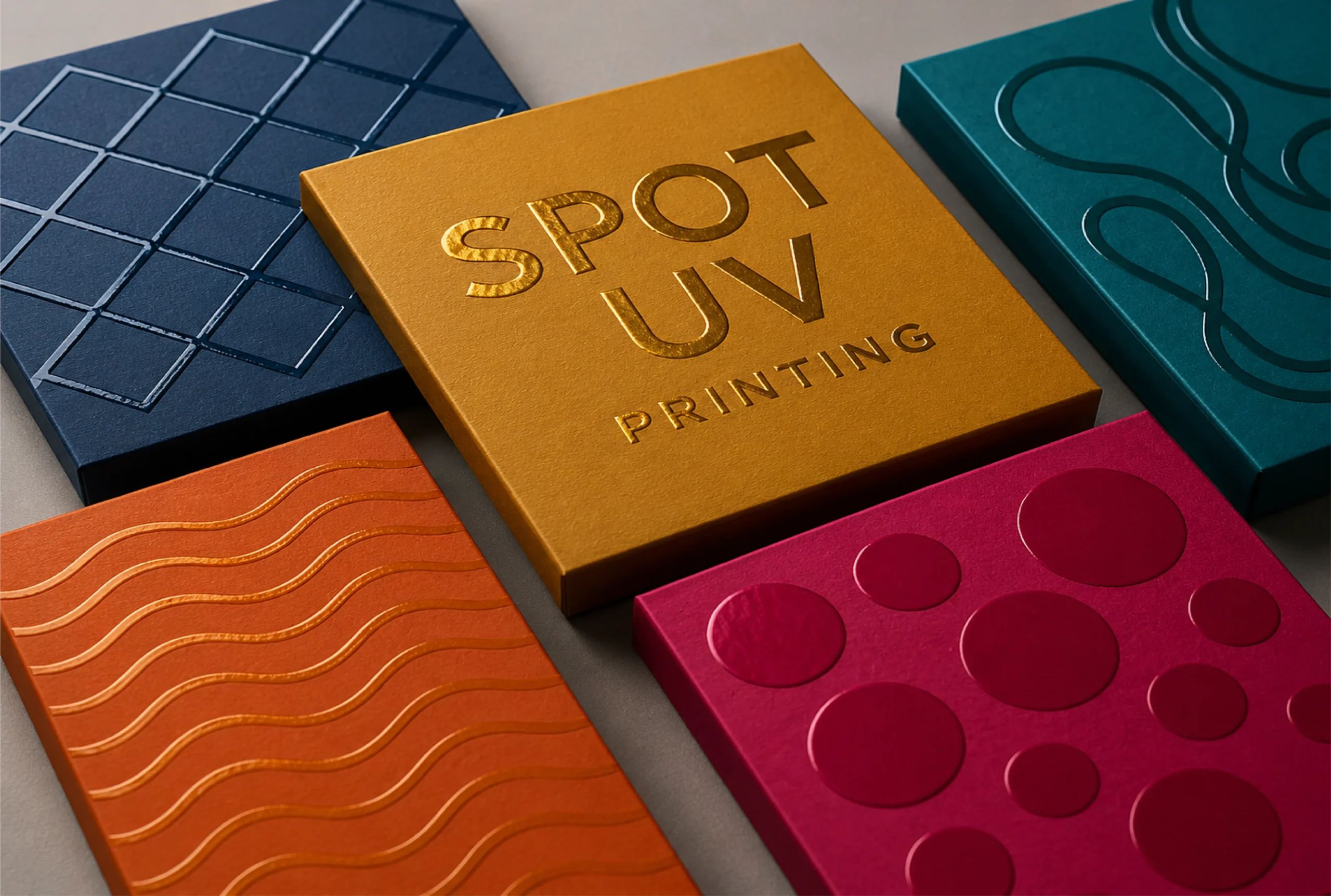
Our high-gloss UV coating gives light and shine to cure the printed material's varnish.
Still unsure? Email sales@packaginghubs.com and a packaging specialist will help.
Get your free quote today and see why Packaging Hubs is the most trusted name in U.S. custom packaging.